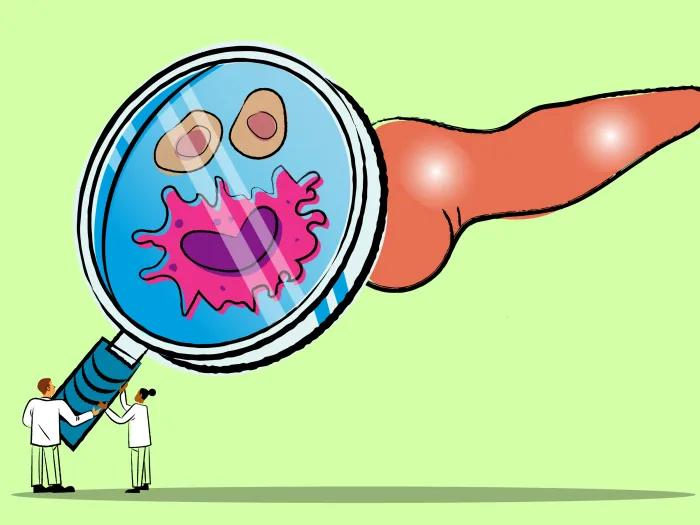
Understanding family history key to early detection of pancreatic cancer
What to know about pancreatic cancer screening, gene mutations that can increase risk
2:30 PM
Author |

Pancreatic cancer accounts for about 3% of all cancers in the U.S.
Although it is not a common type of cancer, it is one of the deadliest forms since most cases are not detected until they are at an advanced stage.
Diagnosis, which includes imaging, blood tests and biopsies, can be delayed because often there are no symptoms.
While there are general screening programs for breast and colorectal cancer, there are none for pancreatic cancer.
This can be problematic for people who have a higher than average risk.
For them, genetic testing can provide insight and potentially help with early detection.
Elena Stoffel, M.D., M.P.H., Clinical Professor of Internal Medicine-Gastroenterology and co-lead of the Cancer Prevention and Survivorship research team at Rogel Cancer Center, answered questions about recent advances in pancreatic cancer detection, the importance of understanding family history and what inherited gene mutations can increase the risk of developing cancer.
What are challenges with early detection of pancreatic cancer?
Stoffel: Until recently, there weren’t any studies proving that screening for pancreatic cancer can improve patient survival.
The average five year survival rate for a patient diagnosed with pancreatic cancer is less than 15%.
However, recent studies have shown that if patients are diagnosed at earlier stages, they have better outcomes.
Patients who had cancer detected by screening are more likely to be eligible for curative surgeries, and many continue to do well 10 years later.
The challenge is that many practicing physicians may be unaware that pancreatic screening is now available to individuals at high risk.
Studies have shown that approximately one in every 10 people with pancreatic cancer carries a genetic factor that increases their cancer risk."
--Elena Stoffel, M.D., M.P.H.
What genetic mutations are commonly seen in those at high risk?
Stoffel: Inherited mutations in specific genes can alter the way certain cells behave, and that's why certain gene changes can be associated with risks for more than one type of cancer.
Inherited mutations in BRCA1 and BRCA2 genes are typically associated with risk for breast and ovarian cancer. However, these are also among the most common genetic changes we find in families with pancreatic cancer.
Families with multiple cases of pancreatic cancer may have alterations in other genes.
Mutations in the ATM gene, which is associated with risk for breast cancer, and CDKN2A, which is associated with increased risk for melanoma, can increase your risk for developing pancreatic cancer by five- to ten-fold.
Lynch syndrome, an inherited genetic condition that usually raises the risk of gastrointestinal and gynecologic cancers, can also increase pancreatic cancer risk.
Why is understanding family history important?
Stoffel: Generally, pancreatic cancer screening is not recommended for people at average risk.
However, studies have shown that approximately one in every 10 people with pancreatic cancer carries a genetic factor that increases their cancer risk.
Therefore, every person diagnosed with pancreatic cancer is now recommended to undergo genetic testing for inherited gene changes as this information could impact their care and the care of their family members.
If you have a close relative who was diagnosed with pancreatic cancer and did not have genetic testing, then you may be a candidate for genetic testing.
For people who were diagnosed more than five years ago, it is unlikely that they would have had genetic testing and, therefore, their relatives should get tested.
Based on family history and/or results of genetic testing, pancreatic cancer screening may be recommended for high risk individuals.
What progress has been made in detecting pancreatic cancer?
Stoffel: Researchers and doctors have been studying pancreatic cancer screening for about 20 years.
Pancreatic cancer screening is performed using radiology exams and specialized procedures like endoscopic ultrasounds.
Although work is ongoing to develop additional tests to improve early detection of pancreatic cancer, currently imaging is the clinical standard.
We have made a lot of progress in identifying how pancreatic cancers develop and what are the earliest warning signs.
For instance, many people develop cysts in their pancreas, but only some of those cysts are at risk for growing into cancer.
Understanding which of these cysts are worrisome requires expertise on the part of gastroenterologists and radiologists, which is why it is best to have pancreatic cancer screening at specialty centers like Rogel Cancer Center.
Sign up for Health Lab newsletters today. Get medical tips from top experts and learn about new scientific discoveries every week.
Sign up for the Health Lab Podcast. Add us wherever you listen to your favorite shows.

Health Lab
Explore thousands of health news & research stories by visiting the Health Lab homepage for more.
Media Contact

Public Relations
Department of Communication at Michigan Medicine
In This Story

Elena Stoffel, MD, MPH
Clinical Professor
Related

BRCA1 and BRCA2 Gene Mutations: I Have a Mutation, What Are My Options?
Research sheds light on low rates of genetic testing for cancer
Stay Informed
Want top health & research news weekly? Sign up for Health Lab’s newsletters today!
Featured News & Stories

Patient with rare form of diabetes finds answers in genetic testing, clinical trials

Online resources and coaching helped people seek genetic testing for cancer
Prostate cancer and hereditary risk: A doctor explains the connection
Rogel research team receives $3. 2 M grant to cascade genetic testing to relatives
Study sheds light on how early pancreas lesions become cancerous