Understanding esophageal cancer
An expert discusses the signs and risk factors, including Barrett’s esophagus
10:37 AM
Author |
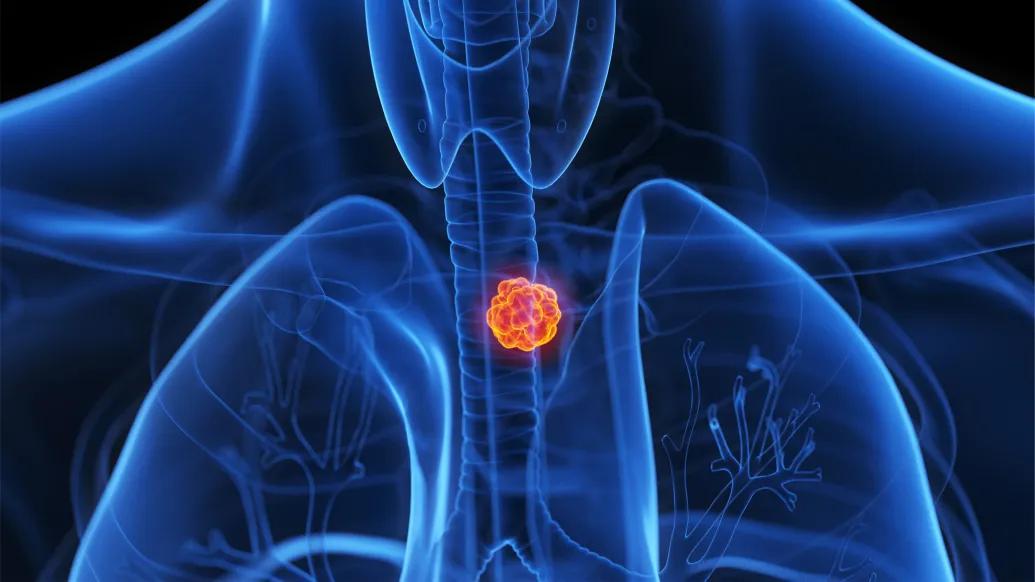
Although rarer than other cancers, esophageal cancer is a serious disease that mostly impacts men over 55 years old.
Here, Joel H. Rubenstein, M.D., M.Sc., the Director of the Barrett's Esophagus Program at Michigan Medicine, answers common questions and highlights key information you should know about this disease.
What’s the most important message to know about esophageal cancer?
Rubenstein: Cancer of the esophagus is far more easily treatable if identified at its earliest stage.
Screening can identify a pre-cancerous change in the esophagus called Barrett's esophagus. And, for patients with this diagnosis, additional surveillance exams and treatment can prevent the cancer entirely.
What causes Barrett’s esophagus?
Rubenstein: If people have acid reflux, it can cause damage to the lining of the esophagus.
For most people, when that damage heals, it heals with a normal lining of the esophagus. But around 10% of people develop Barrett’s esophagus.
Then that Barrett’s esophagus can progress to cancer, at a pretty low rate (less than 1% per year.)
For patients with Barrett's esophagus, we do surveillance endoscopy every three to five years.
We're looking for a change in biopsies under the microscope called dysplasia. And then when we find it — particularly high-grade dysplasia — we treat that endoscopically.
What is dysplasia?
Rubenstein: Dysplasia is a microscopic change to the cells lining the esophagus. The normal lining looks layered like bricks.
With Barrett’s esophagus they're instead organized in ovals.
I describe it to patients as kids in kindergarten sitting nicely in a circle. But if they're jumbled up, disorganized and yelling: that's dysplasia. And if they get up and run away from the circle: that's cancer.
If you don’t have Barrett’s esophagus can you get esophageal cancer?
Rubenstein: Probably not. Even if they can, the risk of developing esophageal cancer over the next 10 years is less than 1%.
Should everyone over a certain age be screened for esophageal cancer, like colorectal cancer?
Rubenstein: We don’t screen the entire population because esophageal cancer is too rare. In some populations, if their risk is particularly low, we could actually harm them on average by screening them.
We developed an AI tool called the Kettles Esophageal and Cardia Adenocarcinoma prediction tool, called K-ECAN for short.
We used data from 10 million Veterans across the country over a 20-year period. Using routine medical data and machine learning, it can help predict who will develop cancer.
Right now, we're working on additional validation among non-Veterans.
Who should get screened for esophageal cancer?
Rubenstein: The American College of Gastroenterology suggests screening by upper endoscopy in people who have chronic symptoms of heartburn or reflux of stomach contents up into the chest — if they have at least three additional risk factors among: age over 50, male sex, obesity, smoking, white race, or a first degree relative with either Barrett's esophagus or esophageal cancer.
What are the treatments for esophageal cancer once diagnosed?
Rubenstein: If someone has high-grade dysplasia or the earliest stage of cancer, we can treat endoscopically, with endoscopic resection and/or ablation.
That will usually involve three to four outpatient procedures performed every few months, and we’re around 95% successful in those cases.
There’s a risk of recurrence afterwards, so people have to come in for surveillance exams.
Sign up for Health Lab newsletters today. Get medical tips from top experts and learn about new scientific discoveries every week
Sign up for the Health Lab Podcast. Add us wherever you listen to your favorite shows

Health Lab
Explore thousands of health news & research stories by visiting the Health Lab homepage for more.
Media Contact

Public Relations
Department of Communication at Michigan Medicine
In This Story

Joel H Rubenstein, MD, MSc, AGAF, FACG, FASGE
Professor
Stay Informed
Want top health & research news weekly? Sign up for Health Lab’s newsletters today!
Featured News & Stories
Identifying avoidant, restrictive food intake disorder in gastroenterology patients

As probiotic use surges, microbiome-supportive food consumption stagnates

How gastroenterology nutrition therapy has evolved

Will AI transform health care administration, specialty care?

Family that overcame Crohn’s supports research for future patients