Understanding autism: 10 things to know
A debated link between Tylenol and autism has put the neurodevelopmental condition in the spotlight. An expert answers parents’ top questions
5:00 AM
Author |
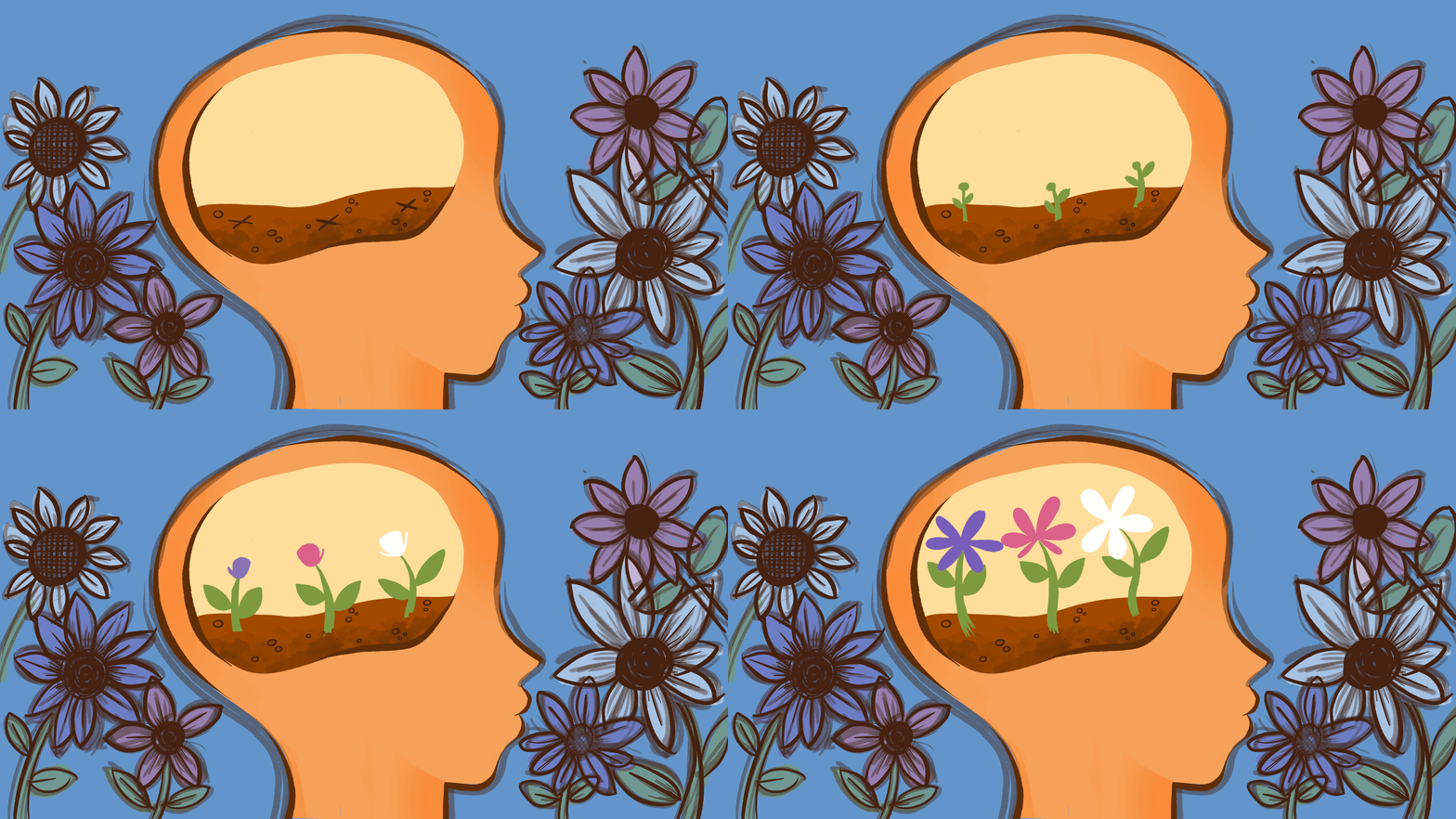
Autism spectrum disorder has recently been in the headlines due to disputed claims about possible risk factors, including the use of Tylenol during pregnancy.
But experts caution that the science doesn’t back those claims – and that many persistent myths about autism continue to fuel misunderstanding.
Sarah Mohiuddin, M.D., a child and adolescent psychiatrist at University of Michigan Health C.S. Mott Children’s Hospital and director of the U-M Multidisciplinary Autism Program, helps answers common questions and shares current insights into this complex condition.
What is autism?
Mohiuddin: Autism is a neurodevelopmental disability caused by differences in how the brain develops and functions.
While challenges with social communication and restricted or repetitive behaviors are common features, autism presents in a wide variety of ways.
That’s why it's called a spectrum — every individual will experience and express autism differently.
Some individuals may graduate from college, pursue careers and have families while others may be non-verbal and require more support.
It's also important to know that about 40% of people with autism also have an intellectual disability, but the majority do not.
Regardless of these differences, all autistic individuals can lead fulfilling lives and contribute meaningfully to their communities.
What's currently know about the causes of autism?
Mohiuddin: There's no single known cause of autism.
There are multiple contributing factors but research over the past several decades clearly shows that genetic differences are the primary drivers in the development of autism.
While some external factors, such as advanced parental age, may also play a role, they likely do so by interacting with underlying genetics – not by directly causing autism on their own.
What are some common misconceptions about what causes autism?
Mohiuddin: Unfortunately, some persistent myths suggest that certain exposures or actions by parents like getting vaccinated or using common medications cause autism.
There's no scientific evidence to support these claims.
The genetic risk far outweighs any other proposed factor.
Misattributing autism to parental choices not only spreads misinformation, but can also lead to unnecessary guilt and shame for families.
What does the science say about the headlines linking Tylenol use in pregnancy to autism?
Mohiuddin: This is a great example of why it's important to understand the difference between association and causation in science.
While some studies have explored a possible link between acetaminophen (Tylenol) use during pregnancy and autism, the largest and most rigorous studies suggest that the association disappears once genetic factors are accounted for.
In other words, the underlying genetic risk explains the association, not the use of Tylenol itself.
What are some other common misunderstandings about autism?
Mohiuddin: One of the biggest misconceptions is that autism is only about deficits and that there is something wrong with being autistic.
There is no single known cause of autism. There are multiple contributing factors but research over the past several decades clearly shows that genetic differences are the primary drivers in the development of autism.”
-Sarah Mohiuddin, MD
Neurodivergence brings unique strengths and individuals with autism enrich our society and communities in many ways.
People with ASD can thrive, especially when they are supported in environments that recognize and respect their differences.
Why are autism diagnoses increasing?
Mohiuddin: The increase in autism diagnoses is likely due to several factors.
While there may be a small true increase in prevalence, most of the rise is explained by improved detection and diagnosis.
There's greater awareness among parents, teachers and healthcare providers on how to identify autism and broader diagnostic criteria that recognize more diverse presentations.
A formal ASD diagnosis also opens the door to increased access to services, especially during school-age years, which can prompt more parents to get their children screened.
How is autism typically treated or supported today?
Mohiuddin: The best approach is a personalized support plan, developed in partnership with clinicians, educators and most importantly the individual and their family.
People with autism may benefit from support in areas such as social skills, speech and language, occupational and vocational therapy, education and school-based services and management of co-occurring conditions like attention deficit hyperactivity disorder, commonly known as ADHD, or sleep issues.
Individuals with autism need a village of support that includes families, communities, schools and healthcare providers working together to promote well-being and independence.
What is leucovorin?
Mohiuddin: Leucovorin, a form of folinic acid, has received increased media attention as a potential treatment for some individuals with autism.
While still considered experimental, there have been two placebo-controlled studies suggesting a modest improvement in communication for a small subset of autistic individuals over about 24 weeks.
However, the long-term safety and effectiveness of leucovorin are still being studied.
Clinicians are encouraged to discuss the potential risks and benefits with families and to follow evidence-based guidance as more research becomes available.
At the University of Michigan, through TEAM (Teaching and Education for Autism and Developmental Disabilities), we're launching a national curriculum to train health care providers in autism care. Information on leucovorin and other treatments will be included in these resources in the future.
What research is happening right now at the University of Michigan related to autism?
Mohiuddin: Our work focuses on improving care across the lifespan for autistic individuals, particularly those with more complex needs.
We're also studying psychiatric conditions that often co-occur with autism and how to better support people in daily life.
Our TEAM project aims to ensure that physicians and providers across Michigan, and eventually the United States, have access to the knowledge and tools they need to help patients receive timely, appropriate and compassionate care.
In our basic research labs, U-M teams are also studying the hundreds of genes implicated in the risk of autism and how they contribute to development of the condition.
Why is continued research on autism so important?
Mohiuddin: Despite increased awareness, access to services remains a major barrier for many autistic individuals and families.
We need more research and funding to offer better services and partner with autistic individuals and communities to align research with their real-world needs.
Every person with autism is different and they and their families are the best people to tell us what matters most in their lives when we talk about research and improving their care.
Autism is a lifelong condition and our systems need to do a better job of ensuring that autistic people not only receive early support but also thrive throughout adulthood.
Sign up for Health Lab newsletters today. Get medical tips from top experts and learn about new scientific discoveries every week.
Sign up for the Health Lab Podcast. Add us wherever you listen to your favorite shows.

Health Lab
Explore thousands of health news & research stories by visiting the Health Lab homepage for more.
Media Contact

Public Relations
Department of Communication at Michigan Medicine
In This Story

Sarah Mohiuddin
Clinical Associate Professor
Stay Informed
Want top health & research news weekly? Sign up for Health Lab’s newsletters today!
Featured News & Stories

4 ways to teach your teen safe driving habits

Online resources and coaching helped people seek genetic testing for cancer
U-M-led consortium to receive up to $52 million in NIH funding to study why viral respiratory infections affect children differently

Can Your Voice Reveal Early Signs of Alzheimer’s?

Better prenatal care data could help prevent maternal complications, experts say