Uncovering how occludin protein maintains blood-brain and blood-retinal barriers
Study reveals how occludin controls both leaky blood vessels and excessive vessel growth in diabetic retinopathy
5:00 AM
Author |
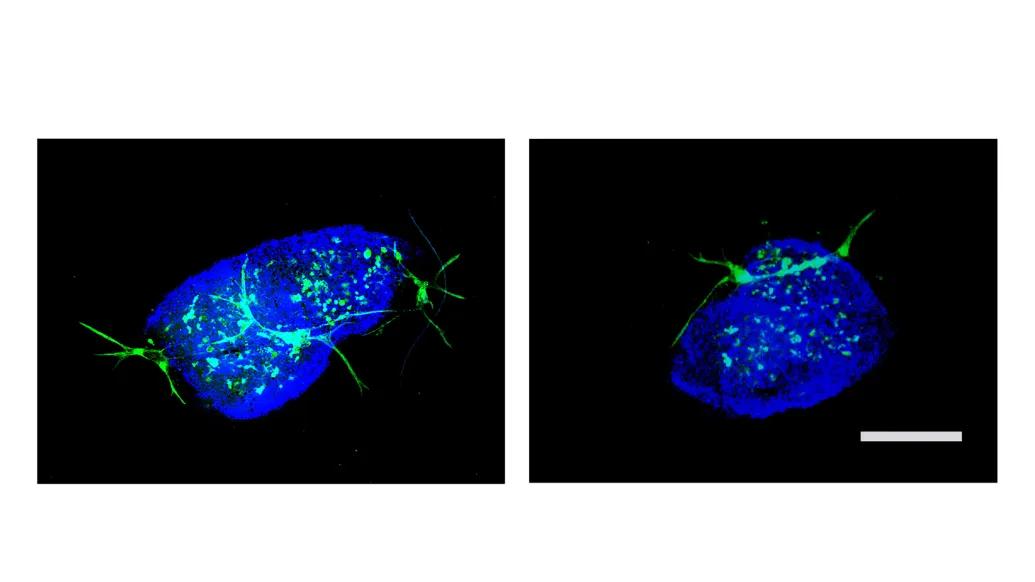
The blood-brain and blood-retinal barriers are protective systems that prevent harmful substances from entering the brain and eyes.
These barriers are created by cells that are joined tightly together by proteins.
Dysfunctional barriers can cause a range of diseases, including stroke, brain tumors and blinding eye diseases such as diabetic retinopathy.
In a study published in Proceedings of the National Academy of Sciences, University of Michigan researchers uncovered the role of occludin, a protein that regulates the tight connections between cells.
Occludin spans the cell membrane in an M-shaped structure, with both its ends, including a long tail, remaining inside the cell.
This zipper-like arrangement was thought to join neighboring cells together.
When researchers previously deleted occludin in animal models, they found that the animals survived but developed unusual defects, including calcium deposits in the brain and infertility.
Their results led them to believe that occludin played only a minor role in maintaining cell barriers.
“Occludin was first identified over 30 years ago, but no one could figure out what it did,” said David Antonetti, Roger W. Kittendorf Research Professor of Ophthalmology and Visual Sciences and member of Caswell Diabetes Institute.
“This is the first paper to demonstrate a clear role for this protein.”
In the present study, the researchers discovered that the earlier deletions did not completely rid cells of occludin.
They found that the occludin gene undergoes alternative splicing.
During this process, the same DNA sequence generates different versions of mRNA, producing a form of occludin that lacks the M shape but still has the long tail.
When the researchers deleted all the possible alternative splices, the mouse models didn't survive.
The loss of occludin disrupted the cell’s transport system, which is made up of several proteins, including microtubules, kinesin and dynein.
Microtubules form train tracks that help kinesin and dynein move cargo across the cell.
Kinesin moves molecules from the cell’s interior to its edge, while dynein moves in the opposite direction.
“We found that occludin has a tail that binds to dynein and helps it pull in proteins. This causes leaks, and that’s how occludin controls what comes into the retina from the blood,” Antonetti said.
This process is disrupted in diseases such as diabetic retinopathy, where blood vessels grow out of control due to the protein VEGF, or vascular endothelial growth factor.
VEGF stimulates occludin, causing leaky blood vessels.
When researchers mutated occludin so that it could no longer respond to VEGF, they were able to restore barrier integrity.
“We have also found that occludin helps deliver cargo to the centrosome, which is the final station on the microtubule train track,” Antonetti said.
“This transport can influence how VEGF drives the development of blood vessels and excessive vessel growth in diabetic retinopathy.”
The researchers are working on trying to restore these cell barriers in patients with diabetes, helping them with their vision.
Additional authors: Xuwen Liu, Enming J. Su, Alyssa Dreffs, John P. Gillies, Madeline Merlino, Lu Gao, Julian S. Peregoff, Cheng-mao Lin, Margaret Elizabeth Ross, Morgan E. DeSantis and Daniel A. Lawrence.
Funding/disclosures: This work was supported by NIH EY012021, S10OD028612, HL055374, Vision Research Center P30EY007003, Michigan Diabetes Research Center P30DK020572 and Research to Prevent Blindness.
Michigan Research Core(s): Unit for Laboratory Animal Medicine Pathology Core
Paper cited: “Occludin acts as a dynein adaptor regulating permeability and collateral angiogenesis,” Proceedings of the National Academy of Sciences. DOI:10.1073/pnas.2516076122
Sign up for Health Lab newsletters today. Get medical tips from top experts and learn about new scientific discoveries every week
Sign up for the Health Lab Podcast. Add us wherever you listen to your favorite shows

Health Lab
Explore thousands of health news & research stories by visiting the Health Lab homepage for more.
Media Contact

Public Relations
Department of Communication at Michigan Medicine
In This Story

David Antonetti
Professor
Related

Diabetic Retinopathy: Know the Signs, Symptoms and Treatments
Diabetic retinopathy is being diagnosed more in younger patients
Stay Informed
Want top health & research news weekly? Sign up for Health Lab’s newsletters today!
Featured News & Stories

Comprehensive DNA sequencing reveals hidden drivers of cancer

‘Molecular glue’ stabilizes protein that inhibits development of non-small cell lung cancer and uterine cancer

Many older adults make Medicare decisions quickly and most don’t change plans, poll finds
What’s the latest on 7-OH and kratom availability and addiction care?

Depression in OBGYN residents needs more attention, study suggests