An ultrasound-activated hydrogel for steady, sustained drug delivery
The breakthrough could revolutionize drug delivery for various medical applications where constant drug levels are crucial for optimal therapeutic outcomes
5:00 AM
Author |
Researchers at Michigan Medicine have developed a composite hydrogel capable of achieving sustained, steady drug release using ultrasound as a trigger.
The team behind the breakthrough believes it could revolutionize drug delivery for various medical applications, in which constant drug levels are crucial for optimal therapeutic outcomes.
The resulting paper, “Acoustically responsive scaffolds: Unraveling release kinetics and mechanisms for sustained, steady drug delivery” appears in the October 2024 issue of the Journal of Controlled Release.
The composite, termed an acoustically responsive scaffold, utilizes a fibrin hydrogel matrix.
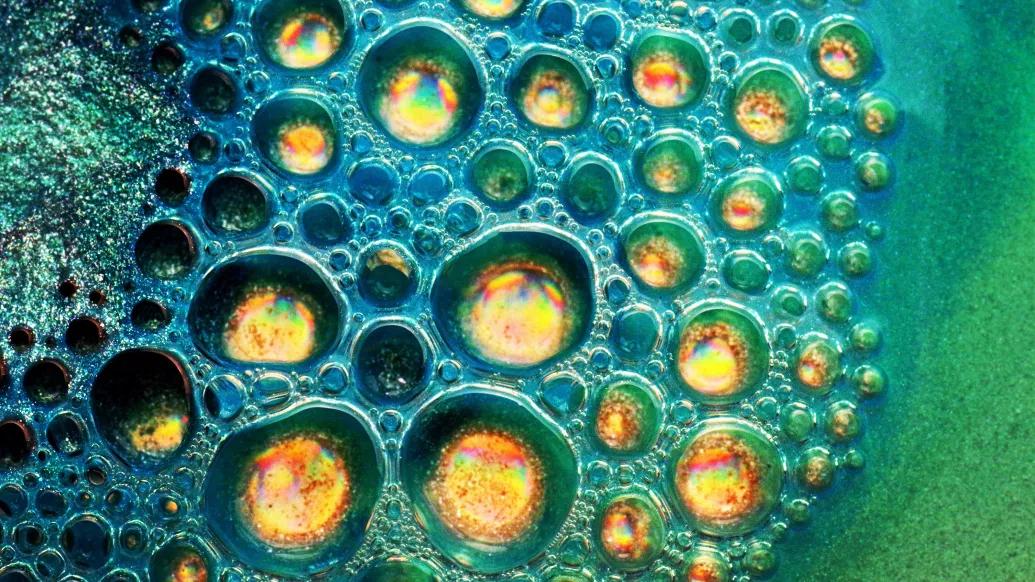
When exposed to ultrasound, an emulsion embedded within the hydrogel vaporizes into bubbles, releasing the encapsulated drug.
There are existing drug delivery devices, such as osmotic pumps, that provide zero-order release—i.e. a constant release over time.
Those methods, however, often have limitations that this fibrin hydrogel could overcome.
“A key advantage of our system is its use of fibrin, a biocompatible material that naturally degrades within the body,” said Haijun Xiao, Ph.D., research fellow at the Michigan Medicine Ultrasound Laboratory and lead author on the paper.
“This eliminates the need for surgical removal of the drug delivery device post-treatment, as is sometimes required with other implantable systems.”
The ability to control the ultrasound allows for sustained, zero-order release, a process allows for a consistent drug level to be delivered over an extended period of time.
“This release can improve treatment efficacy and minimize side effects associated with fluctuating drug concentrations,” Xiao said.
Xiao developed stepwise equations to specifically describe the multi-phasic release behavior of the acoustically responsive scaffolds, which involves an initial fast release upon ultrasound activation followed by a sustained, zero-order release phase.
These equations provide a new framework for designing and optimizing ultrasound-triggered drug delivery systems.
The Michigan Medicine Ultrasound Laboratory has previously pioneered the use of these scaffolds for stimulating blood vessel growth.
Applying this technology to drug delivery offers several advantages: on-demand drug release, personalized treatment regimens and non-invasive dose adjustments.
“Having a mathematical model that accurately describes the release process from the ARS is crucial for ultimately personalizing treatment,” said Mario L. Fabiilli, Ph.D., principal investigator within the Ultrasound Laboratory and senior author on the paper.
“In the future, these equations will empower us to precisely fine tune the drug dose non-invasively to meet individual patient needs.”
The research team is now exploring the development of capable of delivering multiple growth factors sequentially, potentially creating the possibility for more sophisticated tissue engineering and regenerative medicine applications.
Additional authors: Mitra Aliabouzar, Ph.D.
Funding/disclosures: This work was supported by NIH grant R01HL139656
Paper cited: “Acoustically responsive scaffolds: Unraveling release kinetics and mechanisms for sustained, steady drug delivery,” Journal of Controlled Release. DOI: 0.1016/j.jconrel.2024.08.001
Sign up for Health Lab newsletters today. Get medical tips from top experts and learn about new scientific discoveries every week.
Sign up for the Health Lab Podcast. Add us wherever you listen to your favorite shows.

Health Lab
Explore thousands of health news & research stories by visiting the Health Lab homepage for more.
Media Contact

Public Relations
Department of Communication at Michigan Medicine
In This Story

Mario Fabiilli, PhD
Associate Professor
Stay Informed
Want top health & research news weekly? Sign up for Health Lab’s newsletters today!
Featured News & Stories

An AI model that can read and diagnose a brain MRI in seconds
Hospital partnership improves follow up scans, decreases long term risk after aortic repair

Leukemia drug secures FDA approval

AI model helps diagnose often undetected heart disease from simple EKG

After 25 procedures and constant fainting, patient finds long term relief