U-M Coach Stays in the Game Thanks to Bone Marrow Transplant
Joining the bone marrow registry is the first step to being the cure for patients with blood cancers such as leukemia.
3:09 PM
Author |
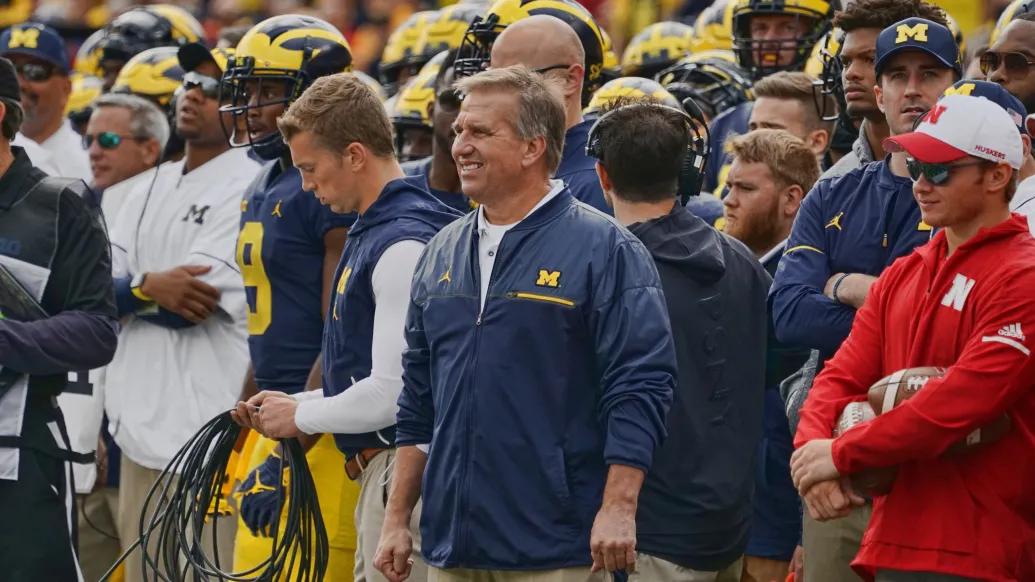
University of Michigan athletics strength and conditioning coach Jim Plocki was ready to take on cancer when diagnosed with acute myeloid leukemia in fall 2017.
He and wife Bev Plocki, head coach of gymnastics at the University of Michigan, approached the diagnosis with strategy and teamwork, of course. Well-wishes and support came from the Department of Athletics and former athletes — all trained by Plocki to be bigger, faster and stronger.
LISTEN UP: Add the new Michigan Medicine News Break to your Alexa-enabled device, or subscribe to our daily audio updates on iTunes, Google Play and Stitcher.
A year later, with the cancer in remission and Plocki again on the sidelines at Michigan Stadium, he's spreading the message about what saved his life: a bone marrow donation.
"You're never ready for something (like this)," says Plocki, a Pennsylvania native who was hired as a graduate assistant by U-M football legend Bo Schembechler some 30 years ago.
"But I said 'what do I got to do?' First of all am I going to live," he remembers. "The doctor told me we'll give you some treatment and it's a possibility. I said 'If it's a possibility then let's get after it. Just tell me what I need to do.' "
Plocki had gone to the emergency room without much urging after suffering fatigue while walking up a flight of stairs. He wouldn't leave the hospital for a month.
Doctors at U-M Rogel Cancer Center discovered his hemoglobin, white blood cell and platelet counts were all extremely low. The coach had leukemia.
"You have your moments when you look at each other and you cry and you hug and can't believe this is what someone is saying to you," says Bev Plocki, who has coached athletes to national championships. "After the diagnosis and as they're going through the steps at the hospital, at one point they said he's going to need a bone marrow transplant."
During a transplant healthy donor cells are transferred to the patient in the hopes they begin to grow healthy red and white blood cells and platelets.
Before bone marrow transplantation, the survival rates for leukemia were near zero; now, some types of leukemia have a 90 percent recovery rate.
But first there's careful evaluation: To be a match, donor's cells must share a similar protein makeup with the patient's — a more complex factor than blood type alone.
The majority of people needing bone marrow are placed on a registry until a suitable match is found, which can take years. About one-third of those in need match with a relative, often a sibling.
Plocki considers himself lucky enough to have matched with his younger brother David.
Donating marrow easy and important
The day after Christmas, David, who lives in San Diego, was with his brother at Michigan Medicine. After a week-long round of injections to increase the number of blood-forming cells in his bloodstream, David Plocki's stem cells were harvested in the morning and transplanted to his sick brother in the afternoon.
"I had a bag of stem cells that looked like salmon eggs to me and then we were good to go," says Plocki. "To be a donor is easy. Sign up, do a swab and if you're needed they'll call. It can make a difference in someone's life."
Young bone marrow donors are particularly important, as donors ages 18 to 44 provide the best chance of a successful transplant.
He offers advice for other cancer patients. What coach wouldn't have tips to share - such as having a patient advocate, like his wife, who can ask the medical team questions. "Some days I was too tired."
During his hospital stays, Plocki kept moving by taking walks in the hospital unit where 17 laps equals one mile. He used Therabands for strength training.
The cancer experience also gave the father of two perspective on the impact he'd made on generations of young athletes — football players, gymnasts, hockey stars and softball players included — that he pushed to be their best.
They returned the favor during his recovery with text messages, phone calls and cards like one that read: "Everyday may not be good, but there's good in every day."
"It's been very important to him and a huge uplift that he was able to return to work," says Bev Plocki of Jim's continued role in athletics operations. "He loves being there and he loves being among the staff and players. I think they have a special relationship. The fact that he's back and feeling good and doing well is a blessing."
You can sign up to be a bone marrow donor at Be the Match.
Or join us at Be a Hero at the Big House, 8 a.m.-5 p.m. Sunday, Nov. 11, in Michigan Stadium where those between age 18 and 44 can sign the registry for free. For more information or to reserve your blood donation appointment, visit https://www.uofmhealth.org/beahero.

Health Lab
Explore thousands of health news & research stories by visiting the Health Lab homepage for more.
Media Contact

Public Relations
Department of Communication at Michigan Medicine
Stay Informed
Want top health & research news weekly? Sign up for Health Lab’s newsletters today!
Featured News & Stories
U-M alumni return from Central Asia to seek treatment for their child at Mott

5 things to know about ALS

The Future of Cell and Gene Therapies
Honoring the Heart of Care: Nurse Well-Being in Action

CAR T-cell Therapy