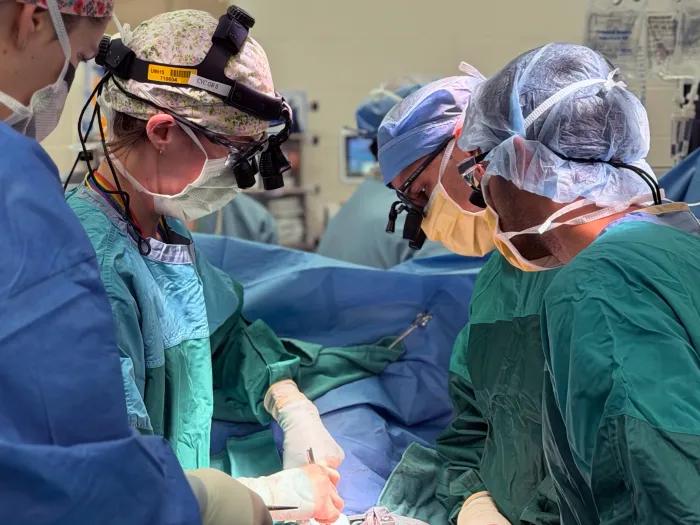
Two heart transplants, one message for organ donation
The procedures took place in 1995 and 2007
3:42 PM
Author |
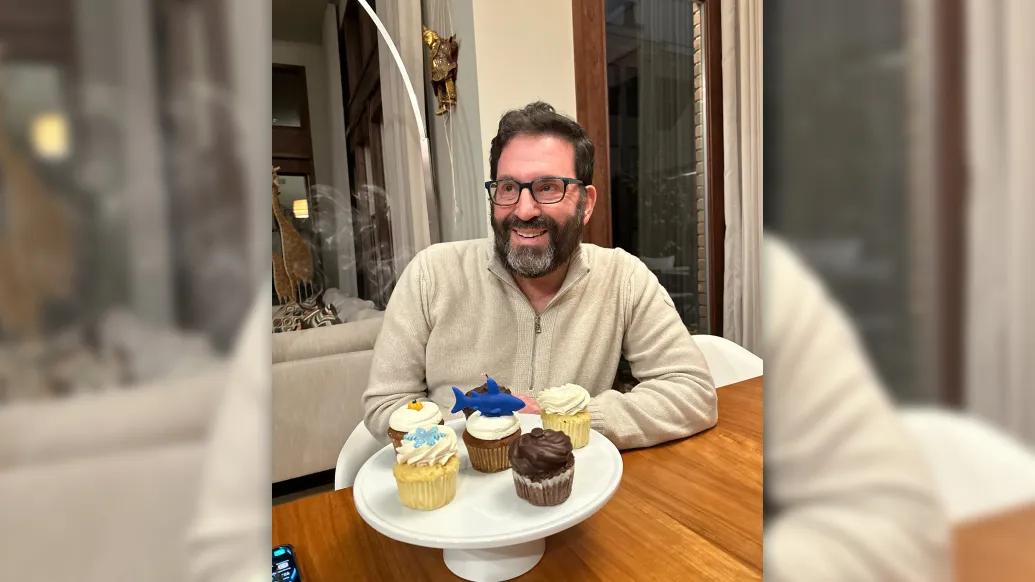
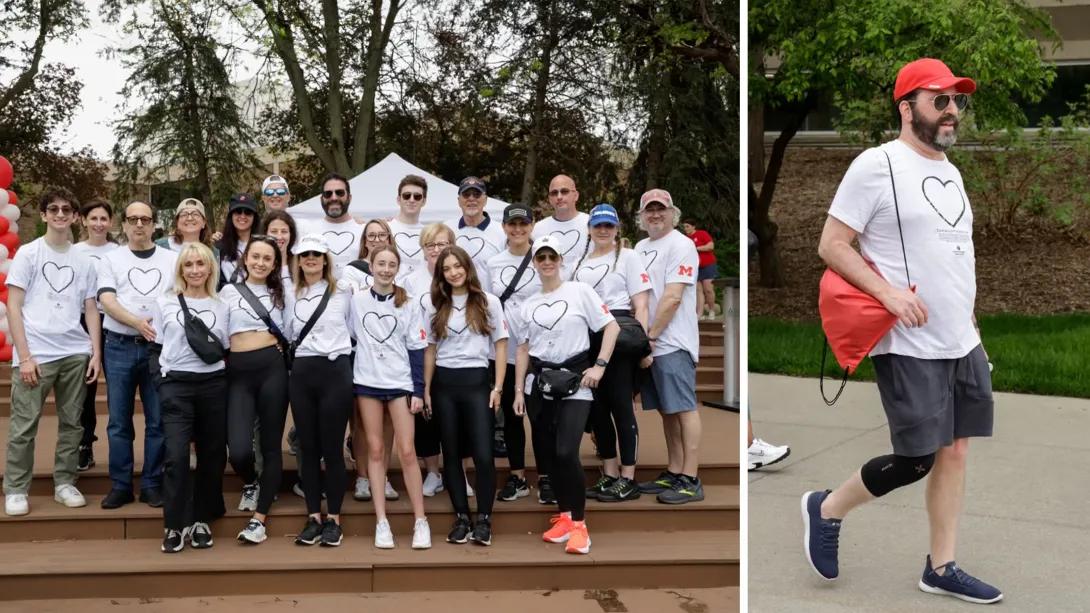
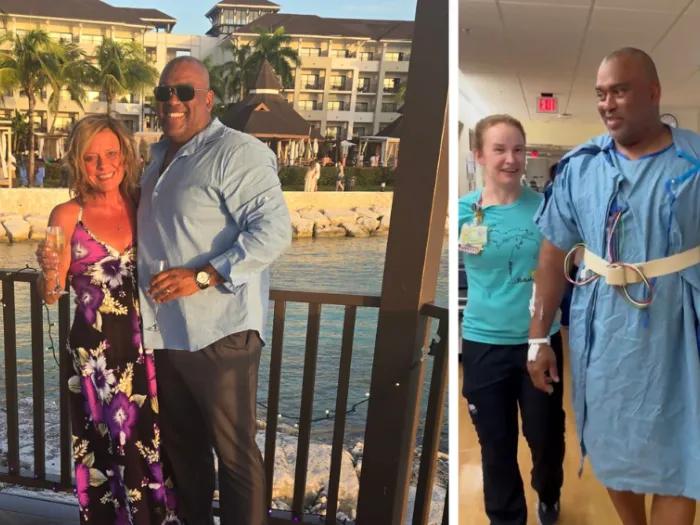
As a crowd of over 600 people sprawled across the campus of Washtenaw Community College, a man wearing an ash-colored shirt with a heart printed across the front looked out at the scene with pride.
“When I see people out here creating more awareness, not only for heart health and heart disease but also for the signs of stroke and heart attack and for organ donation, it makes me incredibly thankful,” said Erik Morganroth, 54, of Birmingham, Mich.
One month before the 100th anniversary of the American Heart Association, Morganroth chaired the 2024 Washtenaw County Heart and Stroke Walk and 5K.
The event raises money to save lives from heart disease and stroke, while also celebrating survivors of the conditions.
As someone who had two heart transplants, one in 1995 and another in 2007, Morganroth has dedicated many years to advocating for organ donation.
“Going from somebody who was healthy and had never broken a bone to becoming a multi-transplant recipient was a surreal and vulnerable experience,” he said.
“While I was able to survive, another family had to make the most difficult decision in their life. They turned their loss into an incredible gift that saved me, and that really changes your perspective on vulnerability and the whole idea of paying it forward. It led me to become an advocate for myself as a patient as well as others going through their own health journeys.”
Morganroth’s first heart episode took place in December 1994.
The University of Michigan graduate found himself at U-M Health after he couldn’t catch his breath.
Tests uncovered that Morganroth was experiencing heart failure — the organ was enlarged and not able to properly contract which limited its ability to pump blood to the rest of his body.
At that time, the sophisticated devices that mechanically assist the heart in pumping until a person receives a transplant were not available. Nor did U-M Health’s highly orchestrated program for ECMO, an advanced process to bypass the heart and lungs while delivering oxygenated blood to the body’s vital organs, exist.
“It was apparent that Mr. Morganroth was going into multi-organ failure and would soon die; we then placed him on emergent ECMO which began the over one month scenario of caring for him and trying to find a suitable organ donor,” said G. Michael Deeb, M.D., a cardiac surgeon at U-M Health since 1986.
With options running out, Morganroth’s parents addressed local and national media to ask for an organ.
“His parents showed determination and perseverance to arrange a public plea for their son,” Deeb added.
“Our dedicated multidisciplinary team worked day and night for 64 days to allow this young man to overcome the odds stacked against him. All the stars had to align for him to survive such a treacherous event which initially appeared to have a minimal chance for success.”
On Jan. 27, 1995, Deeb transplanted a new heart into Morganroth.
In the time after his first operation, he met his now wife, Andrea, and they had two children, Max and Emma.
SEE ALSO: Want to cut U.S. heart risks? Get more people into primary care, study suggests
But 12 years later, at a routine stress test, Morganroth’s providers uncovered damage to his donated heart.
Despite his clinical team’s best efforts, Morganroth, then 37, once again required a heart transplant. The procedure was completed by cardiac surgeon Francis Pagani, M.D., Ph.D., on March 16, 2007.
With over 15 years living with his second heart, Morganroth has now lived more of his life with a transplanted heart than the heart he was born with.
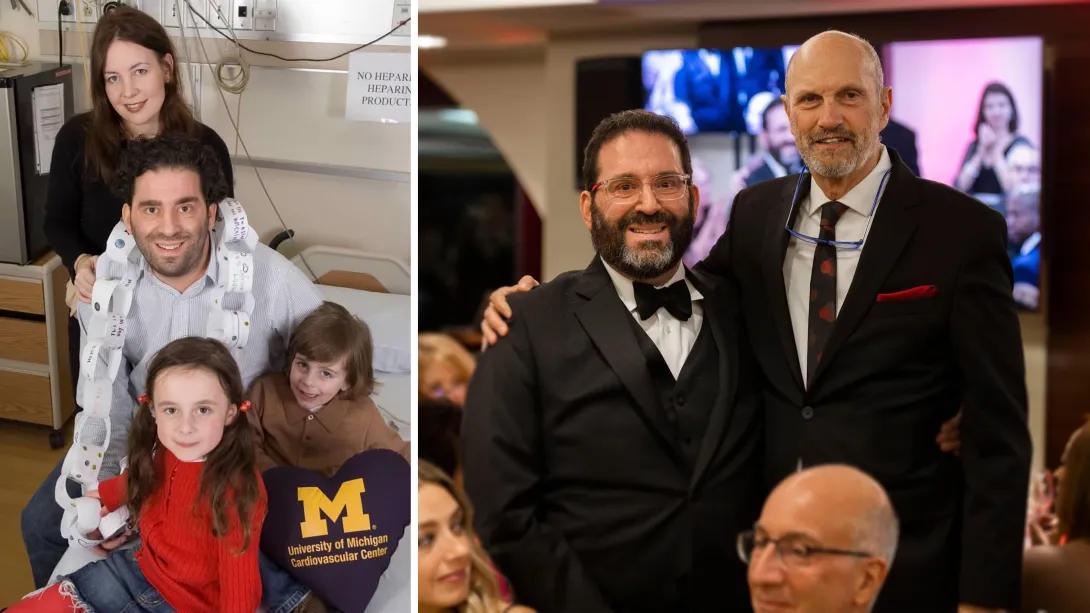
“It is so gratifying to see Mr. Morganroth doing so well, and he has been a wonderful spokesperson on behalf of transplantation and the value of donation,” Pagani said.
Morganroth has been incredibly active with organizations such as Gift of Life and the American Heart Association.
He also served on the Frankel Cardiovascular Center National Advisory Board and co-chaired the creation of the center’s Patient and Family Centered Care Program.
“When I go back to my two heart transplants and the time in the hospital when I thought I probably wasn’t going to survive, people will ask me why I expose myself to the memories of what I had to go through,” he said.
SEE ALSO: Family travels over 1,000 miles for son’s heart transplant
“The answer is always: if I can give back to U-M and those who took care of me and the family members who made the decision to donate their loved ones’ organs when I needed them so badly, I’m willing to relive what I went through. It’s all worth it.”
In 2023, the United Network for Organ Sharing reported a record year for organ transplants, including more than 4,500 heart transplants — an all-time high and increase of more than 10% over 2022.
The same year, U-M Health began performing heart transplant surgery using organs from donors who had recently died.
The process, known as donation after circulatory death, or DCD, has greatly increased the pool of possible organs to be transplanted in Ann Arbor.
“Medical science has provided for incredible advances in all aspects of care and extending the lifespan of their patients,” Morganroth said.
“Organ donation is a major contributor to overcoming organ damage and defects through transplantation but only with the participation of all of us. Making the decision to donate your organs or your loved one’s organs at the appropriate time benefits all of humankind. There is no better gift than the gift of life.”
Sign up for Health Lab newsletters today. Get medical tips from top experts and learn about new scientific discoveries every week by subscribing to Health Lab’s two newsletters, Health & Wellness and Research & Innovation.
Sign up for the Health Lab Podcast: Add us on Spotify, Apple Podcasts or wherever you get you listen to your favorite shows.

Health Lab
Explore a variety of health care news & stories by visiting the Health Lab home page for more articles.
Media Contact

Public Relations
Department of Communication at Michigan Medicine
Stay Informed
Want top health & research news weekly? Sign up for Health Lab’s newsletters today!
Featured News & Stories
Could preeclampsia become a thing of the past?
Treating a rare coronary artery aneurysm without open heart surgery
Timely treatment helps former baseball pro survive on-field stroke with no complications
Severe strokes linked to 5 times higher dementia risk
Fighting rejection antibodies to make heart transplant possible