Trial focuses on duration of therapeutic hypothermia for out-of-hospital cardiac arrests
U-M researchers led the largest U.S. trial to determine effective cooling durations
5:00 AM
Author |
Each year more than 250,000 people in the United States experience out-of-hospital cardiac arrests.
Approximately 90% of patients do not survive.
Since the heart is unable to pump blood into the brain during an arrest, many patients suffer irreversible brain damage even when the heart can be restarted.
For the past two decades, doctors have been using therapeutic hypothermia to prevent or treat brain injury in comatose survivors of cardiac arrest.
The process involves cooling down the body, which slows the body’s metabolism and triggers other protective mechanisms that reduce brain damage.
However, clinical trials of therapeutic hypothermia for out-of-hospital cardiac arrests have not consistently shown that the process works.
To get a clearer understanding, University of Michigan doctors and researchers led the Influence of Cooling duration on Efficacy in Cardiac Arrest Patient, or ICECAP, trial to determine if longer durations of cooling are more effective than those previously used.
SEE ALSO: It takes a village: Michigan Medicine celebrates cardiac arrest survivors
The largest U.S. trial focusing on this question, ICECAP included 71 hospitals in the U.S. between 2020-2025 and investigated adults who underwent cooling durations between six and 72 hours.
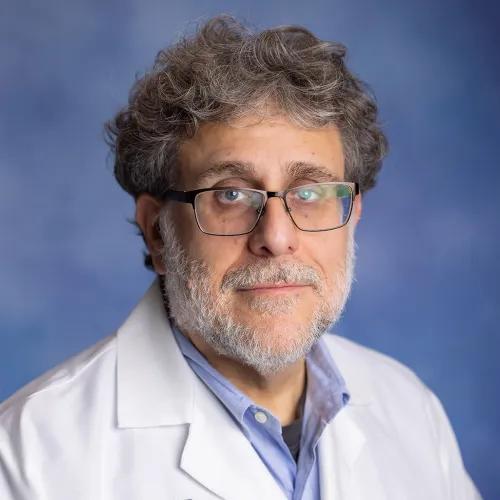
“We knew that cooling reduces brain injury, but we didn’t know how to make that work in a clinical environment,” said Robert Silbergleit, M.D., Professor of Emergency Medicine.
“Most of the previous trials used limited durations of cooling, but longer durations were better in laboratory experiments. We wanted to study whether longer durations were more beneficial for adults with cardiac arrest.”
The study focused on 1158 patients, across different genders and races, whose heartbeats were restored with or without a defibrillator.
It also included a range of injury severity seen in emergency departments.
Patients who suffer cardiac arrests fall into two categories: those who have a sudden arrest, usually from a heart attack and those whose bodies have slowed down over time.
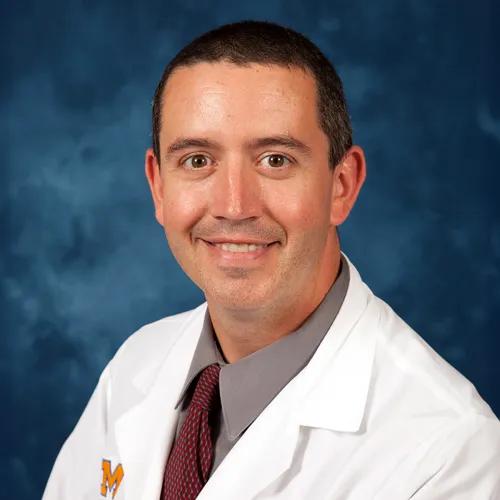
“The two situations created a lot of uncertainty in previous studies because those who have a sudden arrest are usually less sick and their hearts can be quickly restarted with defibrillators,” said William Meurer, M.D., Professor of Emergency Medicine and Neurology.
“It was important to study both populations because sometimes doctors can give up hope for patients who had a longer period of CPR and never received a defibrillator shock.”
The study found that outcomes did not change when they underwent cooling for longer durations.
Future analyses will explore whether duration of cooling was more important for some types of patients but not others.
Additionally, the survival rate in the non-shockable patients was higher than in previous studies with cooling.
“Our study showed that some patients undergoing therapeutic hypothermia can wake up even after two weeks,” Meurer said.
“Although it can be a difficult process to go through, it gives families and doctors hope.”
The team is conducting a similar study for pediatric cardiac arrest patients where they are looking at the benefits of cooling for up to four days.
Additional authors: Sharon D. Yeatts, Romergryko G. Geocadin, Akash Roy, Clifton W. Callaway, Viswanathan Ramakrishnan, Scott M. Berry, Angela F. Caveney, Sara Meyer, Nia Bozeman, Deneil M. Harney, Mickie Speers, Valerie Lynn Willis Stevenson, Cemal B. Sozener, Mohamud R. Daya, David G. Beiser, Jonathan Elmer, Imad R. Khan, Karen G. Hirsch, J. Hope Kilgannon, Michelle Nassal, Nicholas J. Johnson, Rachel Beekman, Teresa L. May and Jeremy Brown.
Funding/disclosures: This study was supported by the National Heart, Lung, and Blood Institute and the National Institute of Neurological Disorders and Stroke of the National Institutes of Health (grants UH3HL145269, U24HL145272, U24NS100659, and U24NS100655).
Paper cited: “Duration of therapeutic hypothermia after out-of-hospital cardiac arrest: the ICECAP randomized clinical trial,” The Journal of the American Medical Association. DOI: 10.1001/jama.2026.10247.
Sign up for Health Lab newsletters today. Get medical tips from top experts and learn about new scientific discoveries every week.
Sign up for the Health Lab Podcast. Add us wherever you listen to your favorite shows.

Health Lab
Explore thousands of health news & research stories by visiting the Health Lab homepage for more.
Media Contact

Public Relations
Department of Communication at Michigan Medicine
In This Story
William J Meurer, MD, MS
Professor
Robert Silbergleit, MD
Professor
Related
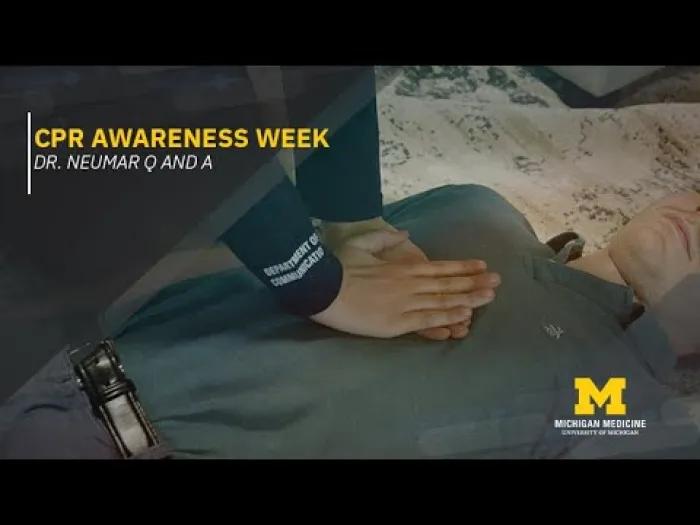
Most cardiac arrests happen at home. Here’s how to make yours ‘heartsafe’
Stay Informed
Want top health & research news weekly? Sign up for Health Lab’s newsletters today!
Featured News & Stories
A pediatric epilepsy fundraiser that changes lives

Digital alerts support timely treatment decisions of critically ill cardiac patients
What’s changing in Medicaid and what can you do?

Rabies is on the rise: Experts offer advice

E-Bikes are everywhere, but most parents say they don’t know enough about them