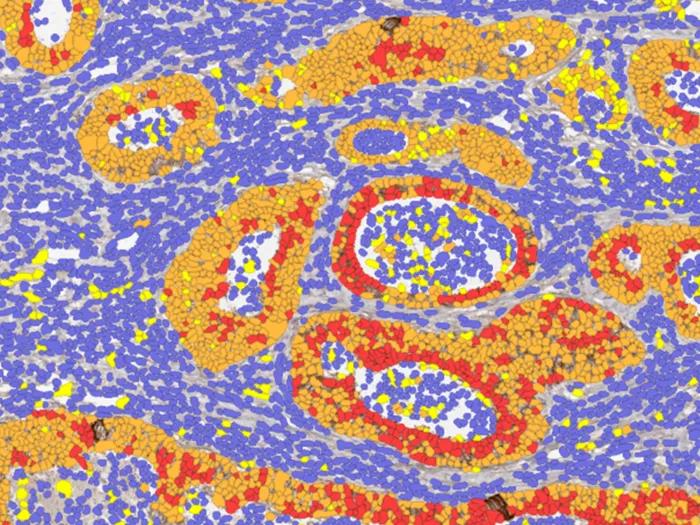
Treatment enhances anti-leukemia effect of bone marrow transplant, reduces recurrence, study finds
In a clinical trial, adding interferon treatment with a bone marrow transplant bolstered outcomes for patients with advanced, high-risk leukemia.
10:20 AM
Author |
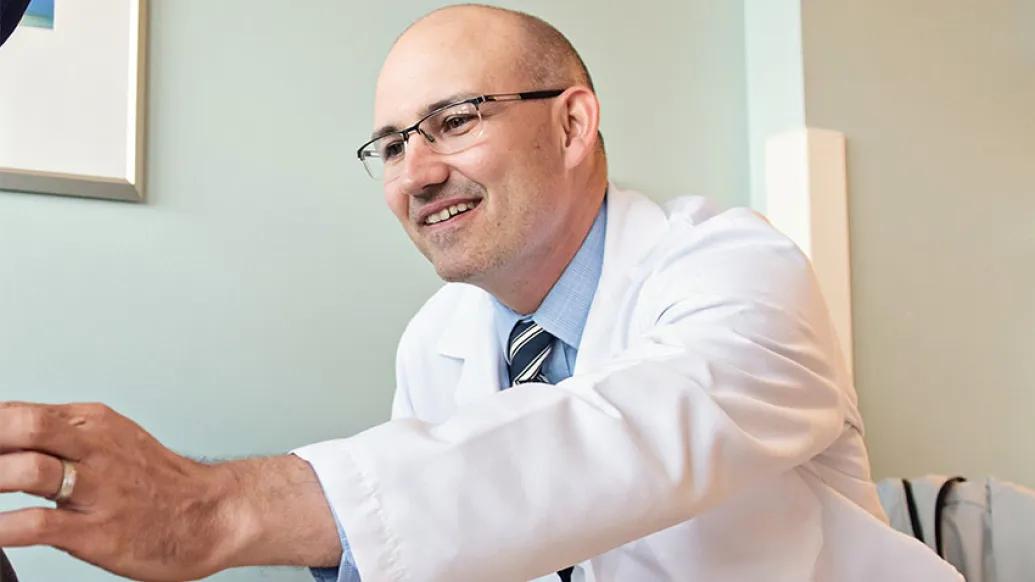
Researchers at the University of Michigan Health Rogel Cancer Center have identified a drug that, when given along with a bone marrow transplant, drops the risk of leukemia recurring by 20% among the high-risk patients.
The study, published in Blood Advances, looked at patients with an advanced form of acute myeloid leukemia that had grown resistant to other treatments. Their next step was a bone marrow transplant from a donor, a procedure that is sometimes not recommended because the patients are so sick. It's a risky option: even with a transplant, 60% of patients relapse within six months.
Previous laboratory studies by the group, led by Pavan Reddy, M.D., suggested the drug interferon could enhance function of a key subset of dendritic cells that can selectively enhance T cells which recognize and kill leukemia cells after transplant. Interferon-alpha is used in some autoimmune diseases, but the response does not last long.
To get around that, researchers looked at a long-acting form of interferon called pegylated IFN-alpha. It's commercially available to treat hepatitis B and C, as well as some blood cancers.
An early stage clinical trial enrolled 36 patients who received four doses of pegIFN-alpha, every 14 days beginning just before their transplant. At six months, 39% of patients had relapsed, reducing the disease relapse by over 20%. The drug was generally well-tolerated, with side effects in line with what many transplant patients experience. Moreover, the interferon treatment did not appear to increase graft-vs.-host disease.
MORE FROM THE LAB: Subscribe to our weekly newsletter
"Despite the curative potential of bone marrow transplant, relapse remains the greatest barrier to successful outcomes. This result suggests that a brief course of peg-IFN may increase the anti-leukemic potency of an allogeneic transplant. If this intervention can reduce relapse, even by 10-20%, it could translate into improved survival," said study lead author John Magenau, M.D., clinical associate professor of internal medicine at Michigan Medicine.
While more research is needed to confirm the findings in a larger, randomized clinical trial, the researchers note that new strategies are essential for this group of patients who have few options.
"It's not a homerun. We moved the bar up, but it's not high enough. We need to determine what else we can do in addition to interferon to get to those patients who still relapsed," said Reddy, division chief and Frances and Victor Ginsberg Professor of Hematology/Oncology.
The team has some ideas based on ongoing laboratory research to try to improve upon these results. In addition, they are looking to perform a randomized trial, potentially also exploring interferon in other types of transplants or blood cancers.
Additional study authors are Dan Peltier, M.D., Ph.D.; Mary Riwes, D.O.; Attaphol Pawarode, M.D.; Brian Parkin, M.D.; Thomas Braun, Ph.D.; Sarah Anand, M.D.; Monalisa Ghosh, M.D.; John Maciejewski, M.D., Ph.D.; Gregory Yanik, M.D.; Sung Choi, M.D.; Moshe Talpaz, M.D.
Funding for this work is from National Institutes of Health grants R01CA203542, R01HL152605, P01HL149633, R01CA217156, K23AI123595, and the Elsa U Pardee Foundation.
Paper cited: "Type1 Interferon to Prevent Leukemia Relapse after Allogeneic Transplantation," Blood Advances. DOI: 10.1182/bloodadvances.2021004908
Like Podcasts? Add the Michigan Medicine News Break on iTunes or anywhere you listen to podcasts.

Health Lab
Explore thousands of health news & research stories by visiting the Health Lab homepage for more.
Media Contact

Public Relations
Department of Communication at Michigan Medicine
Stay Informed
Want top health & research news weekly? Sign up for Health Lab’s newsletters today!
Featured News & Stories
Histotripsy research center launches to advance sound-wave-based cancer treatment
Prostate cancer and hereditary risk: A doctor explains the connection
U-M alumni return from Central Asia to seek treatment for their child at Mott
Path forward for glioblastoma treatment

The Future of Cell and Gene Therapies