Treating obstructive sleep apnea in children with Down syndrome
A sleep physician explains challenges and new approaches
5:00 AM
Author |
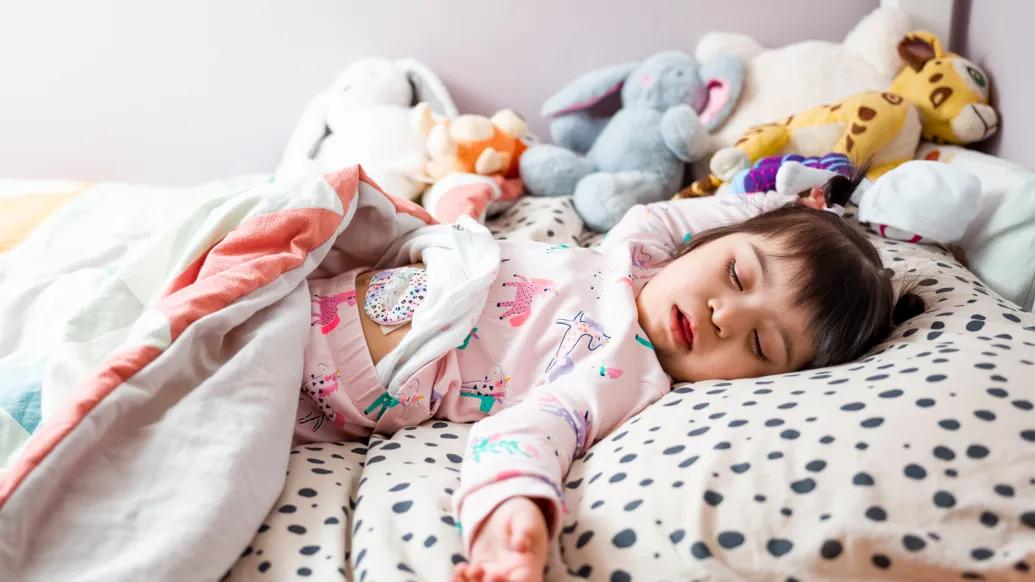
You likely know someone with obstructive sleep apnea, even if they themselves don’t know they have it.
Up to 80% of people with this chronic sleep disorder, which involves repeated episodes of blocked or restricted breathing during sleep, are unaware this is happening.
For children with Down syndrome, the risk for obstructive sleep apnea is particularly high and standard therapies often do not fully treat their symptoms.
Untreated obstructive sleep apnea can lead to serious health consequences, including heart attack and stroke, and finding effective treatments for children with Down syndrome presents additional challenges.
Researchers at Michigan Medicine are studying several approaches to improve care.
Two University of Michigan Health sleep experts, Ronald D. Chervin, M.D., M.S., Co-Director of the Division of Sleep Medicine in the Department of Neurology, and Fauziya Hassan, MBBS, M.S., Pediatric Pulmonologist at U-M Health C.S. Mott Children's Hospital, discuss why early treatment matters, the limitations of current therapies and research opportunities to improve treatment of obstructive sleep apnea in children with Down syndrome.
How common is sleep apnea in people with Down syndrome?
Chervin: Obstructive sleep apnea affects most children with Down syndrome.
In fact, about 50 to 80% of children with Down syndrome have the condition.
This rate is much higher than in the general population.
However standard first-line treatment in most instances — adenotonsillectomy, or removal of the tonsils and adenoids — often does not eliminate obstructive sleep apnea in children with Down syndrome.
Why is it so important to treat sleep apnea in patients with Down syndrome early?
Hassan: Children with Down syndrome have other medical conditions that impact the heart, lungs and brain over the lifespan. These issues may be exacerbated by untreated obstructive sleep apnea.
Obstructive sleep apnea can also be responsible for daytime problems, such as daytime sleepiness, inattention, hyperactivity, changes in mood or lower quality of life in children with or without Down syndrome.
The hope is that with effective treatment of sleep apnea in children with Down syndrome, current symptoms and long-range risks may both decline.
Why is it challenging to treat sleep apnea in patients with Down syndrome? What treatments are available?
Chervin: When adenotonsillectomy does not lead to complete resolution of obstructive sleep apnea, the typical second-line treatment is continuous positive airway pressure, or CPAP.
That avenue may not be tolerated by children with Down syndrome, though, and many remain untreated or incompletely treated.
Sometimes, patients are referred to otolaryngology surgeons (ear, nose and throat) to see whether additional surgeries to improve airflow through the upper airway may be helpful.
One newer approach is hypoglossal nerve stimulation, or HGNS, which involves an implantable device that electrically stimulates a nerve that moves the tongue and prevents it from blocking the airway.
The technology began with Inspire Medical Systems, and there are now several available HGNS devices.
How are researchers trying to develop better treatments?
Hassan: Obstructive sleep apnea that is difficult to treat has been a particular challenge for patients with Down syndrome, their families and their physicians for many years.
It can be severe and still untreated.
Alternative approaches being studied for these circumstances have the potential to make considerable improvements in the short and long term health and well being of many individuals who have Down syndrome.
We have three ongoing studies at Michigan Medicine that are investigating new treatments:
- The DOSA study is looking to find out whether supplemental oxygen, delivered by small tubes placed at the openings of the nostrils, may be better tolerated than CPAP and still effective at treating sleep apnea in these children.
- The ssNPA study is trying to find out whether a small, simple and highly portable nasal stent invented at Michigan Medicine might be a good alternative treatment.
- The TOPS-DS clinical trial is investigating whether, even before adenotonsillectomy, use of a thin, flexible scope to visualize the anatomy of the upper airway may offer opportunities to fine-tune the surgical approach and increase success rates.
As no alternative option has gained status as standard of care, and what is best under some circumstances may not be best in others, multiple approaches are being investigated.
In addition to positive airway pressure-based, other device-based or surgical approaches, effective medications may one day be available to treat obstructive sleep apnea.
To learn more about enrolling in these studies, check out these DOSA, ssNPA, TOPS-DS.
Louise M. O’Brien, Ph.D., M.S., Erin M. Kirkham, M.D., M.P.H., Madelyn Eckel, and Stephanie Rau, CCRP, all additionally contributed to the content of this article.

Health Lab
Explore thousands of health news & research stories by visiting the Health Lab homepage for more.
Media Contact

Public Relations
Department of Communication at Michigan Medicine
In This Story

Ronald D Chervin, MD, MS
Professor

Fauziya Hassan, MBBS, MS
Clinical Associate Professor
Stay Informed
Want top health & research news weekly? Sign up for Health Lab’s newsletters today!
Featured News & Stories
A pediatric epilepsy fundraiser that changes lives

Better prenatal care data could help prevent maternal complications, experts say

Michigan Alzheimer's Disease Research Center receives $22M to advance efforts statewide
Pediatric patient treated for rare kidney cancer
Engineered nanoparticles sensitize gliomas to radiotherapy