Timely response leads to complete recovery for young stroke survivor
Within two hours, he received two advanced stroke treatments
5:00 AM
Author |
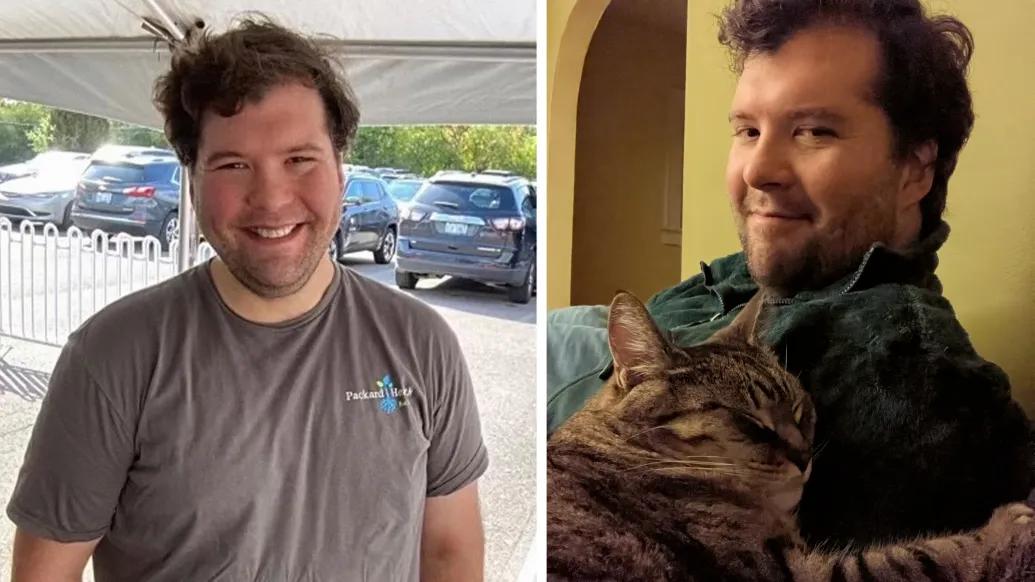
When a stroke occurs, the chance to fully recover decreases with each passing minute.
Fewer than 15% of patients make it to a hospital in time to receive the most advanced stroke treatments, which include clot-busting medications and a minimally invasive procedure called thrombectomy.
But when things go right — and the chain of survival works as intended — a person can walk away from a stroke with little to no damage to their brain or other organs.
For a Michigan man in his early 30s who never expected to have a stroke so young, the quick action of others allowed him to fully recover with no need for rehabilitation.
“Frankly, I’m very lucky that after such an awful thing happened everything went perfectly,” said Chris Kemp, 33, a therapist from Ann Arbor, Mich.
“It started with my partner recognizing something was wrong. She didn’t hesitate, and it started the cascade of events that saved my life.”
The stroke
In November 2023, Kemp had just finished dinner. He was playing with his cats, twirling a string, when he started feeling lightheaded.
“It was like your brain reaches for an explanation of why you’re feeling some off sensation, and you just can’t find it,” Kemp said.
“It was the dizziest I ever felt. I remember standing up and bracing myself on some furniture, and my partner was like, ‘Are you OK?’”
Kemp had stopped talking, not for a lack of trying. His right side went numb. His partner, Kristen, continued questioning him and called 911.
“The other part I feel lucky about is that this happened when I was awake,” he said.
“If it had happened when I was asleep, the outcome would have been completely different. I probably would have gone to bed just over an hour later.”
An ambulance arrived in minutes and transported Kemp to University of Michigan Health’s adult emergency department.
Hospital activation
By the time Kemp was seen in the ER, just over an hour elapsed since the stroke — well within the time limits for advanced treatment.
This activated the hospital-wide stroke code response through U-M Health’s Comprehensive Stroke Center. It started with emergency physician, Matthew Kennedy, D.O., who connected with neurology resident Kellen Quigg, M.D., and neurologist Mollie McDermott, M.D.
That team confirmed Kemp’s stroke through brain imaging and a comprehensive stroke exam. He was given Tenecteplase, the intravenous clot busting medication more commonly called TNK.
The stroke team also includes experts in neurosurgery and neurointerventional radiology. Who provides the treatment depends on the type and presentation of the stroke.
“Having a specialized team on call at all hours allows patients to receive the most advanced care in a timely manner and, thus, have the greatest chance for recovery,” said Aditya S. Pandey, M.D., chair of the Department of Neurosurgery at U-M Health.
In Kemp’s case, a team led by neurointerventionalist Zachary Wilseck, M.D., performed an endovascular thrombectomy. This involves a technology called a stent retriever that is inserted through an artery and routed up to the brain’s blocked blood vessel. A wirelike cage “traps” the clot before it is pulled out of the body.
“Without these treatments, Mr. Kemp may have experienced difficulty speaking or walking for the rest of his life,” said Christina Lineback, M.D., who led the inpatient stroke neurology team that took over Kemp’s care in the hospital.
“He was in the right place at the right time and our multidisciplinary team was able to move quickly to ensure that it occurred as promptly as possible.”
More than two-thirds of Americans who have a stroke require rehab services, and around 40% experience moderate to severe impairments, according to the American Heart Association.
A complete recovery is less common. But Chris Kemp walked out of the hospital with no rehab needs.
“I woke up in recovery and I was able to talk and move — all of it had returned to normal compared to the hour before when I wasn’t able to function at all,” he said.
“I called my mom [after surgery], who was not expecting to hear from me so soon. It was shocking and, frankly, kind of elating. I was expecting to have some impairments, but I didn’t end up backsliding. Things just kept getting better from there.”
Moving forward
Kemp soon returned to his routine, continuing to see clients at Packard Health, gardening regularly and spending time with his partner.
Despite the rapid recovery, he says, there are natural adjustments to life that can sometimes be challenging.
“I had to learn to be OK with some of the existential uncertainty that came afterwards,” Kemp said.
“I was told by many people that I should not always expect to feel good after this, so it has been about creating a balance. It’s still unfolding, but there is a pretty profound mindset change. I don’t think I took life for granted before, but I really can’t now.”
Around one-third of stroke survivors experience depression sometime after the event. Support groups, whether in person or virtual, provides opportunities for survivors and survivor supporters to discuss challenges and build new friendships.
Get information on stroke patient resources.
Live your healthiest life: Get tips from top experts weekly. Subscribe to the Michigan Health blog newsletter
Headlines from the frontlines: The power of scientific discovery harnessed and delivered to your inbox every week. Subscribe to the Michigan Health Lab blog newsletter
Like Podcasts? Add the Michigan Medicine News Break on Spotify, Apple Podcasts or anywhere you listen to podcasts.

Health Lab
Explore thousands of health news & research stories by visiting the Health Lab homepage for more.
Media Contact

Public Relations
Department of Communication at Michigan Medicine
In This Story
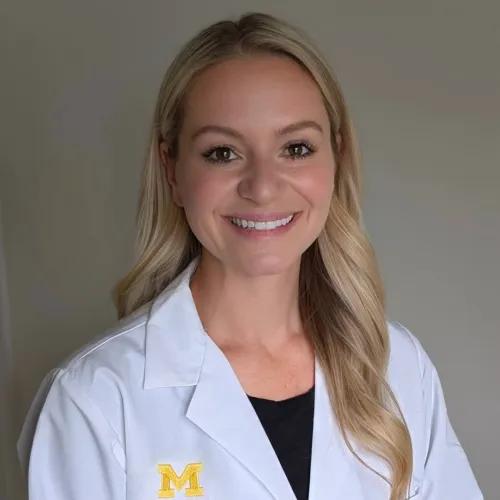
Christina Lineback
Clinical Assistant Professor
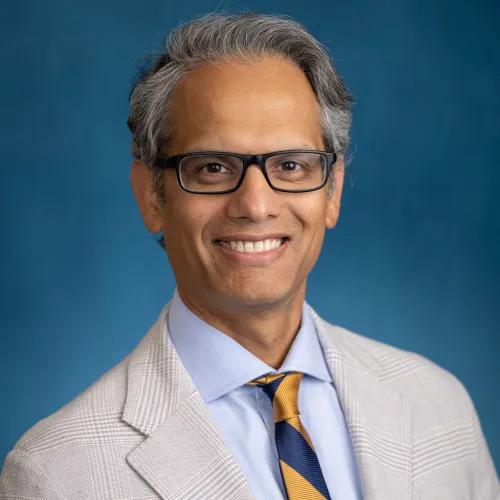
Aditya S Pandey, MD
Professor
Stay Informed
Want top health & research news weekly? Sign up for Health Lab’s newsletters today!
Featured News & Stories
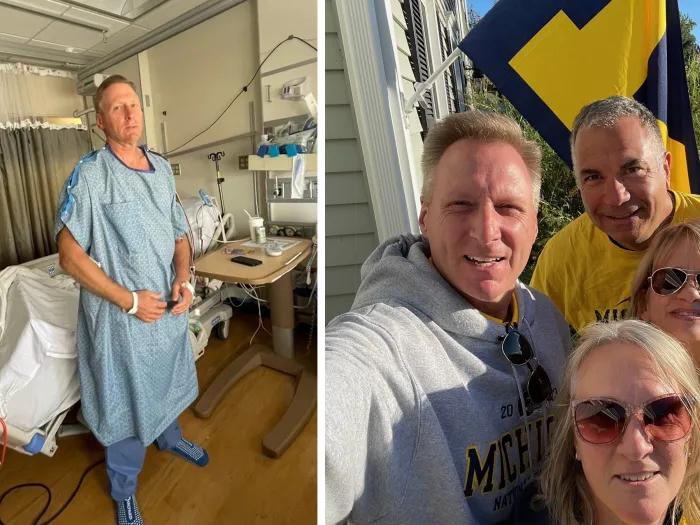
Michigan fan saved after wife recognizes stroke at football game
Better prenatal care data could help prevent maternal complications, experts say
Many hospitals still don’t do enough to prevent UTIs from catheters

Rabies is on the rise: Experts offer advice

Mediterranean diet can slow progression of age-related macular degeneration