Throw a fast ball without throwing out your arm
Experts give advice on how to throw your best, injury free
5:00 AM
Author |
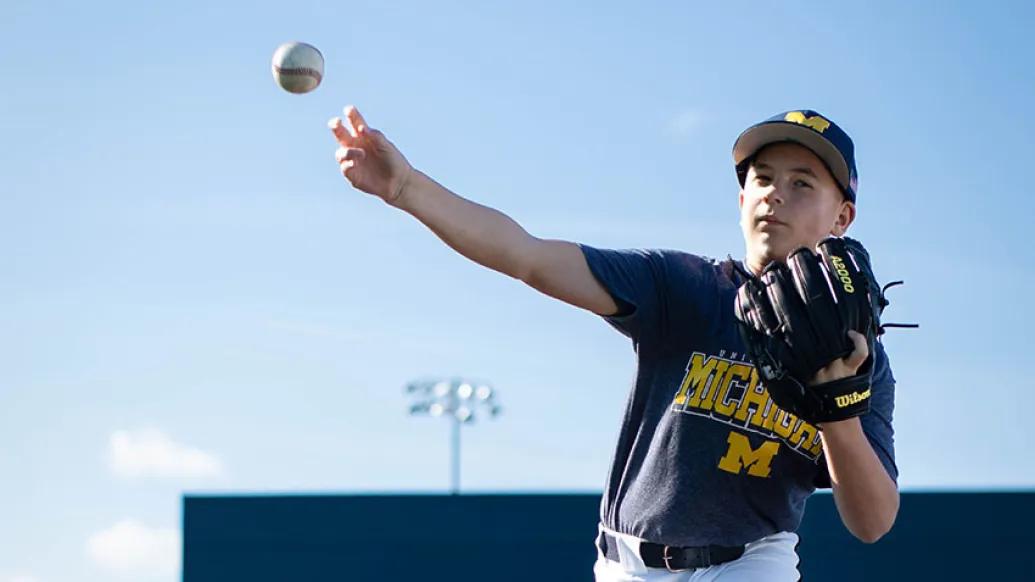
With the summer season in full swing, the long sunlit days encourage people to get outside and play ball.
But for throwing sports like baseball or softball, overuse places the shoulder and elbow at risk of injury.
For every ball player from youth stars to weekend warriors – Michigan Medicine experts explain common throwing sport injuries as well as how to best treat them.
Common injuries
Pain typically arises at the mid-point of the throwing motion when the arm is in the maximum amount of external rotation. Most often, the pain starts gradually and worsens over time if left unchecked.
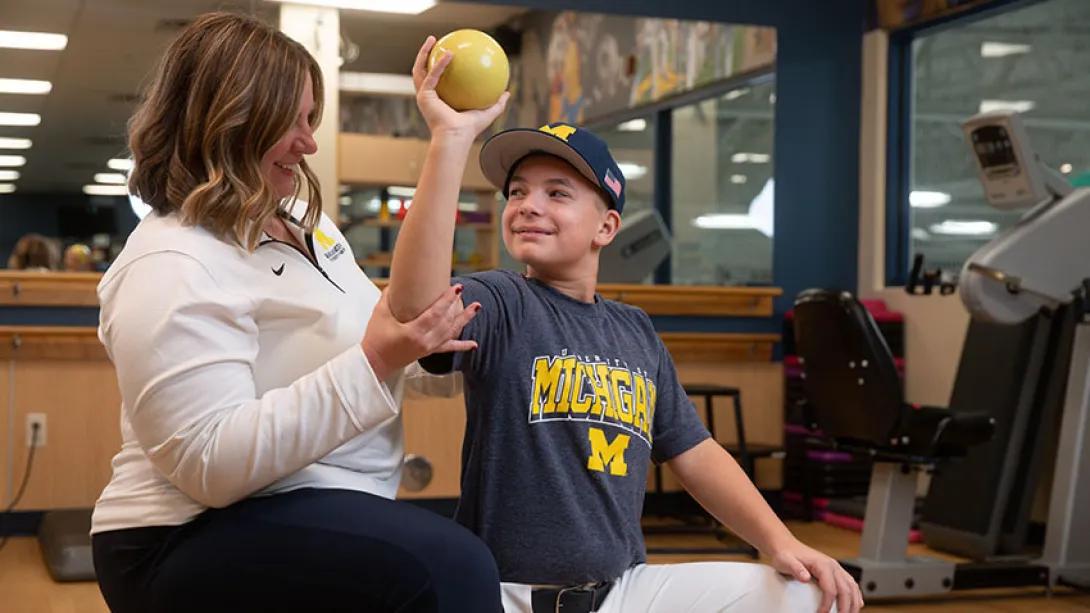
“The most common injuries we see in throwing sport athletes are elbow and shoulder problems,” said Jennifer DeMink, PT, DPT, physical therapist lead of the MedSport Performance Throwing Program which provides specialty physical therapy services geared towards throwing athletes.
Athletes between 10 to 16 years old are at high risk for throwing injuries.
Youth injuries are usually due to weakness of the scapular (shoulder blade) muscles. They’re putting more stress on the shoulder or the inside of their elbow with the normal throwing motion because they don’t have the strength behind the shoulder.
“They’re getting taller, their muscles are stretching, their bones are growing,” said DeMink. "The body is already going through a lot of changes, and if you add a lot of stress to it, it can be a recipe for injury.”
Don’t play through pain
For athletes of all ages, playing through the pain can have negative results.
“If you’re throwing and it hurts, don’t play through it. You’ll likely make it worse and harder to recover from in the end,” said Eileen Crawford, M.D., pediatric sports medicine surgeon and Harold W. and Helen L. Gehring Early Career Professor of Orthopaedic Surgery.
Crawford recommends that parents have their kid’s shoulder pain checked out sooner rather than later, especially if they are still growing.
Most often the pain can be treated with rest and physical therapy, but waiting too long before treatment can lead to surgery being the only treatment option.
Surgery and recovery
The most common overuse injury that requires surgery in youth throwing athletes is osteochondritis dissecans.
The condition “occurs when you have repetitive micro trauma to a vulnerable area that the body is unable to heal,” Crawford said.
This injury typically occurs in early adolescent years, around 11 to 14 years old and is most seen in pitchers.
Sometimes, rest is enough to heal. But, when the injury requires a surgery, post-operative recovery takes at least six months.
SEE ALSO: Tips for Treating and Preventing ACL Injuries in Athletes (michiganmedicine.org)
Recovery from a surgical procedure is not only a physical challenge for kids, but a mental one too.
“These athletes are often playing their sport year-round at a high level,” said Crawford.
“If their injury requires surgery, they have to shut down completely from doing something that’s not just physically enjoyable for them, but also a big part of their social life and identity.”
Tips for injury prevention
There are ways to prevent throwing sport injuries before they occur. A team at MedSport Performance Throwing Program suggest:
- Manage throwing volume by following age specific pitch count guidelines
- Avoid playing both pitcher and catcher
- Practice arm care throughout the year with strengthening and mobility exercises
- Take time off
- Play other sports
“Athletes shouldn’t be throwing a baseball for four months out of the year,” said DeMink.
During time off from throwing, playing different sports can help with neuromuscular development and make sure certain parts of the body aren’t under high levels of stress all the time while other parts of the body are getting neglected.
The choice of cross-training sport is up to the athlete. DeMink suggests that athletes try any sport that moves the body differently.
“For adults re-entering recreational softball or baseball leagues, go gradually and listen to your body,” Crawford said.
“Your body can adapt really well to new activities, but it has to be able to do that on a gradual basis.”
DeMink recommends starting in positions like first or second base where you don’t need to make quite as long of throws to ease back into the sport.
Again, a good strength and mobility program will help protect the joints from injury for adult athletes.
“Your joints need to have the mobility necessary for the sport to prevent using bad mechanics while throwing which can lead to injury. Stretching is really important,” Crawford added.
For athletes of all ages, core strength is essential for proper throwing mechanics and injury prevention.
“These are rotational athletes. At the MedSport Throwing Program, we work lower body and core – everything that leads up to the transfer of energy to the ball to create velocity,” DeMink said.
“It’s not just your arm that’s throwing. It’s the whole body. That’s something that I want to teach these younger kids. A lot of time, that realization also helps improve their mechanics and sets them up for longevity in throwing without pain.”
Following these guidelines and listening to your body when pain arises can help athletes throw their best for years to come.

Health Lab
Explore thousands of health news & research stories by visiting the Health Lab homepage for more.
Media Contact

Public Relations
Department of Communication at Michigan Medicine
Stay Informed
Want top health & research news weekly? Sign up for Health Lab’s newsletters today!
Featured News & Stories

A concussion expert and football father discusses why he values teamwork over zero-risk
Why tendons heal so poorly and how researchers hope to fix them

A Gift to Benefit All: Bill and Sally Martin’s Visionary Support for Sports Medicine
Rethinking how clinicians learn to feel disease

Expanding camp adventure for all