Thriving after a rectal cancer diagnosis
Kyle Kipke listened to his body and insisted on a colonoscopy. The result was a timely diagnosis that led to effective treatment
5:00 AM
Author |
Timing, as the saying goes, is everything.
For Kyle Kipke, that was never more true than in early 2022 when he sat in his doctor’s office at the University of Michigan Rogel Cancer Center and heard the word “treatable.”
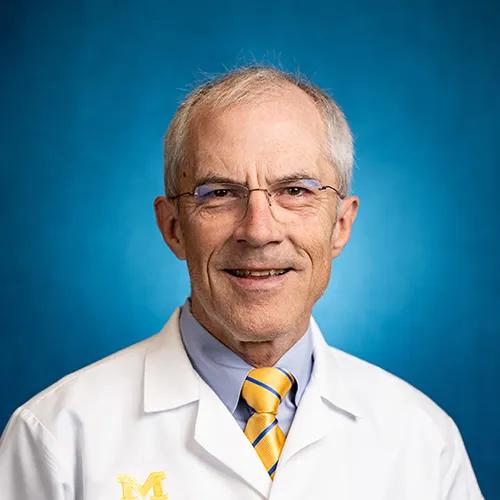
An earlier test had revealed Kyle had a rectal tumor, but his oncologist, John Krauss, M.D., Medical Director of the multidisciplinary colorectal cancer clinic at the Rogel Cancer Center, says that it had been diagnosed in time.
With chemotherapy and radiation, Kipke had an excellent chance of living a long, healthy life.
“At that point, I felt more confident that things were going to work out,” Kipke said. “They told me, ‘Thank god you came in when you did.’”
Up to this moment, it had been a challenging few months.
Kipke first began experiencing fatigue in the fall of 2021.
He frequently needed to go to the bathroom and there was blood in his stool.
Kipke called his primary care physician to schedule a colonoscopy.
Initially, the wait time was 4-6 months, but Kipke pressed for an earlier appointment since past colonoscopies had revealed polyps.
Kipke knew something was off.
“I was so worn out, I needed to go to bed at 5:00 in the afternoon, but I wasn’t even sleeping that well. I could tell that I was losing some weight, the way my clothes fit.”
Kipke says there is a history of prostate cancer on his father’s side: his father and grandfather, as well as an uncle, died from it.
So around age 35, his mom was insistent that Kipke and his brothers get regular checkups.
“I was always getting yearly colonoscopies and I was aware of how my body operated,” Kipke said. “I knew that there was something going on.”
Just after Valentine’s Day in 2022, Kipke had his colonoscopy.
His sister went with him to the appointment, and she was there when the doctor told Kipke he’d found a tumor.
“He told me they thought the tumor was cancerous. He said they’d already contacted the cancer center and someone would be in touch with me.”
Kipke and his sister were mostly silent on the way home.
“We were both in complete shock,” he said.
After that, things moved quickly.
Kipke got a call from Rogel within 24 hours of his colonoscopy. His next appointment was in a matter of days.
There, doctors laid out the treatment plan that included chemotherapy and radiation.
“From the time they found the tumor to when the treatment plan started, it was no more than two weeks,” he said.
Treatment and support
After his chemotherapy started, Kipke says the doctors discovered a pea-sized spot of cancer on his liver that had started to spread.
“I had a minor operation to cut that out. They checked my liver throughout treatment and nothing ever came back on it.”
For the next six months, Kipke went to the hospital every Friday morning for his chemotherapy infusion.
Every other Friday, he’d get a “fanny pack” of chemo that he’d take home with him for the weekend.
“I gained weight and never lost my hair,” Kipke said. “I remember I asked the nurse, ‘Am I supposed to lose weight?’ She told me that they engineer the chemo for your body type. I was young, healthy to begin with, and my body accepted it. I was very fortunate.”
At his appointments, Kipke says that Krauss and physician assistant Pamela Fisher treated him with respect and compassion.
“We’d talk a lot about Michigan football because Fischer’s sons played for U-M, and Dr. Krauss follows the team,” Kyle said.
“They connected with me as a human and answered all my questions. They were helpful but also direct, which is what I wanted. I didn’t want someone to sugar-coat something. I owe them a huge debt.”

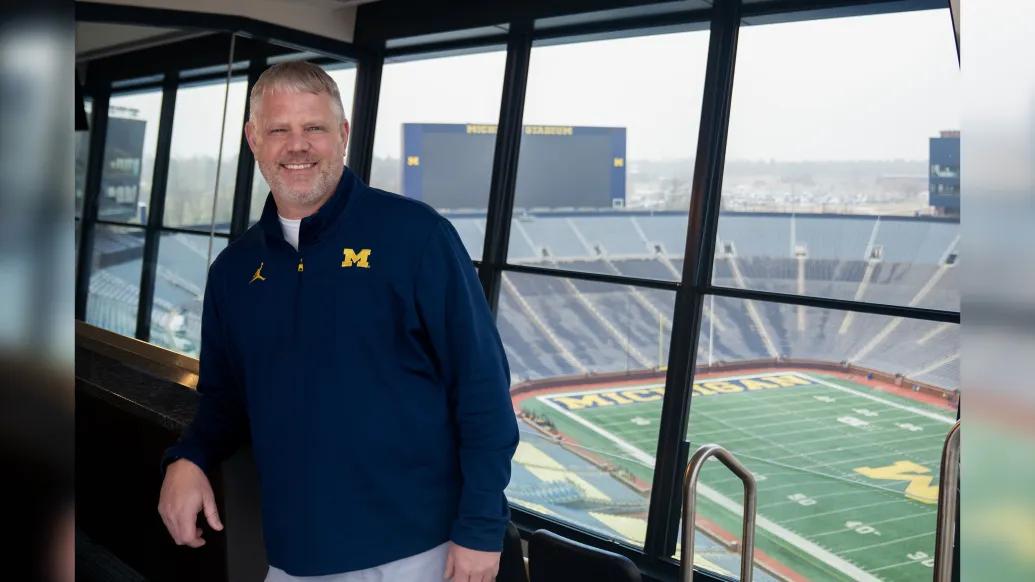
Kipke also had support from family and friends, who took him to appointments, as well as colleagues at the University of Michigan Stadium, where he works as a facilities manager.
“Everyone was so helpful and would check on me,” he said.
Kipke has worked for U-M for more than 17 years and says that it was important to him to show up for his job when he could, even while in treatment.
“In my mind, if I could continue to go to work and continue my schedule, it would make me feel good compared to being off work. It was a mindset of staying active.”
After six months of chemo and two months of radiation, Kipke rang the bell on the wall at the hospital that signals the end of treatment. It was October 2022.
“All the staff were out there when I rang it, everyone clapped and congratulated me.”
A new balance
Today, Kipke says he is active and healthy “Going through rectal cancer for eight months and still being able to do what I did before I got sick—that’s a huge accomplishment.”
Even so, he learned some critical lessons along the way, including the importance of resting when his body tells him to.
“Before the cancer, my body would tell me to rest and I’d keep going. But now, I let myself stop.”
He also started seeing a therapist for his mental health.
“It was such a whirlwind, stressful eight months. When it’s over, you start looking back at it and that’s when you need help processing everything that happened.”
While his body is still experiencing the effects of the chemotherapy and radiation, including neuropathy in his feet and hands, Kipke says that mentally, he’s healthier than he was before this experience.
“I learned how to stop focusing on things that I can’t control or are materialistic and focus on my physical and mental health,” he said.
“I love sharing my story because I want people to know you can survive. Even though someone says you have cancer, there can still be treatment.”
He adds that his story started with listening to his body, and he encourages other people to do the same.
“If you think something’s off, go get it checked out. Be responsible and advocate for yourself.”
Sign up for Health Lab newsletters today. Get medical tips from top experts and learn about new scientific discoveries every week.
Sign up for the Health Lab Podcast. Add us wherever you listen to your favorite shows.

Health Lab
Explore thousands of health news & research stories by visiting the Health Lab homepage for more.
Media Contact

Public Relations
Department of Communication at Michigan Medicine
In This Story
John C Krauss, MD
Clinical Professor
Related
How Colon and Rectal Cancer Differ
What it’s like to have lived through rectal cancer
Stay Informed
Want top health & research news weekly? Sign up for Health Lab’s newsletters today!
Featured News & Stories

Glucose drives STAT3 activation in colorectal cancer cells, leading to tumor growth
Exceptional response to immunotherapy gives patient with liver cancer more milestones to celebrate
FDA-approved drug offers hope for patients with polycythemia vera, a rare bone marrow disorder
Pediatric patient treated for rare kidney cancer
Rare cancer diagnosis inspires community of support