Is there a "cliff effect” in physical activity after high school?
1 in 3 parents say their young adult children don’t get enough physical activity, with time, screen use and lack of interest as top barriers
11:06 AM
Author |
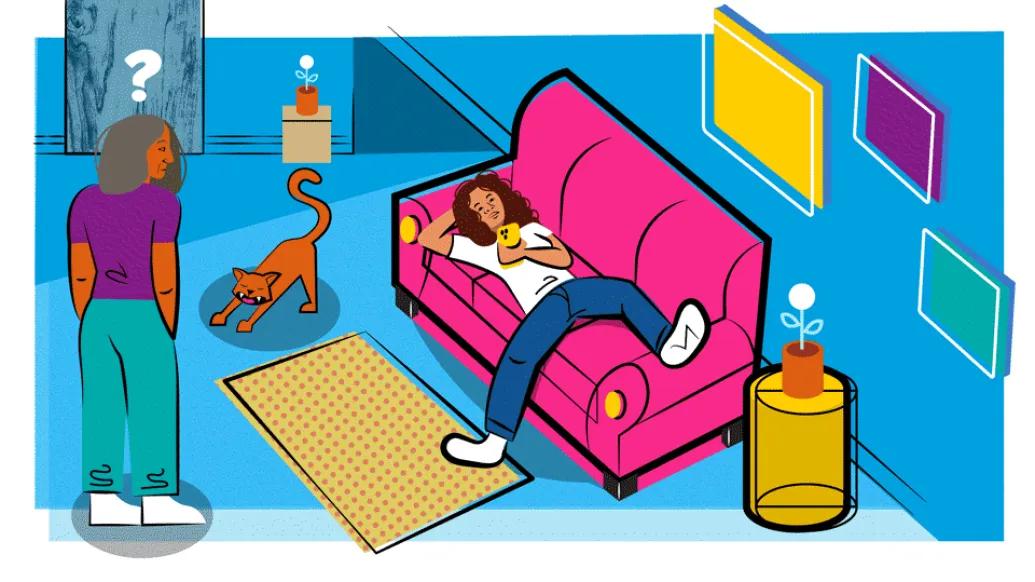
Younger children and teens often have built-in opportunities to stay active through gym class, sports and extracurricular activities.
But after high school, those structured options may disappear.
And many young adults struggle to stay active during this transition, a national poll suggests.
One in three parents say their child ages 18 to 25 is minimally active or inactive, according to the University of Michigan Health C.S. Mott Children’s Hospital National Poll on Children’s Health.
“Physical activity has a profound impact on overall health, but many people do not maintain the same level of activity as they get older,” said Mott Poll Co-Director and Mott pediatrician Susan Woolford, M.D.
“Young adulthood can be a particularly challenging time, especially as structured opportunities like sports and gym classes fall away. After high school, young adults often need to put in more effort to find activities they enjoy and make time for them.”
Barriers to staying active
Parents point to several reasons their young adult children are not getting enough physical activity.
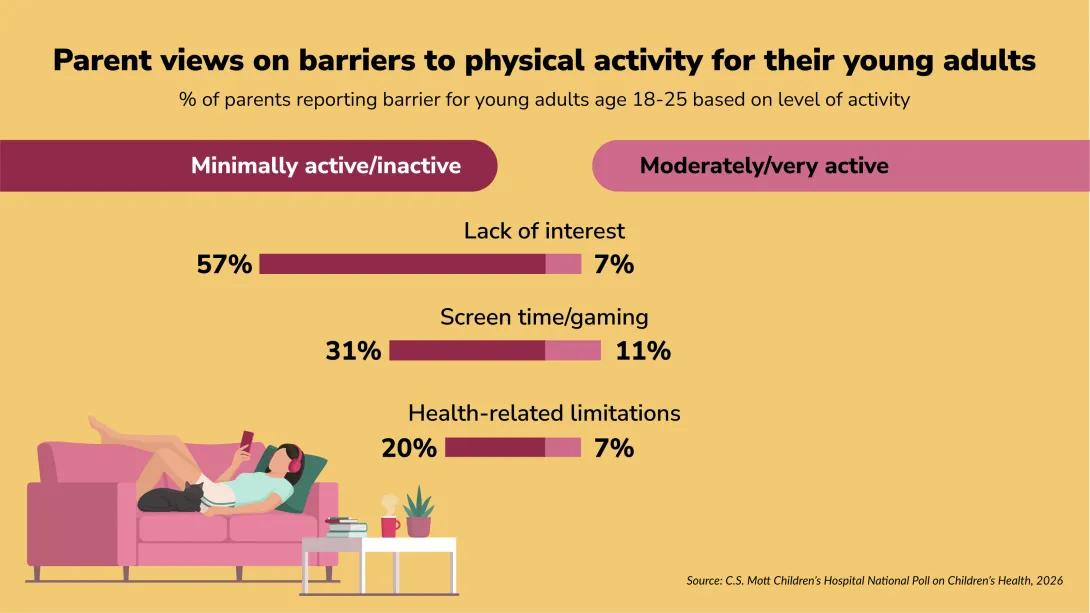
The most common barriers include lack of time, lack of interest and screen time or gaming.
Fewer parents cite cost, lack of a workout partner or health limitations.
Parents of minimally active or inactive young adults were far more likely to point to lack of interest and screen use as major challenges.
“Parents are telling us that interest is a major barrier,” Woolford said.
“If young adults do not find physical activity enjoyable, they are much less likely to make it part of their routine.”
Activity patterns shift with age
The nationally representative report is based on responses from 1,550 parents surveyed in February who have at least one child aged 18 to 25.
According to parents, younger adults ages 18 to 20 are more likely to participate in organized sports or social activities like dancing or skating.
Those 21 and older are more likely to rely on gym workouts or physical activity related to their jobs.
“This shift may reflect a move away from social forms of activity to more independent ones,” Woolford said. “Social connection can make physical activity more enjoyable and may help people stay active longer.”
Many parents report trying to encourage their young adult children to be more active.
Common strategies include verbal encouragement, suggesting activities, exercising together and, in some cases, paying for programs or offering incentives.
However, parents of minimally active young adults are more likely to say their efforts are not successful.
“Encouragement alone is not always enough,” Woolford said.
“Finding activities that are enjoyable and accessible is key to helping young adults build lasting habits especially if activities can be linked to things they value.”
A ‘buddy’ approach, Woolford notes, can make a difference.
Being active together can build accountability while also making the experience more social and rewarding, she says.
Building healthy habits for the future
Parents of less active young adults are more likely to worry about long term health effects and even potential impacts on employment.
Yet only about one in four parents say a health care provider has discussed physical activity with their child in recent years.
That represents a missed opportunity, Woolford says.
Health care providers can play an important role in helping young adults find safe and appropriate ways to stay active, especially for those with health concerns.
She says young adulthood is a critical time for establishing lifelong health habits.
“A common challenge for young adults is maintaining a healthy lifestyle as they become more independent,” Woolford said.
“For some, that means fitting exercise into a busy schedule or limited budget. For others, it’s about building a routine.”
“Parents can still play an important role during this transition,” she added. “The habits formed at this stage can shape long term health and well being."
Sign up for Health Lab newsletters today. Get medical tips from top experts and learn about new scientific discoveries every week
Sign up for the Health Lab Podcast. Add us wherever you listen to your favorite shows

Health Lab
Explore thousands of health news & research stories by visiting the Health Lab homepage for more.
Media Contact

Public Relations
Department of Communication at Michigan Medicine
In This Story

Susan J Woolford, MD, MPH
Associate Professor
Stay Informed
Want top health & research news weekly? Sign up for Health Lab’s newsletters today!
Featured News & Stories

U-M-led consortium to receive up to $52 million in NIH funding to study why viral respiratory infections affect children differently

Comprehensive DNA sequencing reveals hidden drivers of cancer
4 in 5 parents say having a baby is too expensive

Many older adults make Medicare decisions quickly and most don’t change plans, poll finds
‘Molecular glue’ stabilizes protein that inhibits development of non-small cell lung cancer and uterine cancer