Texas man walking on ‘new legs’ after complex vascular procedures
Multiple doctors told him they couldn't operate before he visited U-M Health
5:00 AM
Author |
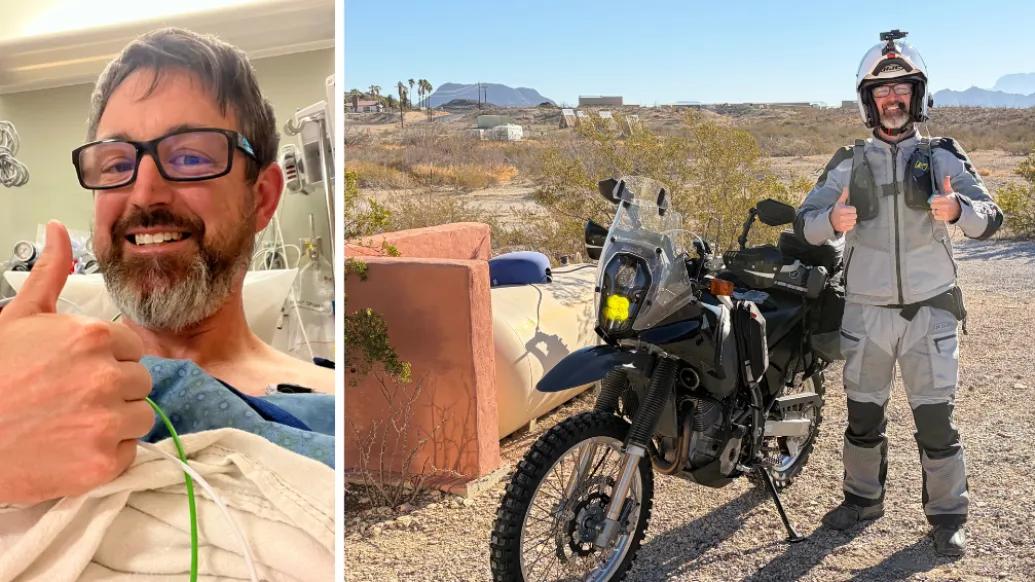
A Texas man walks five miles daily on “new legs” after undergoing a minimally invasive vascular procedure to restore blood flow to blocked vessels.
Jeff Elliott, 46, endured pain and swelling in his legs for years due to inferior vena cava atresia.
This rare vascular anomaly occurs when the veins that carry blood from the lower half of the body back to the heart are blocked.
“It hurt to do anything,” said Elliott, who lives outside of Austin, Texas.
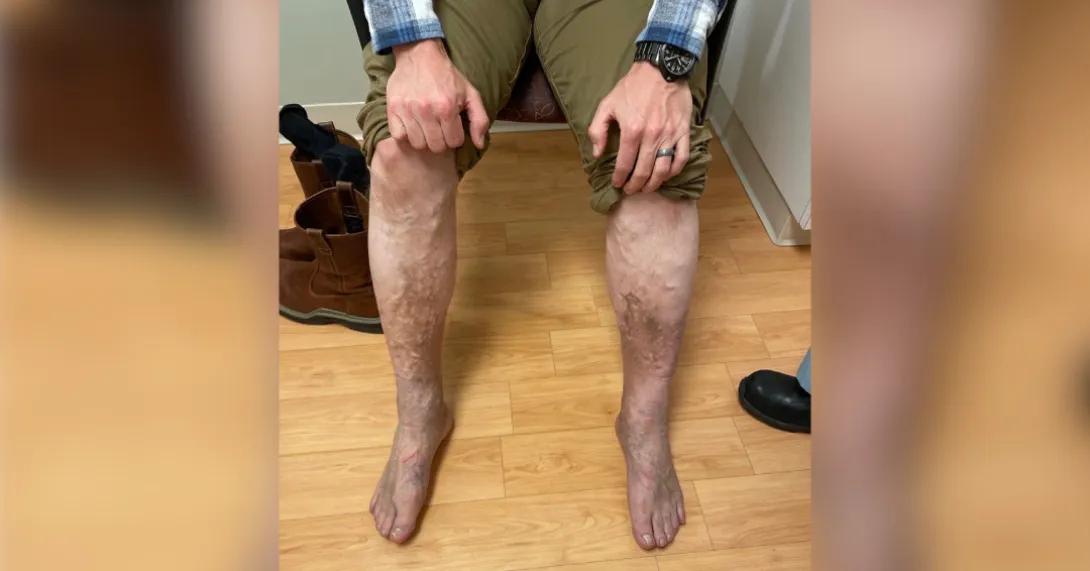
“I would swing one swollen leg in front of another to walk. I felt like my skin was going to split.”
Elliott did not learn about his condition until his early 30s.
Doctors discovered it during a procedure to remove a deep vein thrombosis — a blood clot common among people with IVC atresia — from his leg.
For years, his local care providers said they could not correct the issue.
Blood flowed down to his legs through his arteries but could not efficiently come back up.
By the evening, his veins bulged and his legs swelled to twice their normal size.
Elliott walked several miles per day to stay active as his symptoms exacerbated.
By 2024, he couldn’t even sit in a chair.
“Pushing myself was my survival tactic,” he said.
“I woke up depressed knowing that I would feel worse with every step. At one point, I considered amputation.”
Seeking hope and treatment
In October 2024, Elliott’s wife, Sarah, found a Facebook group for people with IVC problems.
With the community’s help, she compiled a list of specialists across the United States who treat the condition.
Elliott says many physicians turned down treating him due to a stent in his pelvic vein that was incorrectly placed during a past procedure at an outside hospital.
Eventually, he met a woman in the Facebook group who suggested that he contact University of Michigan Health to meet Minhaj S. Khaja, M.D., M.B.A., an interventional radiologist and member of the multidisciplinary Venous Health Program at the Frankel Cardiovascular Center.
“He got back to me in a few days with a plan and two backup plans,” Elliott said.
“It seemed too good to be true after so many people told me that they couldn’t do it.”
After consulting the Venous Health Program team, including vascular surgeon Andrea Obi, M.D., Khaja decided to treat Elliott using minimally invasive techniques including sharp venous recanalization.
In conventional venous recanalization, an interventional radiologist uses catheters and wires and navigates through the blocked veins and creates enough space to place stents.
Sharp recanalization requires the proceduralist to use a needle to traverse through very tough occlusions before opening the veins.
“We needed to use a directional needle to poke through a stent that was blocking the path to Mr. Elliott’s occluded vein,” said Khaja, who's a professor of radiology and cardiac surgery at University of Michigan Medical School.
“The procedure is very complicated, but we were cautiously confident that we could deliver a solution to provide him relief after years of pain.”
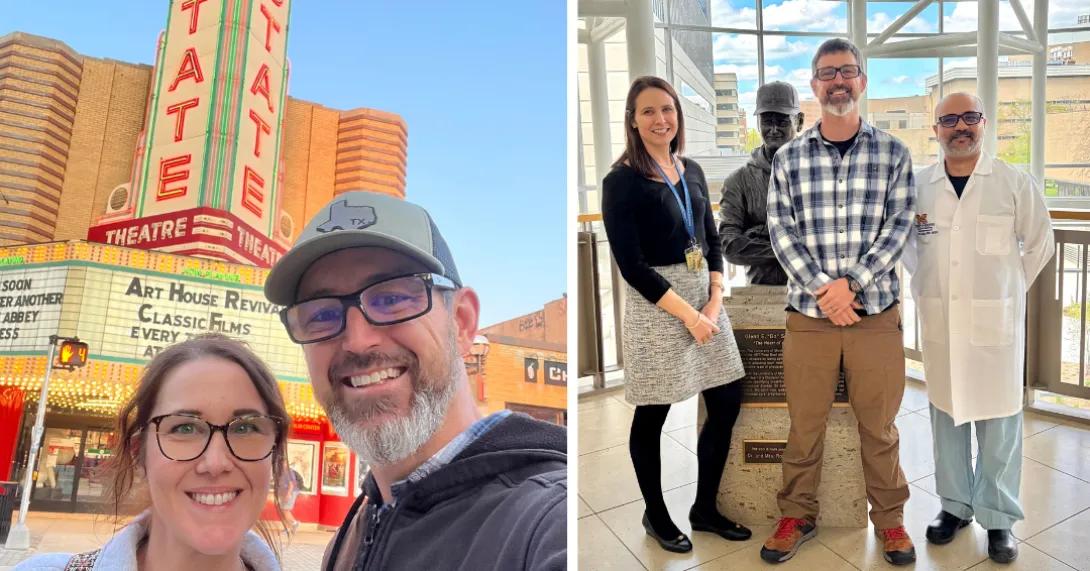
The intervention, which lasted 9 hours, occurred in March 2025.
Obi then performed a procedure to remove some diseased veins in Elliott’s legs and redirect blood flow to the healthier channels in October 2025.
She was also ready to pursue a surgical path if the intervention failed.
“Having a multidisciplinary group allows us to weigh each possible option amongst the range of medical, endovenous and open surgical procedures,” Obi said.
“We can then guide the patient into the best possible option and backup option according to their priorities.”
A fresh start on new legs
Elliott says he felt the benefit of a successful procedure almost immediately.
During his recovery at the hospital, he would walk laps on the floor with a nurse.
One year later, he walks five miles each day and regularly does weight training.
“It’s like having new legs,” he said. “Every day, I’m so thankful. I go to bed and can still see my ankles and kneecaps. I just can’t believe it.”
Obi removed more diseased veins from Elliott’s legs and abdomen last fall, and he will return to U-M Health next month for another round of treatment.
He has since referred several people with IVC problems to the Venous Health Program.
Aside from his trips to Ann Arbor, Elliott is an avid adventure motorcyclist who takes many backcountry rides around the U.S.
In February 2026, he made a return trip to Pinto Canyon near Big Bend National Park in Texas, the site of one of his final rides before pain caused him to stop altogether.
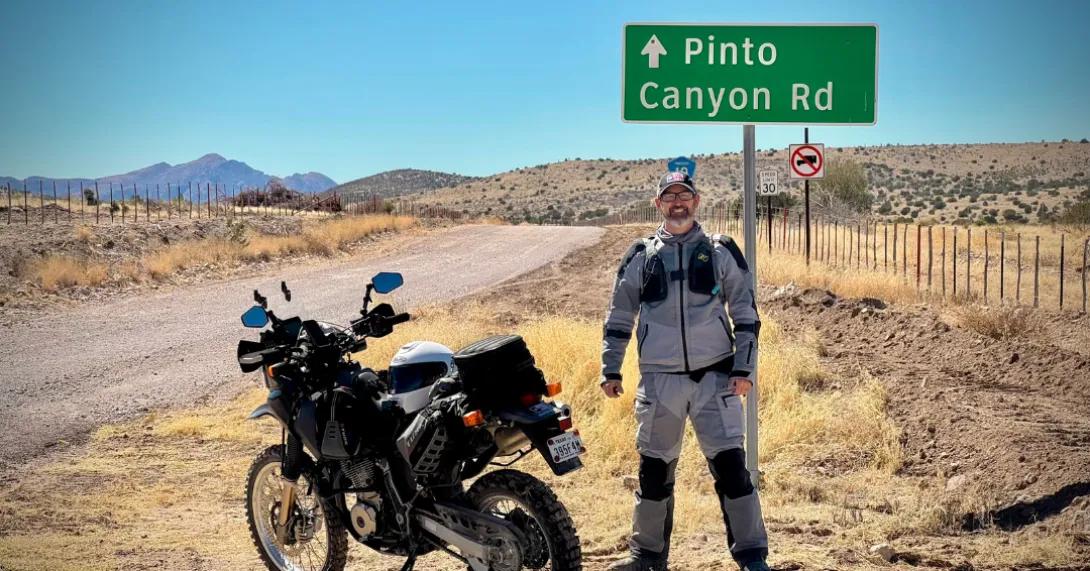
“This ride was my victory lap – it was my carrot on a stick that I was chasing since I started seeking treatment,” Elliott said.
“I owe my lifestyle to the team at Michigan and couldn’t have enjoyed this much if it wasn’t for them. I’m just so glad.”

Health Lab
Explore thousands of health news & research stories by visiting the Health Lab homepage for more.
Media Contact

Public Relations
Department of Communication at Michigan Medicine
In This Story
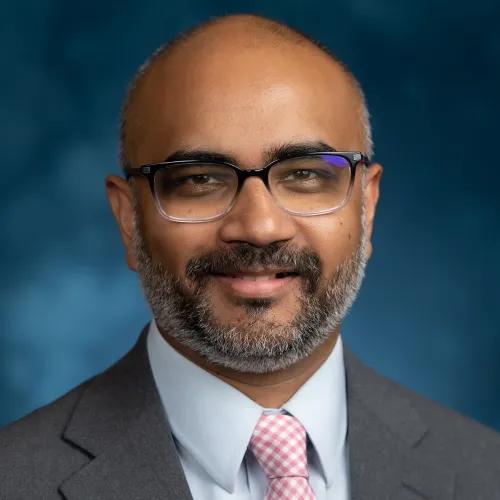
Minhaj S Khaja, MD, MBA, FSIR, FSVM
Clinical Professor

Andrea T Obi, MD
Associate Professor
Related
Treating a rare coronary artery aneurysm without open heart surgery
Stay Informed
Want top health & research news weekly? Sign up for Health Lab’s newsletters today!
Featured News & Stories
Reducing infections after heart surgery could save Medicare $441 million per year
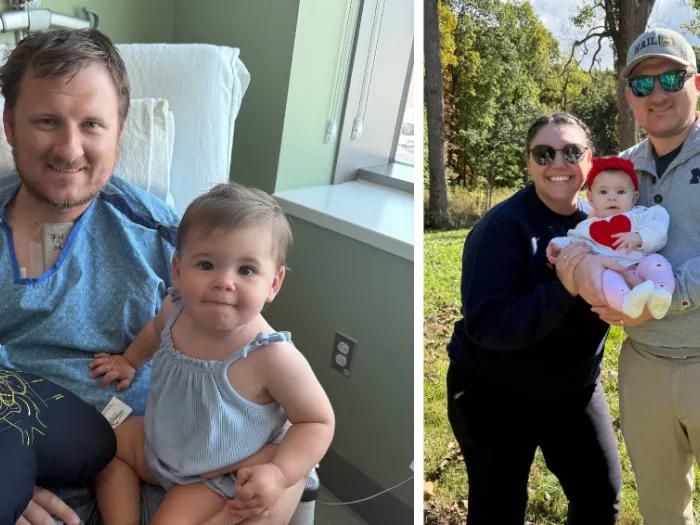
Young father survives aortic dissection after delayed diagnosis
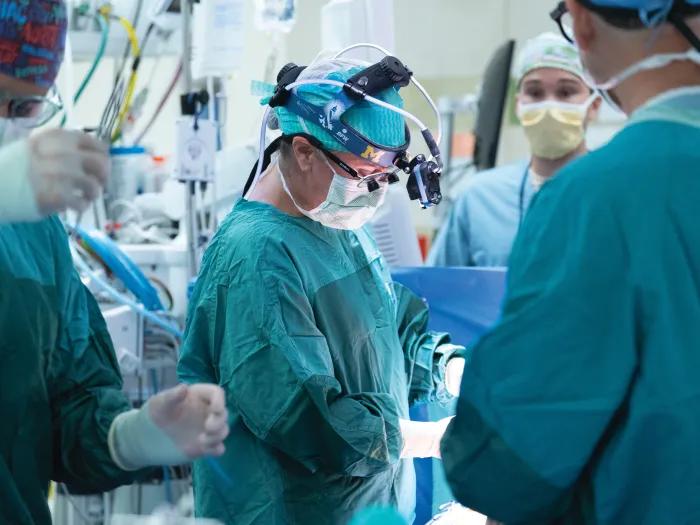
C.S. Mott Children’s Hospital first in country to implant expandable heart valve during FDA review phase
Advancements and trends in lung transplantation

Social, financial barriers linked to reduced treatment for dangerous blood clots