Teen’s journey with severe epilepsy inspires family’s mission for awareness
Max has Lennox-Gastaut syndrome, which involves multiple types of seizures and is one of the most challenging types of epilepsies to treat
8:18 AM
Author |
Every year, Elizabeth Raetz reads a children’s book to her son’s class called “My Life with Epilepsy.”
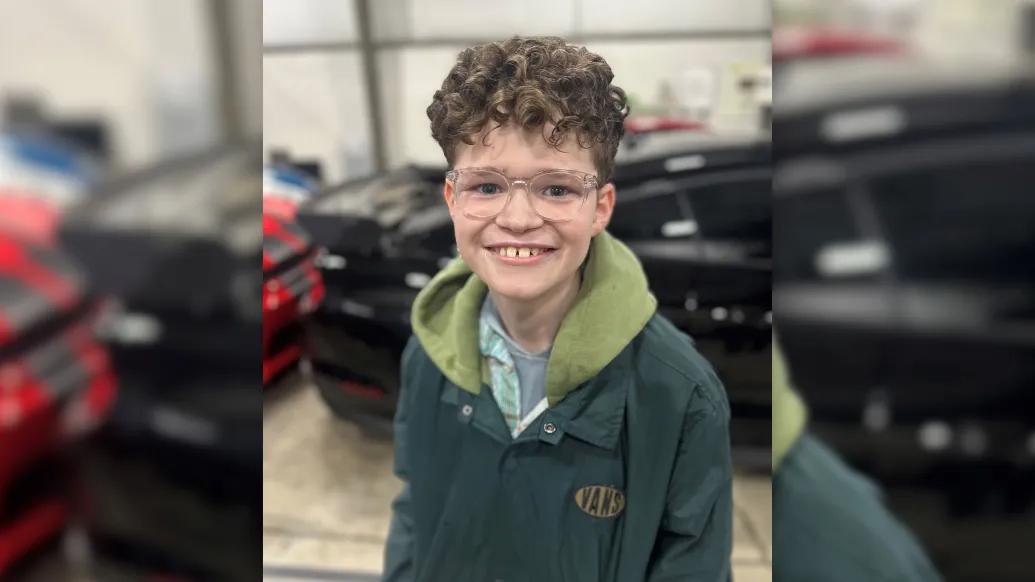
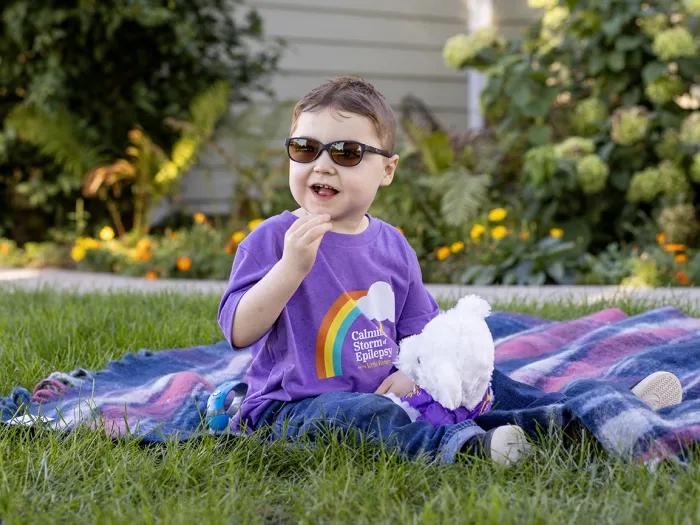
It’s a story about her son, Max, a curly-haired, blue-eyed boy who loves riding his scooter and playing with his dog.
Max is not defined by epilepsy, the book explains, but he sometimes misses school and always needs an adult nearby in case he has a seizure.
It’s just one of many ways the Raetz family helps raise awareness about the neurological condition that impacts Max and more than 450,000 other children across the country.
“Epilepsy is so unique to each patient and it looks different for everyone,” Elizabeth Raetz said.
“Max is a dynamic, fun kid who loves life. You can’t always see his seizures or how hard he’s fighting them.”
“I want people to know my brain is working hard to stop the seizures, but it is hard,” Max added.
“My seizures can be scary, but my mom helps me. My doctors also help me.”
A rare and severe diagnosis
Max was five years old when his family turned to the pediatric neurology team at University of Michigan Health C.S. Mott Children’s Hospital to understand what was behind his seizures, speech delays and disorientating episodes.
They later learned that the date of his diagnosis, March 26, also happened to be known as Purple Day, an effort to raises awareness about epilepsy worldwide.
They now use the annual observance – and anniversary of Max’s diagnosis – as an opportunity for advocacy and education.
“We’re very vocal about his epilepsy, especially around Purple Day and Epilepsy Awareness Month, because we want to help others in similar situations,” Raetz said.
“We also want Max to feel a sense of community and like he has his own voice as well.”
“There are a lot of misconceptions about epilepsy,” she added.
“It’s important for people to understand that epilepsy is so much more than seizures. It affects physical and emotional aspects like going to school, having a job, driving, learning difficulties and mental health.”
Max, now 13, has one of the severest forms of epilepsies, called Lennox-Gastaut syndrome.
The condition is medication-resistant and involves multiple types of seizures that he will likely not outgrow.
We’re learning more about epilepsy every day. We hope that ongoing research in genetics and neuromodulation will help us find better options for people who don’t respond to treatment and lessen the burden of this condition.”
- Paige Rieckhoff, N.P.
Along with medications, the seventh grader has two neuromodulation devices: a vagus nerve stimulator and a deep brain stimulator.
The vagus nerve stimulator involves a small, implantable device sending electrical pulses to help modulate brain activity through the vagus nerve in the neck.
The deep brain stimulator uses depth electrodes placed in the thalamus – a deep structure in the brain that’s often involved in the initiation and spread of seizures – to deliver electrical stimulation.
While Max may never be 100% seizure free, the hope is that these treatments will reduce the impact of seizures over time, making them less frequent and less disruptive to his growth and development.
“Mott is very proactive about Max’s case and I really value the care team involving us and Max in the decision making process,” Elizabeth Raetz said.
“We’re always open and honest about our options. His epilepsy isn’t going away so how do we manage that? We’re always trying different ways to shorten the seizure activity, help him get better sleep and improve his overall health. We always feel supported in these decisions.”
Living life to its fullest
Max, who is in an adaptive program at his middle school, is an avid reader, “obsessed with cars” and loves vanilla lattes, his mom says.
His family, which includes his older sister, Maddie, and dad, John, strive to enjoy life as fully as possible, including regular vacations across the country.
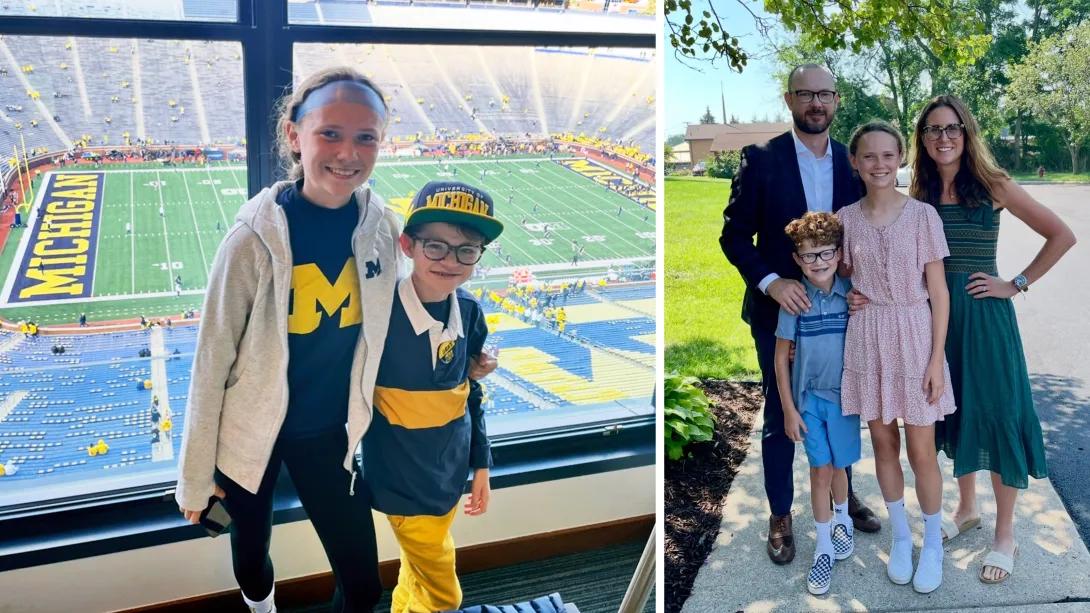
But it means being prepared, packing extra luggage for medical supplies, equipment for Max’s devices and adaptive gear.
Because of his seizures’ unpredictable nature, his family is also always on the lookout for safety hazards, such as making sure he’s not standing near stairs or a hot stove.
“We celebrate all the little wins,” Elizabeth Raetz said.
“Things like school may always be hard for him, but success looks different for Max.”
The family has also donated more than 100 copies of “My Life With Epilepsy,” to Mott to distribute to patients and families. It was written by author Mari Schuh who interviewed Max and his family through written questions.
As a member of the Mott Parent Advisory Committee, Elizabeth Raetz also helps mentor other families faced with similar diagnoses to provide peer support – from advice on navigating accommodations at school to sharing resources.
“As a parent, Max’s epilepsy is always top of mind,” she said.
“It’s important to know you’re also supported and it’s OK be overwhelmed. It can be a really lonely place when your child has a chronic illness.”
For Max, the goal of neuromodulation therapy is to help rework pathways in his brain to improve his quality of life, but interventions like the deep brain stimulator could take years to show effects, says Paige Rieckhoff, N.P. who sees Max at the Comprehensive Pediatric Epilepsy Program at Mott.
“Max has gone through the gamut and tried every anti-seizure therapy there is but he’s so resilient and has always pushed through. He has such wonderful support from his family and team here and has made so much progress.”
Max’s case, she notes, highlights the need for more research to find answers for the hardest-to-treat forms of epilepsy.
“We’re learning more about epilepsy every day,” she said. “We hope that ongoing research in genetics and neuromodulation will help us find better options for people who don’t respond to treatment and lessen the burden of this condition.”
Sign up for Health Lab newsletters today. Get medical tips from top experts and learn about new scientific discoveries every week.
Sign up for the Health Lab Podcast. Add us wherever you listen to your favorite shows.

Health Lab
Explore thousands of health news & research stories by visiting the Health Lab homepage for more.
Stay Informed
Want top health & research news weekly? Sign up for Health Lab’s newsletters today!
Featured News & Stories

“Miracle Maddy” pursues high school diploma after complex brain surgery for extremely rare epilepsy
U-M-led consortium to receive up to $52 million in NIH funding to study why viral respiratory infections affect children differently
A pediatric epilepsy fundraiser that changes lives

Better prenatal care data could help prevent maternal complications, experts say
Michigan Alzheimer's Disease Research Center receives $22M to advance efforts statewide