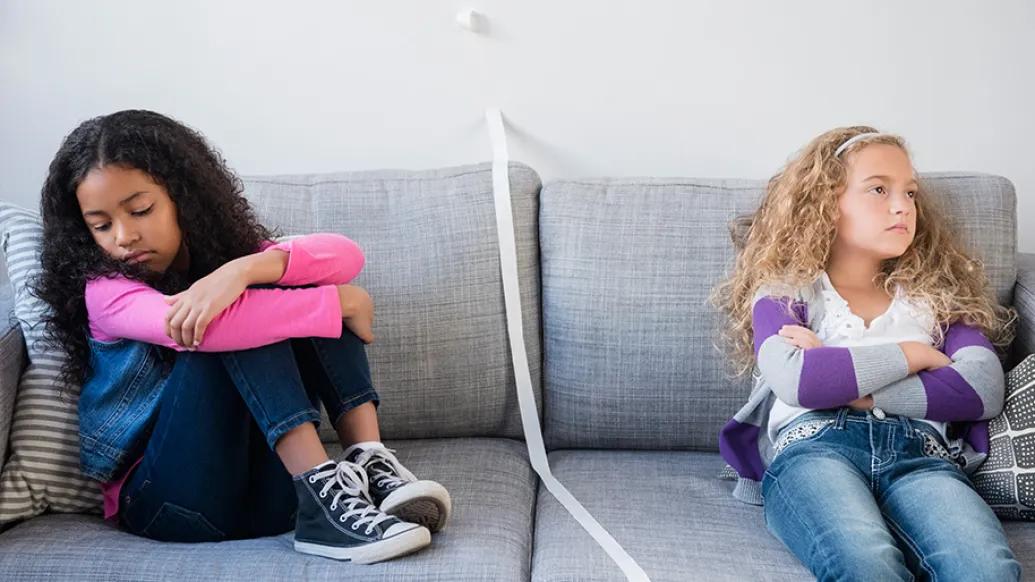
Conflict is a normal occurrence between children. Learning to resolve conflict is an important life skill for children to develop.
Whether your own children are squabbling with each other, or getting into disagreements with playground playmates, it can be hard to know how to help your child learn to deal with conflict, as well as to know when and how to involve yourself in your child’s conflicts.
Tips for helping children learn to resolve conflicts:
- Pay attention to your kids’ conflicts (so that no one gets hurt, and you can notice abuse if it occurs). Try to see if children can work out their own conflicts, but remember that younger children will probably need you to intervene and help structure the problem-solving.
- Try not to take sides and favor one child over the other.
- Get both children settled and calm first, then ask questions about what happened before dispensing discipline.
- Help your kids develop the skills to work out their conflicts on their own. Teach them how to compromise, respect one another, divide things fairly, etc. If you give them the tools, eventually they will have the confidence that they can work it out themselves.
- Don’t yell or lecture. It won’t help.
- It doesn’t matter “who started it,” because it takes two to make a quarrel. Hold children equally responsible when ground rules get broken.
- In a conflict, give your kids a chance to express their feelings about each other. Don’t try to talk them out of their feelings. Help your kids find words for their feelings. Show them how to talk about their feelings, without yelling, name-calling, or violence.
- Encourage win-win negotiations, where each side gains something.
- Give kids reminders and advance warnings (for example, counting to three).
- When kids start picking on each other, help them remember to state their feelings to each other.
- Help children solve the problem themselves. You can offer suggestions, but let them decide what are the best options.
- If you are constantly angry at your kids, no wonder they are angry at each other! Anger feeds on itself. Learn to manage your anger, so you can teach your children how to manage theirs.
- Model good conflict resolution skills for your kids when interacting with them and with other family members.
When should I intervene in conflict between children?
Dangerous fights need to be stopped immediately. Separate the children. When they have calmed down, talk about what happened and make it very clear that no violence is ever allowed.
If the children are physically violent with each other on a regular basis, and/or one child is always the victim, is frightened of the brother/sister, and doesn’t fight back, you are dealing with sibling abuse. You should seek immediate professional help and guidance.
Ground rules
Setting ground rules can also help prevent squabbles between children. Involve your children in setting ground rules. Here are a few ideas:
- In a conflict, no hurting (hitting, kicking, pinching, etc.) is ever allowed.
- No name-calling, yelling, or tattling is allowed.
- If the kids fight over a toy, the toy goes into time-out.
- Any child who demands to be first, will go last.
- No making fun of a child who is being punished, or you will also be punished.
- No fighting in the car, or you will pull over and stop until all is calm again.
- If arguing over who gets first choice of bedtime stories or favorite seats in the car is a problem, assign your kids certain days of the week to be the one to make these choices
- If borrowing is a problem, have the child who borrows something put up collateral—a possession that will be returned only when the borrowed item is returned.
Additional resources:
Reviewed by Sara Laule, MD
Updated March 2017

Health Lab
Explore thousands of health news & research stories by visiting the Health Lab homepage for more.
Media Contact

Public Relations
Department of Communication at Michigan Medicine
Stay Informed
Want top health & research news weekly? Sign up for Health Lab’s newsletters today!
Featured News & Stories
Back-to-school anxiety: 6 ways to fight the fear
Safe sleep for babies

Navigating Mental Health Resources

10 Tips for New Parents

Croup