Taking an At-Home Genetics Test? You Might Still Want to See a Counselor
It’s easier than ever to get a home-based genetics kit or seek a doctor for advanced testing, but how do you process the results? Genetic counselors play a big role in helping patients make sense of their own DNA.
11:52 AM
Author |

Once upon a time, getting your DNA tested was a rare event — as rare as the genetic diseases that the tests tried to detect.
No longer.
Consumers today might purchase a mail-order kit that, using a simple saliva sample, can determine what diseases they're at risk of developing.
Doctors, likewise, can order dozens of easy tests to look for genetic variations that might be causing a patient's symptoms; pregnant women may ask for a blood test to gain details about the DNA of their unborn child.
But fast access to complex data often prompts deeper reflection: How is an ordinary person supposed to make sense of all of this genetic information?
More important, what is the next step if testing reveals a high risk or an existing problem?
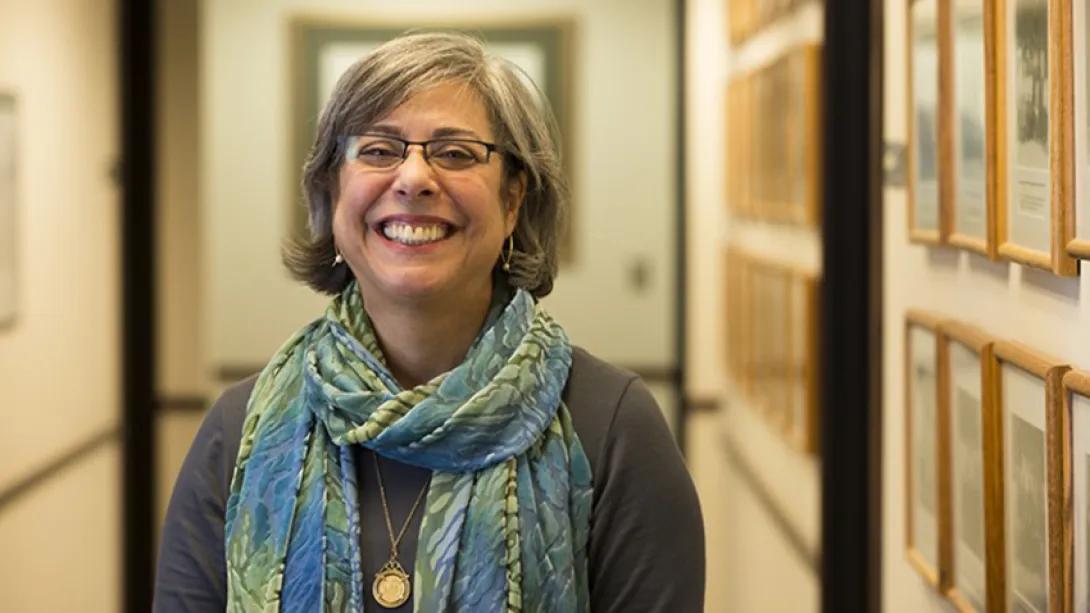
That's where genetic counselors such as Beverly Yashar, M.S., Ph.D., come in.
"The public wants this knowledge, and they can get it," Yashar says. "We are here to help them."
An explosion in testing
Testing advancements throughout the past decade, and even the past year, have been game changers, says Yashar, director of the University of Michigan Genetic Counseling Program.
"We're moving from helping patients with rare diagnoses to those with common ones," Yashar says, "and that's where much of the growth will be in the future."
She points to companies such as 23andMe, which recently received renewed FDA approval to market its genetic testing kits directly to the public as a way to assess a person's risk of some diseases; the test taker's chances of passing on a harmful genetic mutation; and the person's ancestry.
Another company markets a kit directly to pregnant women, with the claim that a vial of blood drawn by their doctor can detect a fetus' risk for a host of disorders, including Down syndrome and cystic fibrosis.
Other manufacturers — as well as U-M's own MLabs division — are offering doctors far more genetic testing options for patients thought to be carrying harmful genetic traits.
Says Yashar: "It's a crazy, exciting time for both individuals and providers."
Why counselors matter
As the technology shifts to put greater control in the hands of patients — with direct-to-consumer tests taken independently of someone trained in medical genetics — the roles of genetic counselors might take on heightened value.
Particularly when the results come back.
Such specialists, Yashar says, act as "critical elements in helping people interpret and act on the results of the tests they order as well as the many more tests that doctors now have access to."
Genetic counselors not only help patients understand what it means to carry a certain DNA alteration or to have a baby with a certain genetic risk, but they also assist families in understanding how the same genetic risk can affect siblings, parents and future descendants.
Still, not all practitioners are accustomed to the partnership. Yashar notes that doctors who specialize in cancer and genetic conditions have the most experience working with genetic counselors. Those practicing in areas such as heart disease, nerve disease and mental health may be less familiar with the availability of genetic counseling.
Other ways exist to foster a connection. The National Society of Genetic Counselors offers a free online service to help people find a genetic counselor near them.
More insurance companies, too, are covering the services of a genetic counselor as well as the costs of doctor-ordered genetic tests (but they won't cover tests marketed directly to the public, such as 23andMe).
An expanding field
With an increase in genetics knowledge and continued demand for testing, the job of genetic counselor is expected to grow by nearly one-third in the next eight years, according to the U.S. Bureau of Labor Statistics.
It is already the 16th fastest growing occupation in the country.
Yashar has proposed to expand the U-M program to train more students. She recently co-authored a research paper showing that most genetic counseling program directors in the U.S. agree that training options need to expand or multiply.
Yashar is also looking at how to get genetic counseling services to patients who haven't historically had access to screening tests for genetic risk (low-income women who receive mammograms at safety-net clinics, for example).
Amid the change, one factor will remain constant: the need for counselors.
"We will still be there for people with rare, complex conditions," Yashar says, "but we also need to figure out how to partner with providers of all kinds to get patients the screening and testing that's right for them and to help them interpret and act on the results."

Health Lab
Explore thousands of health news & research stories by visiting the Health Lab homepage for more.
Media Contact

Public Relations
Department of Communication at Michigan Medicine
Stay Informed
Want top health & research news weekly? Sign up for Health Lab’s newsletters today!
Featured News & Stories

5 ways to manage politically induced stress

5 things to know about ALS
How Student Debt is Impacting Nursing

AI tool can predict heart failure from genetic and health record data

How to discuss health care and end-of-life wishes during the holidays