Study sheds light on why some prostate tumors are resistant to treatment
Researchers identify gene program that causes extreme non-response in one-third of patients
3:52 PM
Author |
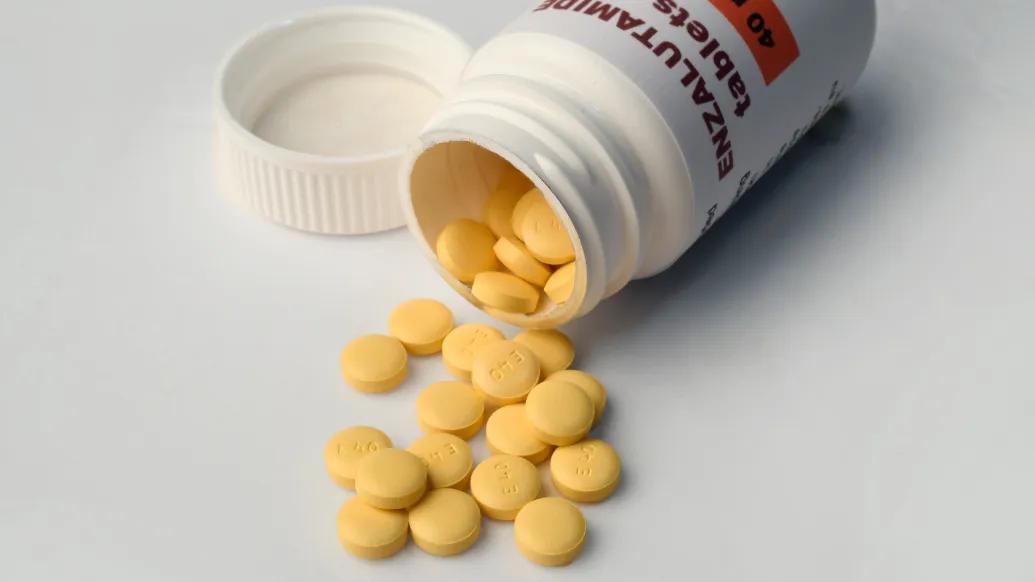
A study from University of Michigan Rogel Cancer Center researchers identifies a cellular signature that explains why about one-third of prostate cancers respond especially poorly to treatment.
Treatments such as enzalutamide, which is an androgen receptor pathway inhibitor, are standard of care for advanced prostate cancer.
While many patients have long term good response to the drugs, some will derive no benefit whatsoever.
These “extreme non-responder” patients die much more quickly from prostate cancer.
The study, published in npj Precision Oncology, looked at RNA sequencing data and clinical outcomes from several prostate cancer clinical trial datasets.
The researchers identified a gene program linked to ARPI extreme non-response.
Moreover, they discovered the chemotherapy docetaxel could be a good option earlier on in patients whose tumor harbors the ARPI extreme non-response program.
Docetaxel is approved for prostate cancer but typically given later in the course of treatment.
“We found significant differences in the gene expression program between prostate cancers that do exceptionally well vs. exceptionally poorly with ARPIs. Patients who have this extreme non-response program appear to get significant benefit from docetaxel, suggesting these patients may be good candidates for earlier docetaxel treatment,” said lead first author Anbarasu Kumaraswamy, Ph.D., an investigator in the Alumkal Lab at the Rogel Cancer Center.
The researchers also found that the kinase CDK2 regulates the extreme non-response program, and targeting CDK2 could block the program and reduce tumor growth in the laboratory samples that harbored the ARPI extreme non-response program.
The authors suggest exploring CDK2 inhibitors, currently in clinical trials in other cancer types, as a promising new direction in prostate cancers with the extreme ARPI non-responder program.
Additional authors: Ya-Mei Hu, Joel A. Yates, Chao Zhang, Eva Rodansky, Dhruv Khokhani, Diana Flores, Zhi Duan, Yi Zhang, Shaadi Tabatabaei, Rachel Slottke, Shangyuan Ye, Primo Lara, Adam Foye, Charles J. Ryan, David A. Quigley, Jiaoti Huang, Rahul Aggarwal, Robert E. Reiter, Max S. Wicha, Tomasz M. Beer, Matthew Rettig, Martin Gleave, Christopher P. Evans, Owen N. Witte, Joshua M. Stuart, George V. Thomas, Felix Y. Feng, Eric J. Small, Zheng Xia, Joshi J. Alumkal
Funding: for this work is from Stand Up to Cancer-Prostate Cancer Foundation; Prostate Cancer Foundation; National Cancer Institute grants R01 CA251245, R01 CA282005, R01 CA291986, P50 CA186786, P30CA046592; National Comprehensive Cancer Network/Astellas Pharma Global Development/Pfizer Inc; Joint Institute for Cancer Research; Allen Family; Smith Family; U.S. Department of Defense grant W81XWH2110539; National Institute of General Medical Sciences grant R01 GM147365; National Institutes of Health grant T90 DE030859
Paper cited: “Transcriptional profiling clarifies a program of enzalutamide extreme nonresponse in lethal prostate cancer,” npj Precision Oncology. DOI: 10.1038/s41698-025-01002-8

Health Lab
Explore thousands of health news & research stories by visiting the Health Lab homepage for more.
Media Contact

Public Relations
Department of Communication at Michigan Medicine
In This Story

Joshi J Alumkal, MD
Professor
Stay Informed
Want top health & research news weekly? Sign up for Health Lab’s newsletters today!
Featured News & Stories
Comprehensive DNA sequencing reveals hidden drivers of cancer

Many older adults make Medicare decisions quickly and most don’t change plans, poll finds

‘Molecular glue’ stabilizes protein that inhibits development of non-small cell lung cancer and uterine cancer
What’s the latest on 7-OH and kratom availability and addiction care?

A metabolic “switch” that could help reset scar-producing cells in scleroderma