Study doubles number of genetic signals for psoriasis
The work is helping researchers figure out the root cause of psoriasis
5:00 AM
Author |
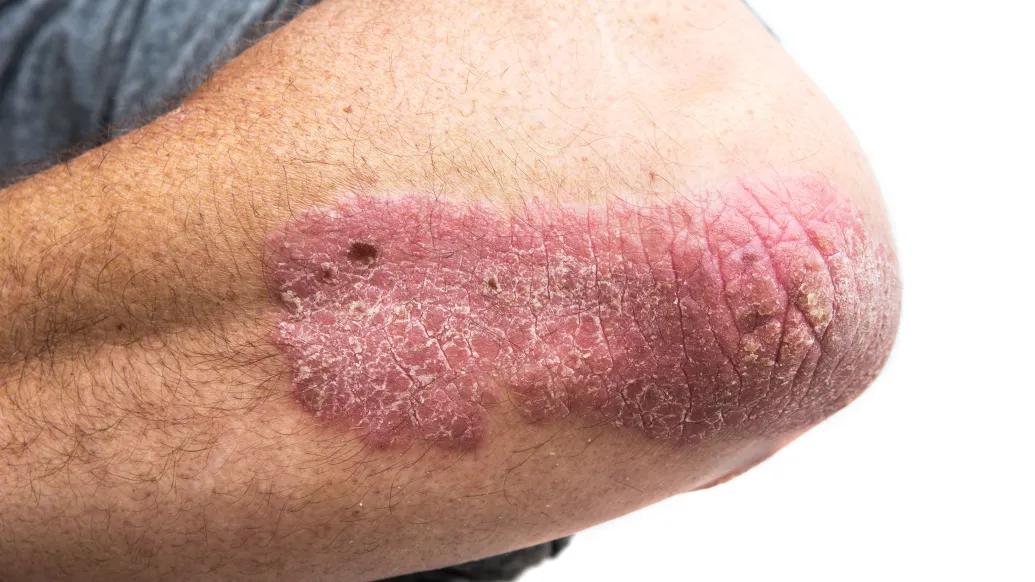
Approximately 6.7 million Americans are affected by psoriasis, according to the National Institutes of Health.
The debilitating autoimmune disease presents as red, scaly patches on the skin, called plaques.
Although newer, specifically targeted treatments like biologics and targeted immunosuppressive drugs have proven to treat the disease effectively in recent years, researchers are still investigating what sparks the condition in the first place.
“The question remains why do certain people get psoriasis, and others don’t?” explained J.T. Elder, M.D., Ph.D., the Kirk D. Wuepper Professor of Molecular Genetic Dermatology at Michigan Medicine, who has been studying the disease for over three decades.
“There’s lots of theories, but the exact cause of psoriasis remains unclear.”
In search of more answers, Elder co-led an international consortium to refine the genetic map of psoriasis susceptibility using a tool called meta-analysis to statistically combine genome wide association study results from 18 research centers, totaling 36,466 psoriasis cases and 458,078 controls.
This is important because these studies measure differences, which are usually small, in variant frequency between cases and controls.
The research was published in Nature Communications.
“In GWAS, size really matters,” Elder said.
“We found a stunning overlap between genes identified by GWAS and signaling pathways targeted by effective therapies,” said Elder, who is co-lead senior author on the paper.
The large size of the study provides more clues, says Elder.
The size of the analysis allowed his team to identify 109 distinct loci (regions of the human genome) containing psoriasis susceptibility genes, including 46 that hadn’t been previously reported.
Overall, 80-90% of susceptibility variants for psoriasis and other “polygenic genetic disorders” influence the rate at which a gene is copied from DNA into RNA (regulatory variants), rather than altering protein structure (coding variants).
This study uncovered regulatory variants at two of the new loci, in which the therapeutic targets IL17RA and AHR are encoded.
The study also identified deleterious coding variants supporting potential new drug targets, including in STAP2, CPVL and POU2F3.
“For these complex genetic disorders, what we call ‘fine mapping’ allows us to pinpoint the underlying cause of the genetic signal, whether it be regulatory or coding in nature,” said Elder.
“It’s important because the gene regulated by a regulatory variant is often not the gene closest to it, due to a phenomenon known as chromatin looping, which brings the regulatory region together with the gene being regulated in three-dimensional space inside the nucleus of the cell.”
Elder states that another important thing they can do with this GWAS data is predict risk.
“If you know more of the genetic signals, you can calculate a more accurate polygenic risk score to predict who is going to get sick and who isn’t,” said Elder.
Elder explains that there are both overlapping and distinct genetic signals for cutaneous psoriasis and psoriatic arthritis, the latter being a painful and potentially disfiguring arthritis that develops in approximately a quarter of psoriasis sufferers.
Elder and his colleagues have used the genetic signals for cutaneous psoriasis and psoriatic arthritis to develop a polygenic risk score for psoriatic arthritis, which can be used to identify psoriasis patients at risk for developing that condition, supporting earlier treatment of these at-risk individuals with highly effective biologic therapies.
Although the current study focused on people of European origin, Elder and an international team of geneticists are currently expanding the psoriasis meta-GWAS to a global scale, adding large psoriasis GWAS results from India, Japan and China.
They expect to identify even more psoriasis loci, getting them closer to determining which genetic signals are the same across world populations and which are population-specific and identifying the genes whose expression is influenced by regulatory variants and the cells in which they function.
In the end, the goal is to provide a stronger basic understanding of psoriasis, paving the way for new therapies and personalized medicine.
Additional authors include: Nick Dand, Philip E. Stuart, John Bowes, David Ellinghaus, Joanne Nititham, Jake R. Saklatvala, Maris Teder-Laving, Laurent F. Thomas, Tanel Traks, Steffen Uebe, Gunter Assmann, David Baudry, Frank Behrens, Allison C. Billi, Matthew A. Brown, Harald Burkhardt, Francesca Capon, Raymond Chung, Charles J. Curtis, Michael Duckworth, Eva Ellinghaus, Oliver FitzGerald, Sascha Gerdes, Christopher E.M. Griffiths, Susanne Gulliver, Philip S. Helliwell, Pauline Ho, Per Hoffmann, Oddgeir L. Holmen, Zhi-ming Huang, Kristian Hveem, Deepak Jadon, Michaela Köhm, Cornelia Kraus, Céline Lamacchia, Sang Hyuck Lee, Feiyang Ma, Satveer K. Mahil, Neil McHugh, Ross McManus , EllenH. Modalsli, Michael J. Nissen, Markus Nöthen, Vinzenz Oji, Jorge R. Oksenberg, Matthew T. Patrick, Bethany E. Perez White, Andreas Ramming, Jürgen Rech, Cheryl Rosen, Mrinal K. Sarkar, Georg Schett, Börge Schmidt, Trilokraj Tejasvi, Heiko Traupe, John J. Voorhees, Eike Matthias Wacker, Richard B. Warren, Rachael Wasikowski, Stephan Weidinger, X Q8 iaoquan Wen, Zhaolin Zhang, BSTOP study group*, Estonian Biobank research team*, Anne Barton, Vinod Chandran, Tõnu Esko, John Foerster, Andre Franke, Dafna D. Gladman, Johann E. Gudjonsson, Wayne Gulliver, Ulrike Hüffmeier, Külli Kingo, Sulev Kõks, Wilson Liao,
Mari Løset, Reedik Mägi, Rajan P. Nair, Proton Rahman, André Reis, Catherine H. Smith, Paola Di Meglio, Jonathan N. Barker, LamC. Tsoi, Michael A. Simpson, James T. Elder.
Funding (U-M only): The work done at U-M was supported by awards from the NIH (L.C.T. K01AR072129, P30 AR075043, UC2 AR081033; A.C.B. K08 AR078251, P30 AR075043; J.E.G.: P30 AR075043) J.T.E: R01AR042742, R01AR050511, R01AR054966, R01AR063611, R01AR065183, P30 AR075043) and by multiple awards from the National Psoriasis Foundation (NPF).
Disclosures (U-M only): Trilokraj Tejasvi serves on an advisory board for L’Oreal Teledermatology. Johann Gudjonsson received research support from Eli Lilly, Kyowa Kirin, Janssen, Almirall, Celgene/BMS, Prometheus, Novartis, Galderma and AnaptysBio, and is a member of an advisory board for Novartis, AbbVie, Eli Lilly, Almirall, Galderma, Boehringer Ingelehim, Celgene/BMS, Sanofi, Janssen and AnaptysBio. Lam C. Tsoi reports support from Janssen, Galderma, and Novartis.
Conflicts of interest: same as disclosures.
Paper cited: "GWAS meta-analysis of psoriasis identifies new susceptibility alleles impacting disease mechanisms and therapeutic targets," Nature Communications. DOI: 10.1038/s41467-025-56719-8
Sign up for Health Lab newsletters today. Get medical tips from top experts and learn about new scientific discoveries every week.
Sign up for the Health Lab Podcast. Add us wherever you listen to your favorite shows.

Health Lab
Explore thousands of health news & research stories by visiting the Health Lab homepage for more.
Media Contact

Public Relations
Department of Communication at Michigan Medicine
In This Story
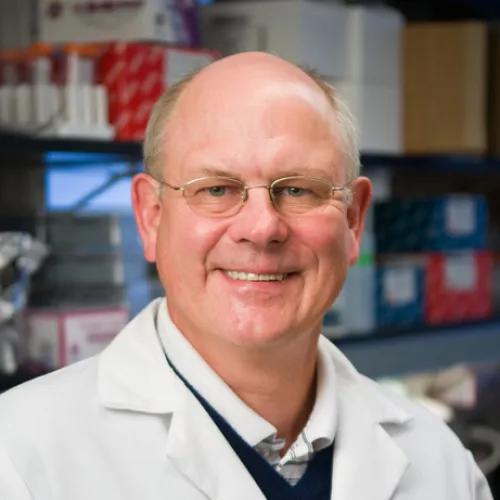
James T Elder, MD, PhD
Professor Emeritus/a
Stay Informed
Want top health & research news weekly? Sign up for Health Lab’s newsletters today!
Featured News & Stories

Researchers identify a potential “Achilles heel” of psoriasis

As probiotic use surges, microbiome-supportive food consumption stagnates
Why tendons heal so poorly and how researchers hope to fix them

C.S. Mott Children’s Hospital first in country to implant expandable heart valve during FDA review phase
Evolving causes, diagnosis of drug-induced liver injury