Stroke survivors miss critical treatment, face greater disability due to systemic transfer delays
Patients who have longer delays in hospital transfer experienced worse disability after their stroke
5:00 AM
Author |
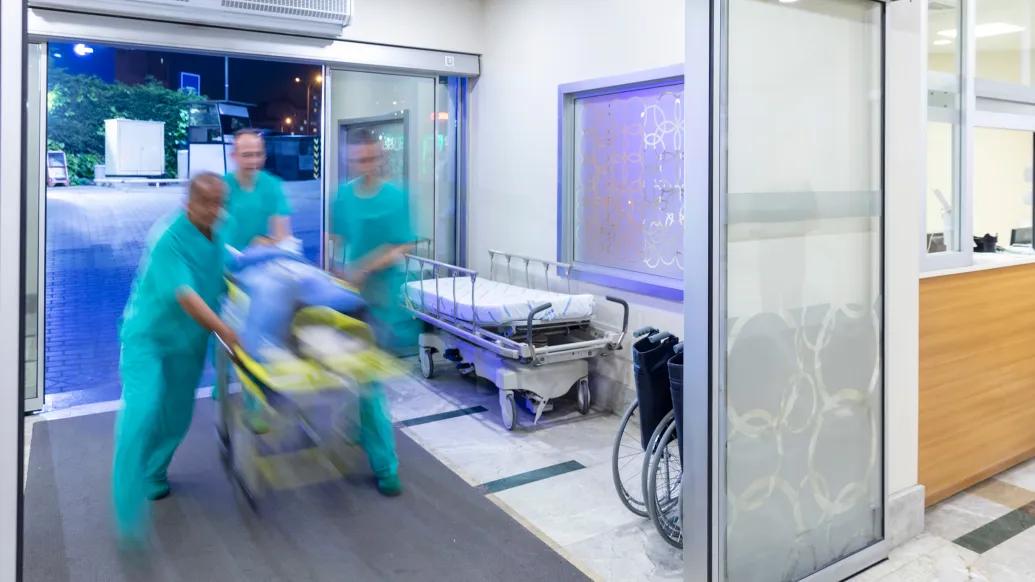
Gaps in the nation’s stroke transfer system are drastically reducing survivors’ chances of receiving critical treatment and increasing the likelihood that they will leave the hospital with a disability, a study suggests.
Around one-third of ischemic stroke survivors are eligible for endovascular thrombectomy, an effective intervention that changed the landscape of stroke treatment more than a decade ago.
More than 40% of people who receive endovascular therapy are initially seen at hospitals that don’t offer the treatment.
These patients require transfer to more advanced facilities capable of delivering thrombectomy.
The findings published in The Lancet Neurology led by investigators from University of Michigan and the University of Chicago reveal that the vast majority of stroke patients face prolonged time to transfer — a process known as door-in-door-out — which reduces their chance of receiving endovascular therapy and increases their chances of leaving the hospital with significant disability.
“This is all about getting people to the right care at the right time,” said Regina Royan, M.D., M.P.H., co-first author and Assistant Professor of Emergency Medicine and Neurology at U-M Medical School.
“Endovascular therapy has been a revolutionary treatment for acute ischemic stroke for years, but a significant portion of patients experience substantial delays in receiving this therapy. Our results show that the stroke transfer system, at a national level, is falling short for patients.”
Systemic issues in the stroke transfer system
In the study of more than 20,000 patients with acute ischemic stroke, researchers found that just 26% of transfers occurred within 90 minutes, the maximum time recommended by the American Heart Association.
The likelihood of a patient receiving endovascular therapy declined steeply as transfer time delays grew.
Patients with transfer times between 91 minutes and three hours had 29% less chance of receiving a thrombectomy.
That number climbed to 65% when the door-in-door-out time was longer than 4.5 hours.
“We have made tremendous progress in getting people timely acute stroke treatment after they arrive at the emergency department, which we call door-to-needle time, but the next frontier of acute stroke systems of care is improving inter-hospital transfer times for patients eligible for endovascular thrombectomy,” said Shyam Prabhakaran, M.D., M.S., senior author and Chair of Neurology at the University of Chicago.
“Every minute that passes before treatment increases the risk of losing neurologic functioning, and our results highlight missed opportunities for many stroke patients who are not initially seen at thrombectomy-capable centers.”
Stroke patients with longer door-in-door-out times had higher scores on the modified Rankin scale, a measure of overall disability used in clinical research.
They also had more complications after treatment and a lower likelihood of being able to walk independently after leaving the hospital.
Improving the system
The team’s findings on the systemic delays in hospital transfer, which relied on data from the AHA’s Get With the Guidelines-Stroke registry, reinforces their work from 2023.
According to the registry’s earlier data from more than 1,900 hospitals, the median door-in-door-out time for stroke patients was nearly three hours.
This national study, however, is the largest examination of the relationship between those delays, missed opportunities for endovascular therapy and worse functional outcomes in acute ischemic stroke patients.
Systemic changes are especially important for areas with larger rural populations and those lacking formal stroke systems of care.
“With this study, we now have compelling evidence that we need to be paying greater attention to developing efficiencies within regional stroke systems of care with a targeted focus on minimizing door-in-door-out times,” said Brian Stamm, M.D., M.Sc., co-first author and Clinical Assistant Professor of Neurology at University of Michigan Medical School.
“We have seen successful global quality improvement initiatives reduce door-to-needle times for clot-busting medications. We should use those as a roadmap to do the same for reducing door-in-door-out time for inter-hospital stroke transfers.”
An ongoing NIH-sponsored clinical trial led by Prabhakaran, called Hospital Implementation of a Stroke Protocol for Emergency Evaluation and Disposition (HI-SPEED), is testing whether an intervention to reduce door-in-door-out times at eight large health systems around the United States will improve functional outcomes for acute ischemic stroke patients undergoing thrombectomy.
U-M is one of the trial sites, with emergency physician William J. Meurer, M.D., serving as site principal investigator and Stamm serving as site co-investigator.
The researchers also note the need for ongoing research aimed at the prehospital window before a patient is brought to the hospital.
“Having prehospital tools that effectively identify patients who are more likely to receive endovascular therapy and triage them to thrombectomy-capable centers that provide that care is another way besides door-in-door-out interventions that we can increase access to this highly effective procedure.” Royan said.
Additional authors: Mihai Giurcanu, Ph.D., of University of Chicago, Steven R Messe, M.D., of University of Pennsylvania, Edward C Jauch, M.D., M.S., of Mountain Area Health Education Center, and Jeffrey L Saver, M.D., of University of California Los Angeles.
Funding/disclosures: This study was partially supported by the National Institute of Neurological Disorders and Stroke (K12NS137516, U24NS107233, R25NS125609, U01NS131797) and the Agency for Healthcare Research and Quality (R18HS027264) of the National Institutes of Health.
The GWTG Stroke program is provided by the American Heart Association. GWTG-Stroke is sponsored, in part, by Novartis, Novo Nordisk, AstraZeneca, Bayer, and HCA Healthcare.
The content is solely the responsibility of the authors and does not necessarily represent the official views of the NIH or AHA.
Paper cited “Door-in-door-out times and outcomes in patients with acute ischaemic stroke transferred for endovascular therapy: a retrospective US cohort study,” The Lancet Neurology. DOI: 10.1016/S1474-4422(25)00478-8
Sign up for Health Lab newsletters today. Get medical tips from top experts and learn about new scientific discoveries every week.
Sign up for the Health Lab Podcast. Add us wherever you listen to your favorite shows.

Health Lab
Explore thousands of health news & research stories by visiting the Health Lab homepage for more.
Media Contact

Public Relations
Department of Communication at Michigan Medicine
In This Story
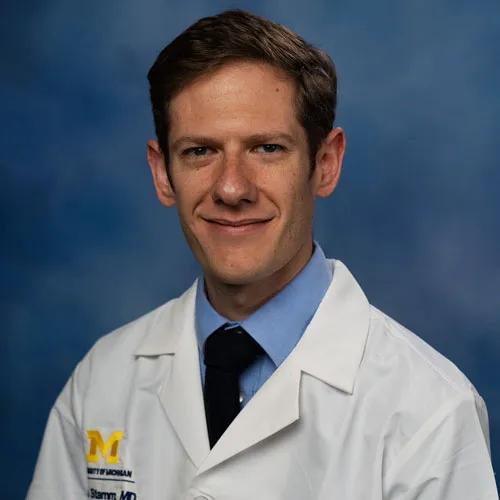
Brian Stamm, M,D,, MSc
Assistant Professor
Stay Informed
Want top health & research news weekly? Sign up for Health Lab’s newsletters today!
Featured News & Stories

Comprehensive DNA sequencing reveals hidden drivers of cancer

Many older adults make Medicare decisions quickly and most don’t change plans, poll finds

What’s the latest on 7-OH and kratom availability and addiction care?

A metabolic “switch” that could help reset scar-producing cells in scleroderma

Depression in OBGYN residents needs more attention, study suggests