Stopping a $40,000 infection with a $40 device
An emergency medicine start-up tackles deadly ICU infections
5:00 AM
Author |
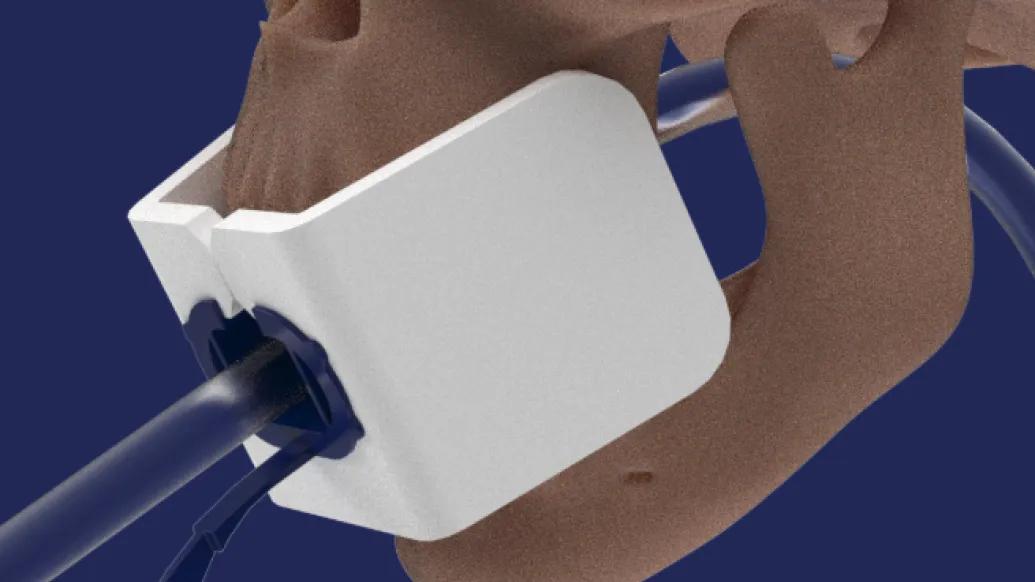
Michigan Medicine’s Department of Emergency Medicine is tackling one of the deadliest and most overlooked hospital-acquired infections: ventilator-associated pneumonia.
Affecting one in 10 ventilated patients and responsible for the majority of deaths from health care associated infections, VAP adds about nine days to intensive care unit stays and costs more than $40,000 per case.
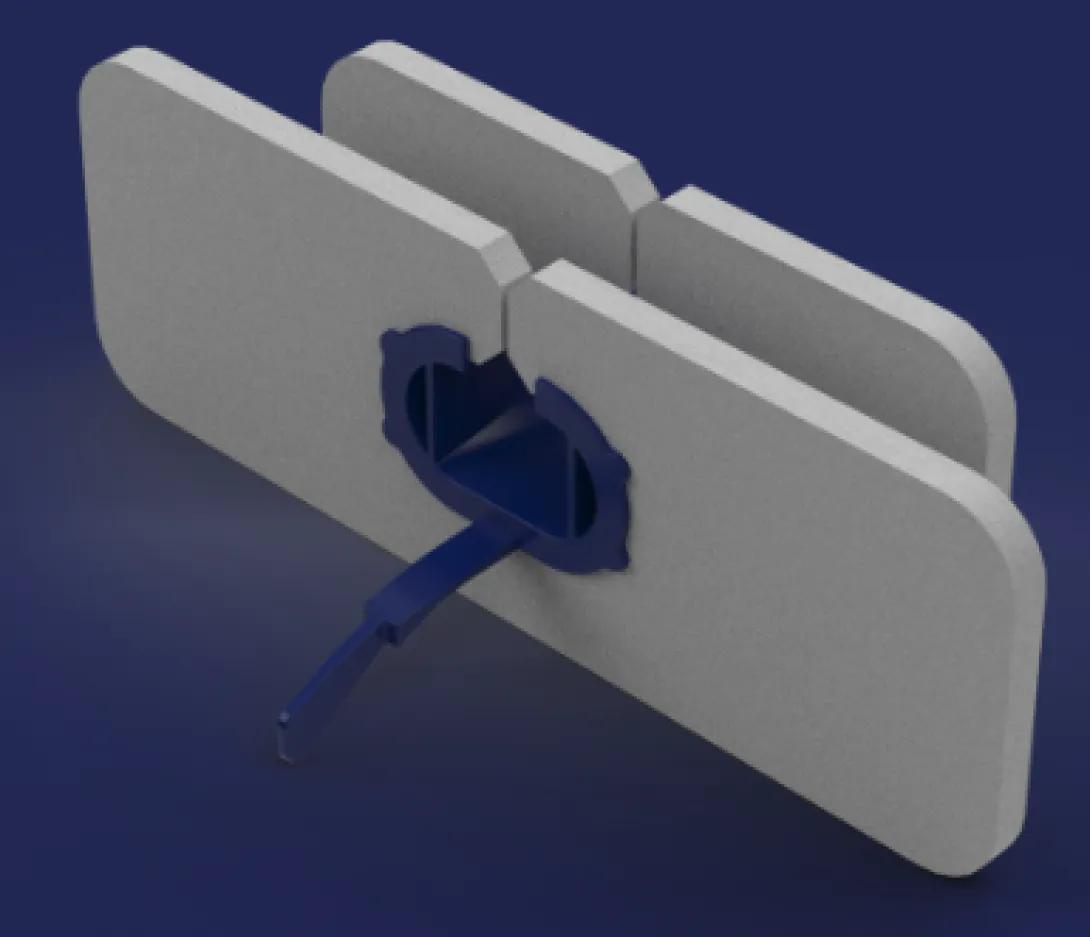
Now, an interdisciplinary team has developed a simple but powerful solution: a soft, antimicrobial mouthguard that absorbs secretions before harmful bacteria can reach the lungs.
“It’s a $40 device to solve a $40,000 problem,” said J. Scott VanEpps, M.D., Ph.D., associate professor of emergency medicine, biomedical engineering, and macromolecular science and engineering at the University of Michigan, and co-founder of the start-up Prevada Medical.
“You can wear it comfortably, it requires no special training, and it could be used anywhere, from hospitals to ambulances to battlefield care.”
Despite decades of clinical workarounds — antiseptic mouth rinses, special endotracheal tubes with suctioning, and antibiotics — rates of VAP haven’t budged.
“This is a huge, stubborn problem in critical care,” said Robert Dickson, M.D., professor of pulmonary and critical care medicine and associate professor of internal medicine and microbiology & immunology at the University of Michigan.
“We haven’t had a new, effective way to prevent VAP in a very long time. We’re overdue for a bold idea.”
The device’s protective coating originated from research on hospital surfaces and wound care.
The team is now preparing for final biocompatibility testing and first-in-human trials, pending additional grant support.
Backed by the Weil Institute for Critical Care Research and Innovation and BioInterfaces Institutes, the team — comprising experts in emergency medicine, critical care, materials science, and microbiology — has received Michigan Translational Research and Commercialization funding to build the prototype and advance toward clinical testing.
The start-up is a true example of what Michigan Medicine does best: fostering collaboration.
“It’s a highly collaborative project,” VanEpps said.
“Emergency medicine, pulmonary and critical care medicine, engineering, materials science, we’re breaking traditional boundaries to solve an old problem in a new way.”
A start-up with heart
The original concept was first proposed and patented by Kevin Ward, M.D., executive director of the Weil, over 15 years ago.
Ward brought the idea to U-M to expand development with added antimicrobial technology and cross-disciplinary expertise in engineering, the microbiome, and critical care and to consider starting a company around the technology.
Prevada, founded by Ward and led by Dylan Bourelle, co-founder and CEO, exists to bridge the gap between promising research and real-world use, a gap that VanEpps says is notoriously difficult to cross.
“Academia rewards discovery. Industry rewards the final product. But the hard work in between often falls through the cracks,” VanEpps said.
"This startup is our way of making sure this innovation doesn’t die on the vine.”
Life saving potential
Beyond the ICU, the mouthguard could serve intubated patients in ambulances, field hospitals, or during long medical evacuations, such as battlefields — anywhere a ventilator is needed.
Its simplicity is its strength.
“This isn’t just a scientific exercise,” Dickson said.
“We’re talking about an inexpensive, easy-to-use tool that could prevent infections, shorten hospital stays, reduce antibiotic use, and ultimately save lives. That’s incredibly motivating.”
As clinical testing nears, the team remains optimistic that their low-cost innovation will make a high impact difference in emergency medicine and critical care worldwide.
Conflicts of interest: Drs. VanEpps and Ward have Equity and Intellectual Property licensed to Prevada. Dr. Dickson has an advisory role with Prevada.

Health Lab
Explore thousands of health news & research stories by visiting the Health Lab homepage for more.
Media Contact

Public Relations
Department of Communication at Michigan Medicine
In This Story

J Scott VanEpps, MD, PhD, FACEP
Associate Professor

Robert Pickett Dickson, MD
Professor
Stay Informed
Want top health & research news weekly? Sign up for Health Lab’s newsletters today!
Featured News & Stories
What’s the latest on 7-OH and kratom availability and addiction care?

Depression in OBGYN residents needs more attention, study suggests
A metabolic “switch” that could help reset scar-producing cells in scleroderma

Emergency room intervention pairs smartphone, telehealth counseling to reduce risky firearm behavior
Better prenatal care data could help prevent maternal complications, experts say