Specialized care helps patient navigate rare liposarcoma diagnosis
What began as a routine checkup turned into a life changing diagnosis—and a journey marked by expert care and resilience
5:00 AM
Author |
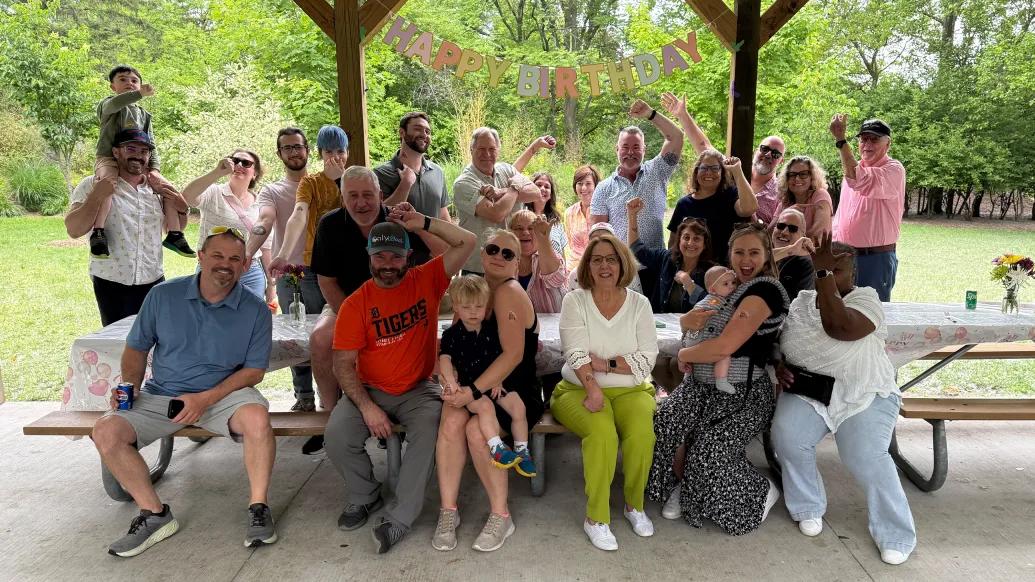
Virginia Fallis, age 64, never expected a routine checkup to change her life.
During a regularly scheduled visit with her primary care physician in the summer of 2024, an EKG revealed an unexpected abnormality around her left ventricle.
Additional imaging revealed a cancerous tumor.
Within days, Fallis learned that she had well-differentiated liposarcoma.
Well-differentiated liposarcoma is one histology within a diverse group of rare cancers known as sarcomas, explains Rashmi Chugh, M.D., Maisel Research Professor of Translational/Clinical Oncology and medical oncologist at University of Michigan Rogel Cancer Center.
“Sarcomas comprise less than 1% of all adult cancers, and there are over 100 different subtypes, including liposarcoma," Chugh said.
"Virginia has one of three different types of liposarcoma, well-differentiated liposarcoma.”
Even more unusual, the tumor had developed inside her chest, an uncommon location for this rare disease.
“At first I really didn’t notice anything was wrong,” Fallis said.
Looking back, she realized there had been subtle warning signs: occasionally she would experience shortness of breath and difficulty swallowing, but assumed they were simply part of getting older.
Imaging later revealed the growing tumor had begun pressing against her esophagus, explaining the symptoms she had dismissed.
Following her diagnosis, Fallis' care team quickly developed a surgical plan.
The tumor, which weighed nearly four pounds, was wrapped around organs inside her chest, making the operation especially complex.
The first surgery occurred at Corewell Health William Beaumont University Hospital in Royal Oak.
The care team initially anticipated a seven-hour procedure that would remove one portion of the tumor before repositioning her to remove the remainder.
Instead, after about three hours in the operating room, Watson, a thoracic surgeon at Corewell Health, made an unexpected decision.
Although half of the tumor had been removed, the remaining portion appeared different from what the team expected.
Rather than continue operating, the surgeon stopped the procedure to biopsy the remaining tissue before deciding how to proceed.
A few days before Thanksgiving, the pathology results confirmed the diagnosis: well-differentiated liposarcoma.
Because well-differentiated liposarcomas typically grow slowly, the tumor had likely been developing for years before it was discovered, Chugh says.
After several weeks of recovery, Fallis underwent a second surgery in January 2025.
The goal was to remove the remaining tumor, but additional testing revealed just how dangerous that would be.
Chugh explains that the remaining tumor had become wrapped around her pericardium, the protective sac surrounding the heart.
Removing it completely would likely require removing the majority if not all of her left lung.
Specialized testing showed that her left lung was responsible for the majority of her ventilation.
Attempting a complete resection would have significantly affected her ability to breathe and ultimately caused more harm than benefit.
"The primary treatment for this disease is surgery," Chugh said. "Unfortunately, sometimes the disease is in a place that cannot be completely removed."
Rather than pursue an operation with life-altering risks, Fallis' surgeon referred her to the University of Michigan Health Rogel Cancer Center, where a multidisciplinary sarcoma team reviewed her case.
From her first appointment, Fallis said she felt she wasn't facing the disease alone.
"I feel like there's a whole team of people working for me," she said.
Today, Fallis' care involves a multidisciplinary team of oncologists, physician assistants, nurses, pharmacists and other specialists who coordinate her treatment, answer questions and help navigate everything from medications to insurance approvals.
"I don't have to worry about it," Fallis said. "They're worrying about it for me."
Although she continues taking oral chemotherapy and lives with residual disease, Fallis has returned to many of the activities she loves, like singing, golfing, traveling and spending time with family.
"I don't feel like I've had to change my life a whole lot," she said. "I don't feel like I have to shoulder that burden all by myself."
For patients diagnosed with rare cancers like sarcoma, Chugh hopes they know expert care and support are available.
"It's important for patients to know they're not alone," Chugh said.
"Sometimes it's very lonely getting a rare diagnosis and feeling that nobody can quite understand you or the disease you face. I feel so grateful that here at Michigan Medicine, we're able to focus on patients with rare diseases so we can provide specialized care."
For Fallis, knowing that she has an experienced team behind her has brought more than expert treatment—it has brought peace of mind.
Sign up for Health Lab newsletters today. Get medical tips from top experts and learn about new scientific discoveries every week.
Sign up for the Health Lab Podcast. Add us wherever you listen to your favorite shows.

Health Lab
Explore thousands of health news & research stories by visiting the Health Lab homepage for more.
Media Contact

Public Relations
Department of Communication at Michigan Medicine
In This Story
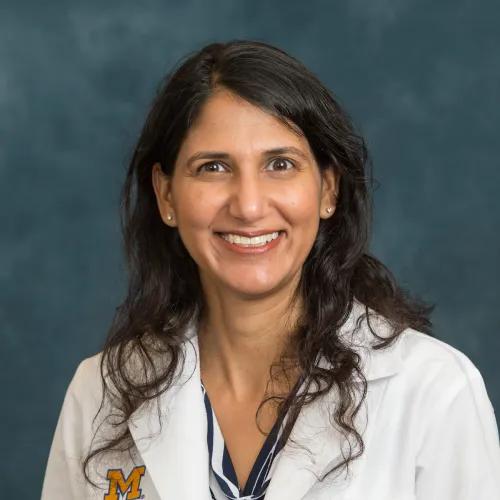
Rashmi Chugh, MD
Clinical Professor
Stay Informed
Want top health & research news weekly? Sign up for Health Lab’s newsletters today!
Featured News & Stories
Online resources and coaching helped people seek genetic testing for cancer
Comprehensive DNA sequencing reveals hidden drivers of cancer
‘Molecular glue’ stabilizes protein that inhibits development of non-small cell lung cancer and uterine cancer
Exceptional response to immunotherapy gives patient with liver cancer more milestones to celebrate
FDA-approved drug offers hope for patients with polycythemia vera, a rare bone marrow disorder