Small daily activities may help ease dementia caregivers’ stress

Pilot study shows engaging in positive activities improves experience for caregivers, recipients

4:00 PM

Elderly man stands outside in a snowy neighborhood. He is holding a white mug of coffee in his right hand and has his left hand in a coat pocket. He is staring ahead, presumably taking in the snowy scene around him.
Photo credit: Adobe Stock

Written by Wendy Lombard

Nearly 12 million people in the U.S. provide unpaid care to a relative or friend with Alzheimer’s disease and related dementias (ADRD).  


Compared with caregivers of people without dementia, ADRD caregivers face greater demands that may contribute to higher rates of depression, anxiety, sleep problems, reduced physical activity, and chronic illness.  


When caregivers experience poor physical or emotional health, the health and well being of those receiving care may also suffer.   


Research suggests that engaging in positive activities can improve caregivers’ mood and support their physical and emotional well being. Yet, existing caregiver interventions are often burdensome and may not prioritize positive activities.  


To address these gaps, Sung Won Choi, M.D., M.S., an Edith S. Briskin and Shirley K. Schlafer Foundation Research Professor of Pediatrics at the University of Michigan Medical School developed Roadmap, a mobile health (mHealth) app featuring eight positive activity modules for caregivers.  


Previous studies across multiple caregiver populations demonstrated the app’s feasibility, acceptability, and efficacy, but it had not been tested specifically among ADRD caregivers.  


Choi collaborated with colleagues including Noelle Carlozzi, Ph.D., Director of U-M’s Center for Clinical Outcomes Development & Application, and Kira Birditt, Ph.D., Research Professor, Survey Research Center, Institute for Social Research at U-M to assess Roadmap’s feasibility and acceptability. 


In a pilot study involving 20 dementia caregivers, participants engaged in positive activities on 87% of study days and completed 95% of nightly surveys, demonstrating high feasibility.  


The app received moderate acceptability ratings ranging from 72% to 78%. Notably, on days caregivers engaged in positive activities, they also reported less stress and depression and a more positive mood.  


“These findings suggest that even small, manageable positive activities may make a meaningful difference in caregivers’ daily well-being,” said Carlozzi.  


“By making this type of support accessible through a mobile app, we hope to give dementia caregivers practical tools they can incorporate into their daily lives without adding to their already substantial demands.”  


These promising findings, recently published in Frontiers in Dementia, lay the groundwork for a future randomized controlled trial examining whether Roadmap can improve ADRD caregivers’ mental health.  


Additional authors: Yee To Ng, Lizabeth Benson, Allison Doroschewitz, and Angela Turkelson from the Institute for Social Research, University of Michigan, Ann Arbor, MI, United States. 


Paper cited: “Use of the Roadmap positive activity app in daily life among dementia caregivers: evidence of feasibility and acceptability,” Frontiers in Dementia. DOI: doi.org/10.3389/frdem.2026.1861809 


Sign up for Health Lab newsletters today. Get medical tips from top experts and learn about new scientific discoveries every week. 


Sign up for the Health Lab Podcast. Add us wherever you listen to your favorite shows.  


More Articles About:

Mental Health caregiving Depression Alzheimer's Disease anxiety
Health Lab word mark overlaying blue cells

Health Lab

Explore thousands of health news & research stories by visiting the Health Lab homepage for more.

Media Contact

University Hospital at U-M Health in the spring with flowering trees in foreground and Survival Flight helicopter visible

Public Relations

Department of Communication at Michigan Medicine

[email protected]

734-764-2220

In This Story

Noelle E. Carlozzi, PhD

Noelle Carlozzi, PhD

Professor

Sung W. Choi

Sung W Choi, MD, MS

Professor

Related

older woman walking with older man look from behind in their home
Health Lab

For traumatic brain injury caregivers, a mobile health intervention that may improve quality of life
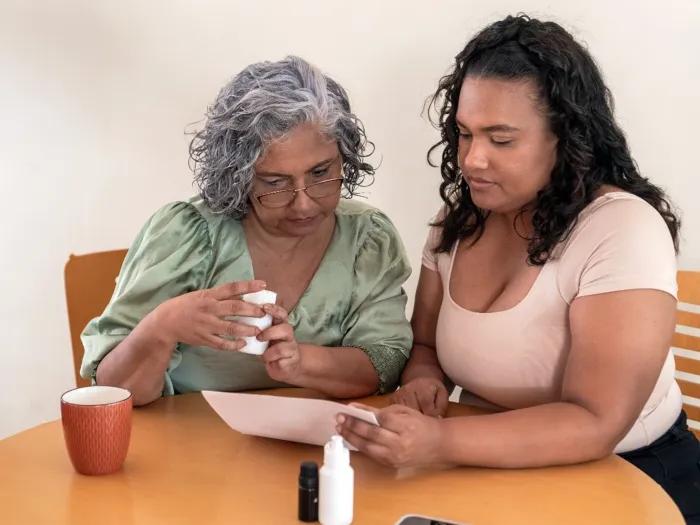
It is important for caregivers to take care of their personal needs and mental health to efficiently give care to others. University of Michigan Health researchers are using a new app to remind caregivers to check in with their own physical and mental wellbeing.
woman with older woman at table helping on tablet
Health Lab

First person-centered measure of dementia caregiving styles improves partner, patient outcomes

First person-centered measure of dementia caregiving styles improves partner and patient outcomes.

Stay Informed

Want top health & research news weekly? Sign up for Health Lab’s newsletters today!

Subscribe

Featured News & Stories

David Diebold smiles as he rings the bell at the end of the HURT100.
Philanthropy News

Going the extra 100 miles

U-M Medical School student runs the HURT100 ultramarathon to raise funds for the Michigan Alzheimer's Disease Center and the Alzheimer's Association.
Politics depression image
Health Lab

5 ways to manage politically induced stress

A Michigan Medicine psychiatrist offers strategies for how to be mindful of depression and anxiety symptoms around the topic of politics
Minding Memory with a microphone and a shadow of a microphone on a blue background
Minding Memory

Antipsychotic Use in Nursing Homes: Balancing Medication Safety, Policy, and Dementia Care

In this episode, Lauren Gerlach and Matt Davis speak with Theresa Shireman, PhD, Director of the Center for Gerontology and Healthcare Research and a Professor of Health Services, Policy and Practice and Epidemiology at the Brown University School of Public Health. Dr. Shireman’s research focuses on pharmaceutical policy, pharmacoepidemiology, health services research, and medication use among vulnerable populations. Dr. Shireman discusses her recent study, "Impact of Federal Antipsychotic Use Policy in Nursing Homes on New Diagnoses for Approved Indications in Dementia Residents," published in the Journal of the American Geriatrics Society. The study examines whether federal policies designed to reduce antipsychotic use in nursing homes were associated with increases in new diagnoses of conditions, such as schizophrenia, that exclude residents from publicly report antipsychotic quality measures. Using an interrupted time-series design, the researchers examined changes following the 2012 National Partnership to Improve Dementia Care and the 2015 addition of antipsychotic use to the Nursing home Five-Star Quality Rating System. They found that neither policy was associated with an increase in new exclusionary diagnossees, challenging concerns that nursing homes were increasingly assigning these diagnoses to circumvent restrictions on antipsychotic use. The conversation also explores the benefits and risks of antipsychotic medications for people living with dementia, including the potential for serious adverse effects such as sedation, falls, stroke, and increased mortality. Dr. Shireman discusses how public reporting and financial incentives can influence prescribing practices,the limitations of using a single quality measure to evaluate nursing home care, and the importance of balancing medication safety and residents’ individual needs. The discussion highlights the need for shared decision-making among clinicians, nursing home staff, residents, and families, as well as greater investment in staffing, resources, and nonpharmacological approaches to improve quality of life for people living with dementia. The transcript for this episode can be found here.
pills close up some powder some round some long
Health Lab

What’s the latest on 7-OH and kratom availability and addiction care?

The United States Drug Enforcement Agency has announced it will place non-botanical products containing 7-OH on Schedule I, joining three other synthetic opioids, effectively removing them the market, leaving natural leaf kratom available amid a shortage of addiction treatment providers.
female surgeon on ground upset hands to face in scrubs and scrub shoes
Health Lab

Depression in OBGYN residents needs more attention, study suggests

New onset depression in obstetrics and gynecology residents in their intern year is common and often untreated, and linked to depression history, higher work hours and less sleep.
Minding memory above a microphone on a blue background
Minding Memory

Can Your Voice Reveal Early Signs of Alzheimer’s?

In this episode, Lauren & Matt speak with Neguine Rezaii, MD, an Assistant Professor of Neurology at Harvard Medical School and a Board-Certified Neuropsychiatrist at Mass General Hospital. Dr. Rezaii’s research focuses on using natural language processing and artificial intelligence to improve the detection and classification of neurodegenerative disorders. Dr. Rezaii talks about her recent study, “Voiceprints of Cognitive Impairment: Analyzing Digital Voice for Early Detection of Alzheimer’s and Related Dementias,” which explores how artificial intelligence can analyze short speech samples to identify subtle signs of cognitive impairment. The study used speech recordings from 120 individuals and found that features such as pauses, word choice and the specificity of language can help distinguish cognitive impairment and Alzheimer’s disease. The conversation also explores how a simple 30-second speech test could potentially be used in clinical settings to support earlier detection and monitoring of cognitive impairment, as well as the challenges and ethical considerations that come with using AI to analyze something as personal as a person’s voice.