Sleep apnea contributes to dementia in older adults, especially women
Women with known or suspected sleep apnea were more likely than men to have symptoms or a diagnosis of dementia at every age level
9:59 AM
Author |
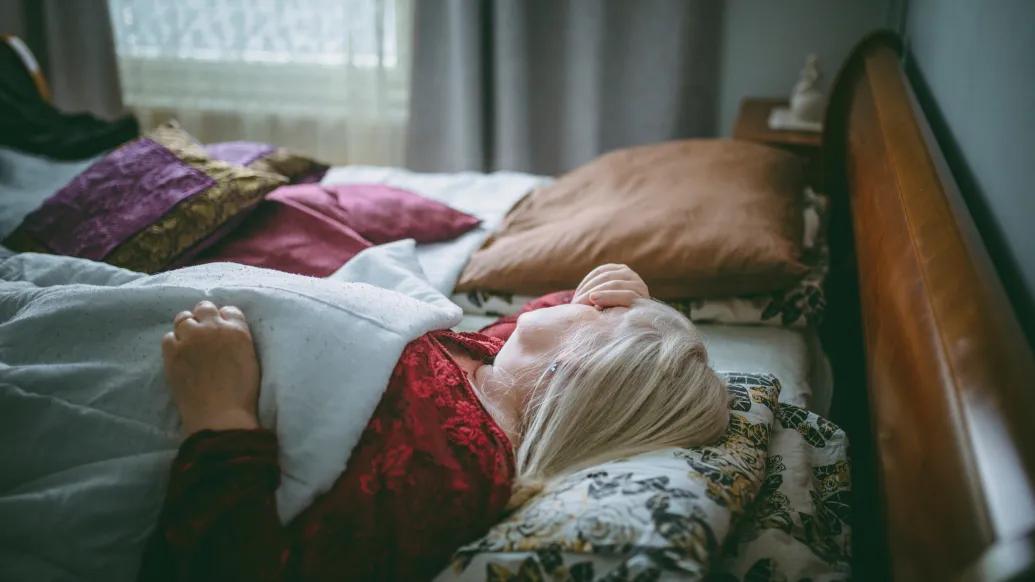
A common yet underdiagnosed sleep disorder contributes to the development of dementia among adults — particularly women, a Michigan Medicine study suggests.
Investigators uncovered this by examining survey and cognitive screening data from more than 18,500 adults to determine the potential effect of known or suspected obstructive sleep apnea on the risk for dementia.
Obstructive sleep apnea is a chronic sleep disorder characterized by episodes disrupted or restricted breathing during sleep.
For all adults age 50 and older, having known obstructive sleep apnea or its symptoms — as people often do not know they have the problem — was associated with a higher chance of having signs or a diagnosis of dementia in coming years.
While the overall difference in those dementia diagnoses never rose above 5%, the association remained statistically significant even after researchers accounted for many other factors that can affect dementia risk, such as race and education.
At every age level, women with known or suspected sleep apnea were more likely than men to be diagnosed with dementia.
In fact, the rate of dementia diagnosis decreased among the men and grew larger for the women as they aged.
The results are published in SLEEP Advances.
“Our findings offer new insight into the role of a treatable sleep disorder on long-term cognitive health at the population level for both women and men,” said first author Tiffany J. Braley, M.D., M.S., neurologist, director of the Multiple Sclerosis/Neuroimmunology Division and co-founder of the Multidisciplinary MS Fatigue and Sleep Clinic at University of Michigan Health.
Reasons for the sex-specific differences in dementia diagnosis by sleep apnea status, researchers say, are not yet known. However, they pose several possible explanations.
SEE ALSO: 11 ways to reduce your risk of dementia
Women with moderate sleep apnea may have a greater risk of cardiovascular disease and are more likely to have insomnia, both of which can negatively impact cognitive function.
“Estrogen starts to decline as women transition to menopause, which can impact their brains,” said co-author Galit Levi Dunietz, Ph.D., M.P.H., an associate professor in the University of Michigan Department of Neurology and Division of Sleep Medicine.
“During that time, they are more prone to memory, sleep and mood changes that may lead to cognitive decline. Sleep apnea increases significantly post-menopause yet remains underdiagnosed. We need more epidemiologic studies to better understand how sleep disorders in women impact their cognitive health.”
Six million Americans have been officially diagnosed with sleep apnea, yet the disorder is believed to affect closer to 30 million people.
In a 2024 report, a Lancet Commission identified several modifiable risk factors that together account for around 40% of global dementia.
While sleep was not included as an official risk factor, the commission noted that sleep apnea “might be associated with dementia” and to consider adding screening questions about dementia for people with the sleep disorder.
Other modifiable risk factors for dementia include cardiovascular disease and mental health problems, both of which may be exacerbated by untreated sleep apnea.
“These potential harms caused by sleep apnea, many of which threaten cognitive performance and decline, highlight the importance of early diagnosis and treatment,” Braley said.
“Obstructive sleep apnea and resultant sleep deprivation and fragmentation are also associated with inflammatory changes in the brain that may contribute to cognitive impairment.”
SEE ALSO: Insomnia, sleep apnea contribute to reports of cognitive decline in women with multiple sclerosis
The Michigan Medicine study used existing data from the Health and Retirement Study, an ongoing survey that is representative of Americans aged 50 and older.
“This study design cannot fully prove that sleep apnea causes dementia — that would likely require a randomized trial, over many years, to compare effects of sleep apnea treatment to the effects of no treatment,” said co-author Ronald D. Chervin, M.D., M.S., director of the Division of Sleep Medicine in the Department of Neurology at U-M Health.
“As it may be a long time if ever until such a trial occurs, backward-looking analyses such as ours, within large databases, may be among the most informative for years to come. In the meantime, the results provide new evidence that clinicians and patients, when making decisions about testing for sleep apnea and treating it, should consider the possibility that untreated sleep apnea causes or exacerbates dementia.”
Additional authors: Xiru Lyu, M.S., Paul C. Schulz, M.S., Henry L. Paulson, M.D., Ph.D., and Kerby Shedden, Ph.D., all of University of Michigan, and Riley Bove, M.D., of University of California San Francisco.
Funding/disclosures: This work was funded by National Institute on Aging R01AG074342 (Braley/Dunietz MPIs.)
Paper cited: “Sex-specific dementia risk in known or suspected obstructive sleep apnea: A 10-year longitudinal population-based study,” SLEEP Advances. DOI: 10.1093/sleepadvances/zpae077

Health Lab
Explore thousands of health news & research stories by visiting the Health Lab homepage for more.
Media Contact

Public Relations
Department of Communication at Michigan Medicine
In This Story

Ronald D Chervin, MD, MS
Professor

Tiffany J Braley, MD, MS
Associate Professor
Galit Levi Dunietz, PhD, MPH
Associate Professor
Stay Informed
Want top health & research news weekly? Sign up for Health Lab’s newsletters today!
Featured News & Stories
Better prenatal care data could help prevent maternal complications, experts say

What’s changing in Medicaid and what can you do?

Nerf gun accident causes retinal detachment in pediatric patient

Michigan Alzheimer's Disease Research Center receives $22M to advance efforts statewide

Rabies is on the rise: Experts offer advice