Should teens use protein supplements?
Teen boys more likely to use protein powder, shakes or bars for muscle growth and sports performance, national poll suggests
11:55 AM
Author |

Protein bars, shakes and powders are increasingly popular among adults – but many teens may be jumping on the bandwagon too.
Two in five parents say their teen consumed protein supplements in the past year, according to the University of Michigan Health C.S. Mott Children’s Hospital National Poll on Children’s Health.
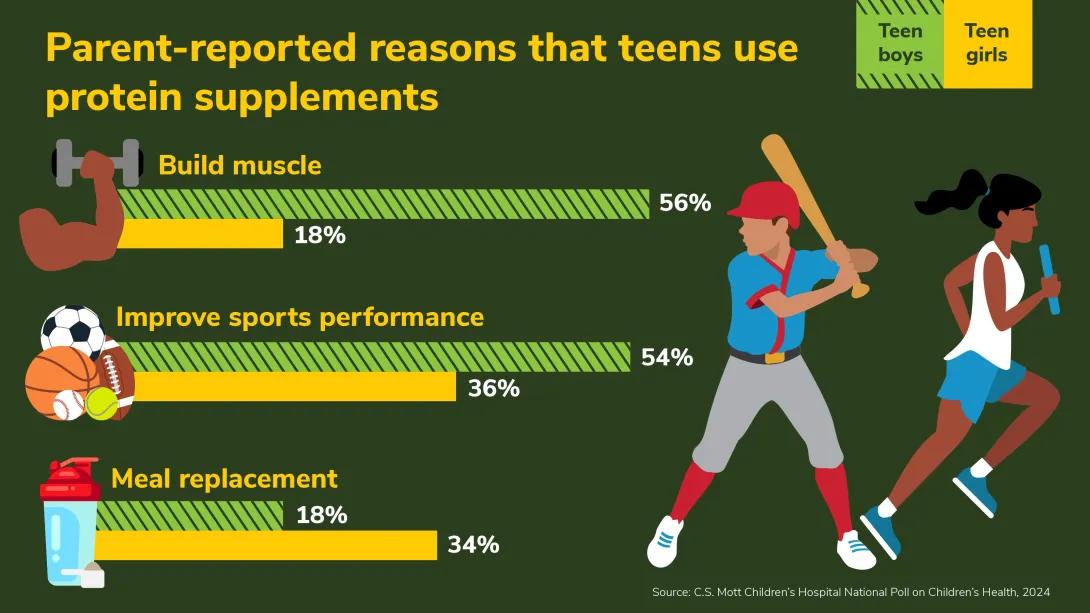
The trend was more common among teen boys who were also more likely to take protein supplements every day or most days, parents reported.
“Protein is part of a healthy diet but it can be hard for parents to tell if their child is consuming the right amount,” said Mott Poll co-director Sarah Clark, M.P.H.
“Our poll highlights that many teens are using protein supplements, particularly protein powders, to improve their athletic performance and build muscle.”
Using protein supplements for muscle growth, sports
Parents of boys were more likely to say their teen consumed protein supplements to boost muscle growth and for athletic training while girls appeared to use them more often to replace a meal when they were busy or to help with a balanced diet.
About one in 10 parents also indicated that their teen used protein supplements to help with weight loss, more commonly reported among parents of teen girls.
Before turning to protein supplements, it’s helpful for parents and teens to think about what they want to accomplish, Clark notes.
In many cases, teens can get adequate protein by eating a balanced diet.
Consultation with the teen’s primary care provider or a nutritionist can provide insight on whether protein supplements would be helpful and, if so, guidance on what products would best fit with the teen’s goals.
“Despite what some teens - and their parents or coaches - think, eating more protein than what your body needs will not result in larger or faster muscle gains,” she said.
“Instead, it’s helpful to consume the recommended amount of protein spread throughout the day, at each meal and snack.”
Choosing wisely
When busy teens have little time to eat, well-meaning parents may replace a meal with what they believe is a healthy alternative.
However, parents should not assume that products labelled as high in protein are healthy options.
“Despite what some teens - and their parents or coaches - think, eating more protein than what your body needs will not result in larger or faster muscle gains.”
-Sarak Clark, M.P.H.
“Many protein shakes and bars have excessive amounts of added sugar and caffeine that are unhealthy for teens,” Clark said.
“Parents should help teens read labels of protein supplements and choose healthy options, such as those that contain fiber, with little or no added sugar.”
“Relying on protein shakes and bars might not provide the necessary vitamins, minerals, and fiber teens need; they aren’t meant to replace balanced meals.”
Monitoring whether teens get enough protein
Many parents think their teen’s protein intake is lacking, with nearly one in five saying their teen does not get enough, suggests the nationally representative report that includes responses from 989 parents of teens ages 13-17 surveyed in August.
“Protein is an essential part of our diets, as it helps to build muscle, manage hormones and support immune health,” Clark said.
The optimal amount of protein for each individual will vary by age, sex, weight, and level of physical activity, Clark says, and it can be challenging for parents to assess whether their teen is getting the right amount.
Parents should consider a strategy of providing at least one source of protein at each meal and encouraging teens to try a variety of protein-rich foods, including eggs, nuts, fish, lean meats, lentils, and dairy products, she says.
“Teens can generally get enough protein through a well-balanced diet,” Clark said.
“There may be some situations when teens aren’t eating a lot of food with protein. In these cases, parents may sometimes consider protein shakes or protein bars as part of a plan to increase their teen’s protein intake.”
Modeling a balanced diet
Adults’ views and behaviors toward protein supplements may also influence kids.
High protein and low carb diets are popular with many adults, and over half of parents also think a high protein diet is healthy for their teen.
However, high protein diets are not generally recommended for them since there’s a risk that they may miss other essential nutrients, including carbohydrates.
One in three parents also said they use protein supplements themselves – these parents were more likely to report their teen used them, too.
Parents should apply the same approach for themselves as for their teen, Clark says.
Generally, it’s better to get enough protein through a well-balanced diet, and if protein supplements are being considered, they should choose products that also contain fiber and other nutrients, without added sugar or caffeine.
Sign up for Health Lab newsletters today. Get medical tips from top experts and learn about new scientific discoveries every week.
Sign up for the Health Lab Podcast. Add us wherever you listen to your favorite shows.

Health Lab
Explore thousands of health news & research stories by visiting the Health Lab homepage for more.
Media Contact

Public Relations
Department of Communication at Michigan Medicine
In This Story

Sarah J Clark
Research Scientist
Stay Informed
Want top health & research news weekly? Sign up for Health Lab’s newsletters today!
Featured News & Stories
Few parents offer teens guidance on healthy eating during the holiday season

Better prenatal care data could help prevent maternal complications, experts say

Pediatric patient treated for rare kidney cancer

E-Bikes are everywhere, but most parents say they don’t know enough about them

Studying Period Pain