Should Growth Hormone Be Used for Short Stature in Kids?
Many parents worry that short stature spells psychosocial issues for children. But a U-M research review pokes holes in this premise.
8:00 AM
Author |
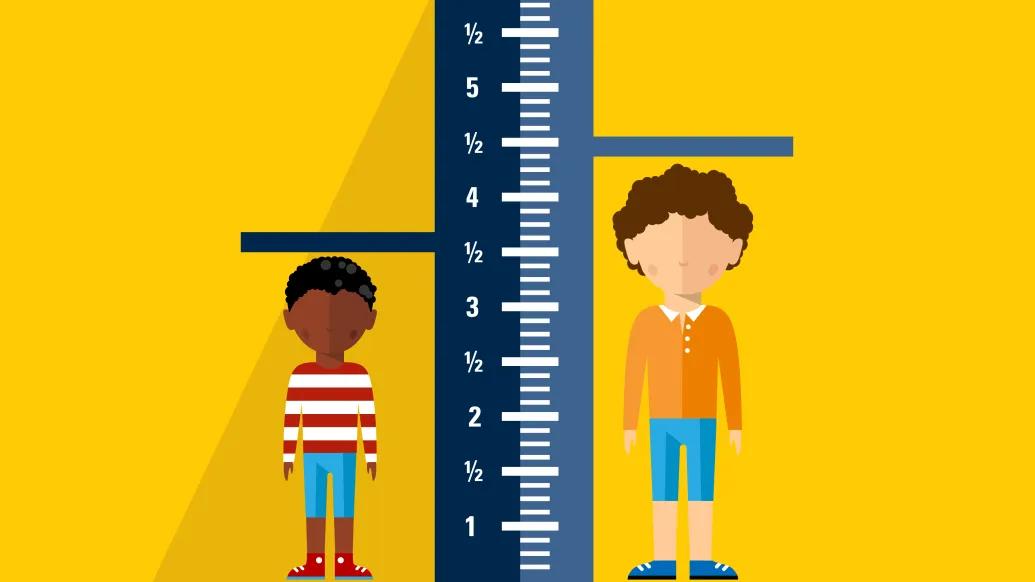
When a child is at the low end of the growth chart, parents commonly turn to their primary care provider with concerns about implications for their child.
Put simply: Will the child be picked on? Will he or she have trouble with socialization and relationship building? For a parent, these are pretty hefty concerns.
Such worries may lead parents to ask their physician whether the use of growth hormone is warranted.
In the U.S., growth hormone is approved to treat what doctors refer to as idiopathic short stature, or cases where there is not a medical cause. As a result, use of growth hormone has expanded from strictly hormone replacement to an area of care focused on treating slow growth and short stature itself.
As with most medical recommendations, physicians generally consult research for evidence to guide their thinking. But, does the data they're working from tell the full story?
Challenging primary care considerations
Rationale supporting the use of growth hormone to manage short stature comes from several assumptions about the short- and long-term psychological impact of stunted height. For years, these assumptions have been rooted in past studies concerning the negative consequences children experience from being short.
New research challenges this idea, however, because of flaws in the design of past studies. In fact, the vast majority of previously available research on the topic has design issues, according to a review published in The Journal of Clinical Endocrinology & Metabolism.
"We looked at the reports of 80 research studies related to short stature and growth hormone treatment, and found that there was a high risk of bias in the studies due to flaws in the study design, execution or reporting of results," says study co-author David Sandberg, Ph.D., professor of pediatrics and director of Pediatric Psychology at C.S. Mott Children's Hospital at University of Michigan Health System.
"Only one of the studies included the gold standard in research — a randomized and blinded, placebo-controlled study. Even that one was flawed for other reasons."
If I'm a parent facing these decisions, I say look at whether you are concerned about issues the child is facing now, or issues you think he or she may face in the future.David E. Sandberg, Ph.D.
Weighing the risks
Typically, pediatricians refer children below the 3rd percentile in height to an endocrinologist to discuss growth issues and intervention. Doctors refer boys more frequently than girls.
In some cases, such as when short stature is caused by a medical condition, use of growth hormone might be appropriate to allow the person to achieve an adult height in the normal range for the general population. For patients with medical conditions such as Prader-Willi syndrome, growth hormone therapy may offer benefits beyond enhancing height, such as reducing body mass index.
For other patients, the discussion about whether to use growth hormone is more complex. There are few studies on the long-term impact of growth hormone treatment in those who are not growth hormone deficient. But there are potential hazards, such as an increased risk for diabetes.
Some children might find being short a challenge, but for many others it is not an issue and not worth the burden of daily injections or the uncertainties that come with treatment.
"When I meet with a child who is short, I ask if they are having issues now because of their height. Are they being bullied? Excluded? Teased?" says Sandberg. "If that is the case, we can help the child develop strategies to handle those challenges. Growth hormone works slowly over years, so we give them the tools they need now to deal with any issues they may face."
The bottom line
Until there are more strong studies on the psychological benefits of receiving growth hormone and the long-term safety of treatment (including years after discontinuing treatment), parents will need to make the decision without the benefit of reliable research.
"If I'm a parent facing these decisions, I say look at whether you are concerned about issues the child is facing now, or issues you think he or she may face in the future," says Sandberg. "If there are issues now, like bullying, we can address these now. If the concerns are about the future, it's important to discuss the benefits of growth hormone treatment versus the questionable benefits and still unknown long-term health risks."

Health Lab
Explore thousands of health news & research stories by visiting the Health Lab homepage for more.
Media Contact

Public Relations
Department of Communication at Michigan Medicine
Stay Informed
Want top health & research news weekly? Sign up for Health Lab’s newsletters today!
Featured News & Stories
Antibiotic prescriptions for kids plummet during pandemic

Study: Hospitalizations for eating disorders spike among adolescents during COVID

Cellphones at Summer Camp: Research Explores the Effects

Better prenatal care data could help prevent maternal complications, experts say

E-Bikes are everywhere, but most parents say they don’t know enough about them