Rx Kids linked to reductions in preterm births and low birthweights, fewer NICU admissions
Direct support during pregnancy and infancy associated with healthier babies and stronger starts
11:52 AM

This article was written by Laura Cane.
A new study found that Rx Kids, the nation’s first community-wide prenatal and infant cash prescription program, was associated with significant improvements in birth outcomes for infants born in Flint, Mich.
The program was associated with reduced low birthweight and preterm birth rates and reduced admissions to the neonatal intensive care unit, according to the study published in The Lancet Public Health.
The findings show that providing direct support during pregnancy and infancy can improve maternal and infant health.
This is among the first population-level studies in the United States showing that direct economic support during pregnancy improves birth outcomes.
Researchers from Michigan State University and the University of Michigan analyzed approximately 4,500 births in Flint between January 2021 and June 2025, comparing outcomes before and after the launch of Rx Kids to similar cities in the state without the program.
Before Rx Kids, low birthweight and preterm birth rates in Flint were increasing from 2021-2023.
After the program began in 2024, those trends reversed. Compared to similar communities, Flint experienced meaningful declines in both outcomes.
Following the launch of Rx Kids, Flint saw an estimated 18% reduction in preterm births and a 27% reduction in low birthweight.
These improvements contributed to a roughly 29% decrease in NICU admissions, generating millions in health care savings.
“When we look at population-level data, we can see that Rx Kids is making a measurable difference in the health of babies at birth,” said Sumit Agarwal, M.D., M.P.H., Ph.D., a physician and health economist at the University of Michigan, Assistant Professor at the U-M Medical School and School of Public Health, and a faculty affiliate of Poverty Solutions at U-M.
"These results show that providing economic support during pregnancy can improve infant health at a population level.”
Previous Rx Kids research has shown a near-universal participation rate with improvements in housing stability, food hardship, maternal mental health, as well as an increase in prenatal care utilization and trust in healthcare institutions.
Along with a decrease in smoking during pregnancy, all of these outcomes are key drivers of healthier births.
“These findings are a big deal and should change how our country thinks about maternal and infant health,” said Mona Hanna, M.D., M.P.H., Director of Rx Kids and Associate Dean of Public Health at Michigan State University College of Human Medicine.
“For decades, we’ve talked about the social drivers of health. This study shows we can actually change them — and improve outcomes at a population level. Poverty is a powerful pathogen harming moms and babies, but these findings prove it is also treatable. When we invest directly in families during pregnancy and infancy, we prevent complications, reduce NICU admissions, and give children a healthier start for life.”
Rx Kids was designed to improve maternal and infant health by addressing the economic shock that accompanies childbirth — when income often drops and expenses surge.
At the same time, this period marks a critical window for child development, with conditions in utero and early infancy shaping lifelong health and development.
The program provides $1,500 during pregnancy and $500 per month during infancy for babies in participating communities.
Since launching in 2024, Rx Kids has expanded to 42 Michigan communities and provided direct support to more than 11,000 families.
The program has demonstrated improvements in family financial stability, prevention of child welfare system involvement, and meaningful economic benefits, with millions of dollars flowing directly into local businesses and communities.
Rx Kids is led by Michigan State University and administered by GiveDirectly, with support from the State of Michigan and a growing family of funders, through a public-private partnership.
Agarwal is a member of the U-M Institute for Healthcare Policy and Innovation, as is Luke Shaefer, a study co-author and original director of U-M Poverty Solutions who is on leave to the City of Detroit to serve as its inaugural Chief Executive of Health, Human Services and Poverty Solutions.
About Rx Kids
Rx Kids is the nation’s first-ever, community-wide maternal and infant cash prescription program, founded and directed by Mona Hanna, pediatrician and Associate Dean of Public Health at Michigan State University College of Human Medicine. Administered by GiveDirectly, the global leader in cash transfers, Rx Kids has efficiently delivered direct support to thousands of families across dozens of communities—strengthening family financial security, improving maternal and infant health, and boosting local economies.
Rx Kids is built on a strong network of partners who bring together academic leadership, community expertise, and public–private investment to make this vision possible. Co-founded by Michigan State University and Poverty Solutions at the University of Michigan, Rx Kids is implemented in partnership with local Community Champions and stakeholders who drive outreach, engagement, and celebration. Sustained through a robust public–private partnership that blends state investment with philanthropic and other support, Rx Kids reimagines what’s possible with a prescription for health, hope, and opportunity.
Additional authors: In addition to Agarwal, Hanna and Shaefer, the study’s authors are MSU researchers Yasamean Zamani-Hank, Ph.D., Eric Finegood, Ph.D. and Jenny LaChance, M.S.
Paper cited: "The effects of the Rx Kids unconditional cash prescription programme during pregnancy and infancy on birth outcomes in the USA: a population-based, quasi-experimental study," Lancet Public Health. DOI: 10.1016/S2468-2667(26)00055-1
Sign up for Health Lab newsletters today. Get medical tips from top experts and learn about new scientific discoveries every week
Sign up for the Health Lab Podcast. Add us wherever you listen to your favorite shows

Health Lab
Explore thousands of health news & research stories by visiting the Health Lab homepage for more.
Media Contact

Public Relations
Department of Communication at Michigan Medicine
In This Story
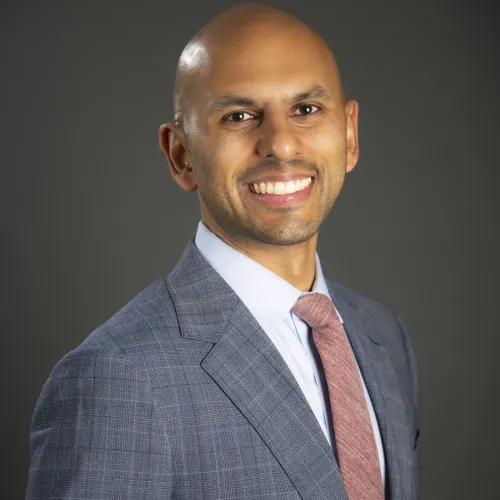
Sumit Agarwal, MD, MPH, PhD
Assistant Professor
Stay Informed
Want top health & research news weekly? Sign up for Health Lab’s newsletters today!
Featured News & Stories
Better prenatal care data could help prevent maternal complications, experts say
Pain, psychological factors and physical function closely linked in people with systemic sclerosis
Many hospitals still don’t do enough to prevent UTIs from catheters

Digital alerts support timely treatment decisions of critically ill cardiac patients

Rural-urban disparities in head and neck cancer