Roy’s Michigan Answer: Second opinion saves patient’s heart
A team’s expertise in advanced, minimally invasive coronary interventions restored one ski pro to good health
5:00 AM
Author |
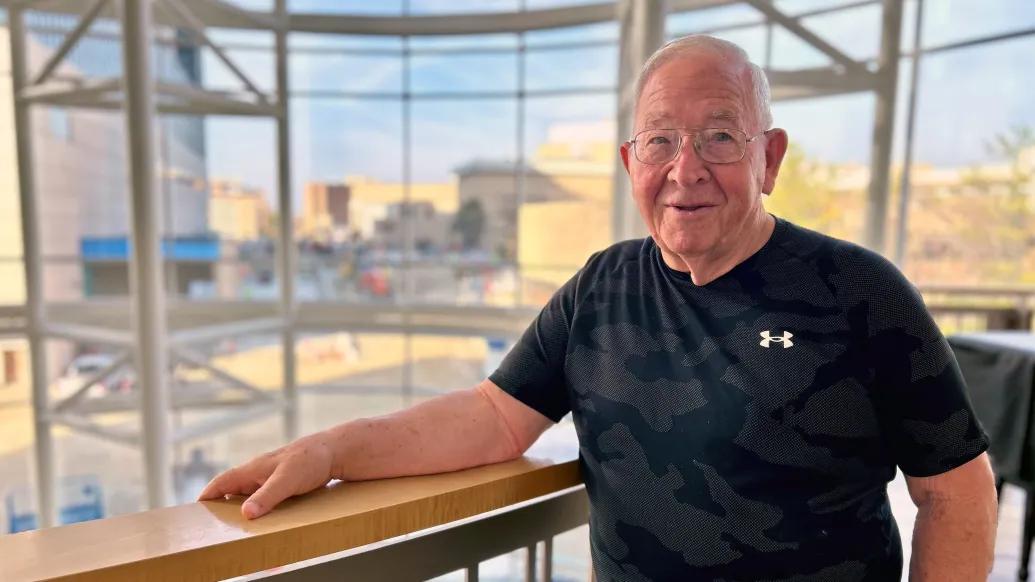
Roy Schaefer describes himself as being “a little tougher than your average dog.”
That may explain his matter-of-fact response to receiving unexpected heart health news that may have frightened most people.
Last summer, Schaefer had gone to a local hospital near his home in Cheboygan County in northern Michigan for treatment of cellulitis, a bacterial skin infection, in his left leg.
Doctors noticed the 85-year-old was showing other symptoms of heart failure – shortness of breath and leg swelling – and admitted him to the hospital for a full workup.
“The night before I went into the hospital, I had chills really bad,” Schaefer said.
“I’ve been in the ski business all my life. I know cold. This was different – I may have actually had a mild heart attack.”
They found he had severe aortic stenosis, a narrowing of the valve that opens to pump blood from the heart to the rest of the body.
With the valve leaflets thickened by calcium buildup, Schaefer’s heart was extremely weakened and its function seriously diminished.
Equally troublesome, they found significant blockages in the circumflex artery, located at the back of the heart, and complete blockage of the left anterior descending artery, or LAD, often referred to as the widowmaker artery.
Then Schaefer got the news.
“Basically, I’m 85 years old, and they told me there wasn’t anything they could do for me,” he recalled.
“They said they wouldn’t be able to unplug the arteries.”
The local hospital discharged him with no hope, other than instructions to go home and take aspirin.
But the tough dog who learned to ski at two and spent his career teaching the sport and owning and operating ski resorts in New England, was far from ready to give up.
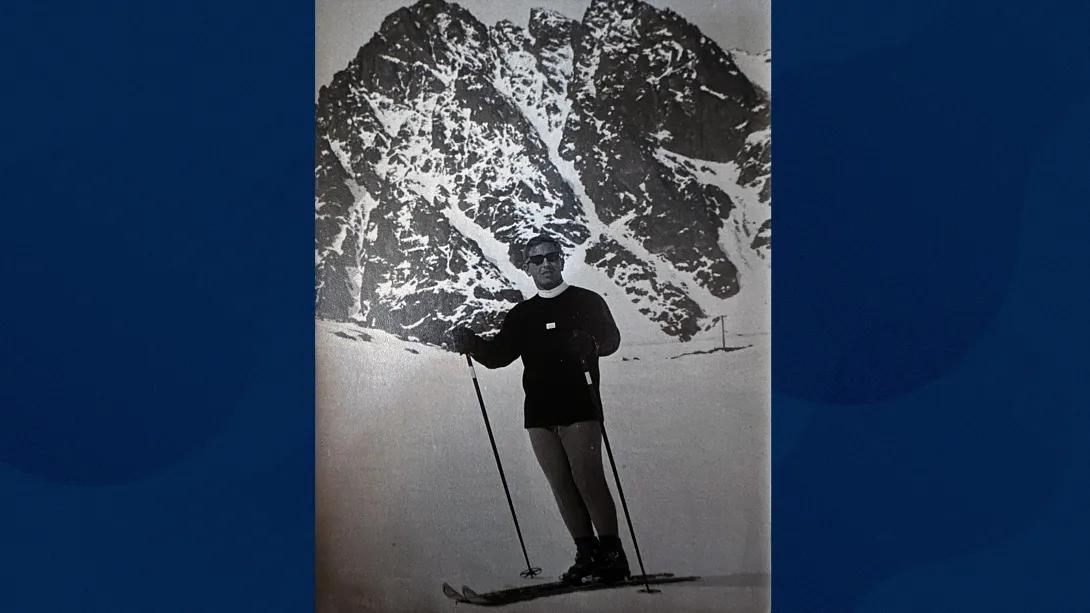
His former business partner Paul W. Brown, who had served on the University of Michigan Board of Regents, advised Schaefer to seek a second opinion from the experts at University of Michigan Health Frankel Cardiovascular Center.
“Paul said to come on down [to Ann Arbor] and get 10 more years on my life. I said I’ll take 12,” Roy quipped.
A multidisciplinary team approach
Schaefer had an initial consult with cardiologist John Bisognano, M.D., Ph.D., who immediately referred him to Frankel CVC’s multidisciplinary cardiac valve disease team who admitted him to the hospital while they began planning to save his life.
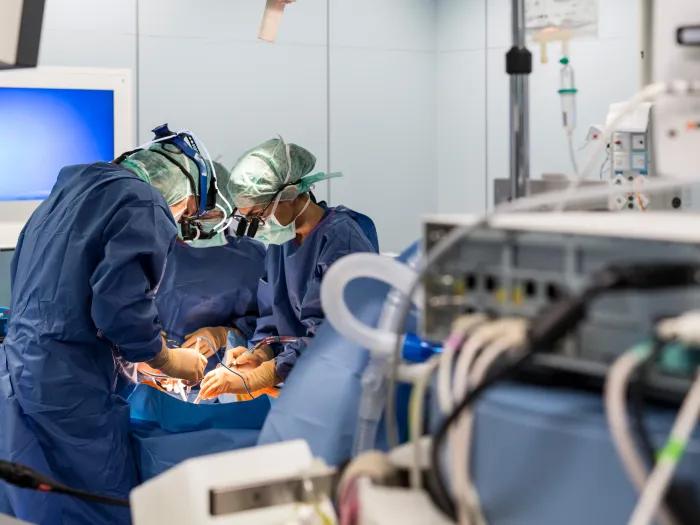
Given the complexity of his case, the team agreed upon a series of advanced, minimally invasive procedures to open the blocked arteries and replace the diseased aortic valve.
“To take care of him safely, he needed a number of things done that many other institutions are not capable of performing,” said Daniel Menees, M.D., an interventional cardiologist and director of Frankel CVC’s Chronic Total Occlusion Program.
“Treating his arteries would not make sense if you could not fix his valve; likewise, his valve could not be fixed without being able to treat his arteries.”
They began on August 13 with interventional cardiologist Eric Cantey, M.D., performing a percutaneous coronary intervention to remove the blockages in Schaefer’s circumflex artery.
Using specialized equipment and advanced techniques, Cantey placed two small mesh tubes, or stents, to widen and support the walls of the artery and restore normal blood flow.
Two days later, Menees and cardiac interventionalist Brett Wanamaker, M.D., FACC, FSCAI, tackled Schaefer’s completely blocked LAD at the front of his heart, inserting four stents.
Frankel CVC is one of the few teams in Michigan with specialized expertise in catheter-based treatment of chronic total occlusions.
About one month later, Schaefer returned to Frankel to have his severely stenotic aortic valve replaced.
Alongside Menees, interventional cardiologist and leader of the structural heart program, Stanley Chetcuti, M.D., and cardiothoracic surgeon Kristopher Deatrick, M.D., performed an advanced, minimally invasive procedure called a transcatheter aortic valve replacement, or TAVR.
The procedure involves using a catheter to insert a new valve inside the diseased valve, sparing patients open heart surgery and improving outcomes.
“The true highlight of this case is that we work as a team, and we’re able to come together to offer options for people who are told there are no options,” Cantey said.
“It’s exciting that we’re able to take these cases where other people say no.”
A new lease on life
Just two months later, Schaefer says he feels like a new man.
“I feel great now!”
He recently returned for a follow up visit where everything checked out well.
He’ll do cardiac rehab at a hospital closer to his home and come back to Ann Arbor in a year for a checkup.
“His overall prognosis is very good,” Menees said.
“We know that without treating his aortic stenosis, his chance of being alive in two years would be only 50 percent at best given his other heart problems.”
Cantey added, “Everything we’ve seen is that he has a normal functioning valve and his heart function has recovered. Our hope is that he will live without any heart-related issues.”
Facing the diagnosis of significant heart disease and the prospect of complex procedures to treat it, was Schaefer ever discouraged?
“The reality is it’s going to go one way or the other,” he said.
“You just trust the people you’re going to work with and that they’re going to do a good job. And they did.”
“From the PAs (physician assistants) to the nurses to the doctors you can’t ask for a better team. They were as good as last year’s Michigan football team!”
Sign up for Health Lab newsletters today. Get medical tips from top experts and learn about new scientific discoveries every week.
Sign up for the Health Lab Podcast. Add us wherever you listen to your favorite shows.

Health Lab
Explore thousands of health news & research stories by visiting the Health Lab homepage for more.
Media Contact

Public Relations
Department of Communication at Michigan Medicine
In This Story
Daniel S Menees, MD
Clinical Professor
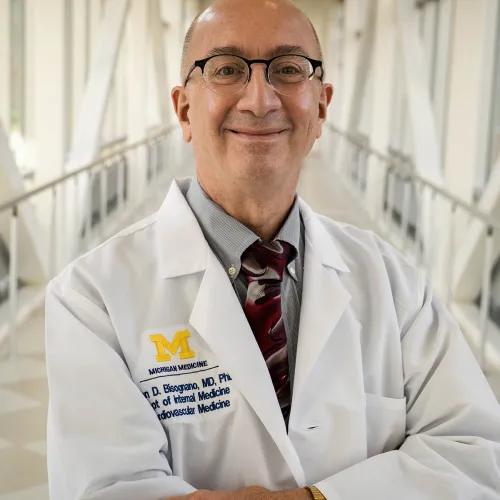
John D Bisognano
Clinical Professor
Stanley J Chetcuti, MD, FACC, FSCAI
Clinical Professor
Brett L Wanamaker MD FACC FSCAI
Clinical Associate Professor
Stay Informed
Want top health & research news weekly? Sign up for Health Lab’s newsletters today!
Featured News & Stories
Many hospitals still don’t do enough to prevent UTIs from catheters

Digital alerts support timely treatment decisions of critically ill cardiac patients

Is the United States Lagging Behind Europe in Memory Improvement?
Reducing infections after heart surgery could save Medicare $441 million per year
Young father survives aortic dissection after delayed diagnosis