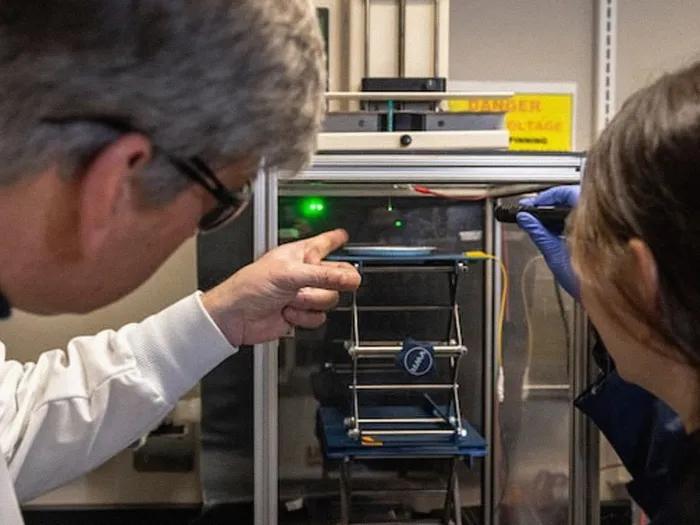
Researchers uncover novel mechanism that leads to high blood pressure
The findings may guide clinicians toward personalized management of hypertension for some patients
7:26 AM
Author |

When someone has high blood pressure, or hypertension, it results in changes to the walls of their blood vessels.
This process is known as arterial or vascular remodeling, which is driven by smooth muscle cells in the blood vessel wall.
Researchers at Michigan Medicine uncovered a key mechanism that regulates blood pressure and vascular remodeling — increasing downstream risk of heart attack and stroke — in people with a genetic variant linked to high blood pressure, a study in both animals and human samples suggests.
The results are published in The Journal of Clinical Investigation.
“These findings advance our understanding of gene-disease interactions among a growing list of variants linked to several cardiovascular conditions, such as hypertension,” said Kevin Mangum, M.D., Ph.D., first author and integrated vascular surgery resident at University of Michigan Health.
In the study, investigators analyzed the Jumonji domain-containing protein-3, commonly known as JMJD3, an enzyme that is linked to changes in systolic blood pressure in large genome wide association studies.
The research team found that JMJD3 regulates the expression of the endothelin receptors on the smooth muscle cell.
Endothelin, a chain of amino acids that is produced by endothelial and other cell types, can bind to these receptors on smooth muscle cells to control how much they constrict and dilate.
To investigate JMJD3’s role in hypertension, researchers reduced JMJD3 levels in the smooth muscle cells of mice.
The team found that JMJD3 absence decreased the production of endothelin receptor-B while increasing endothelin receptor-A levels, which limited vessel dilation and raised blood pressure.
“We see that JMJD3 is the key to an intricate balance between the two endothelin receptors that regulate blood pressure,” Mangum said.
Over time, the diminished production of endothelin receptor-B remodeled the blood vessels and raised the risk of hypertension-related complications, such as atherosclerosis and eventual heart attack or stroke, due to increased endothelin receptor-A-mediated signaling.
“A lack of JMJD3 leads to elevations in systolic blood pressure that is mediated by increased endothelin-dependent smooth muscle cell contractility,” he said.
“This occurs in the short term, but the long-term arterial remodeling in hypertension leads to downstream adverse effects on multiple organ systems.”
Investigators then targeted the rs62059712 genetic major T allele variant, which is present in around 90% of people and associated with increased blood pressure.
In both mice and human arterial samples, they found that the major allele genetic variant decreases JMJD3 expression, resulting in a “double hit” increase of both blood pressure and arterial remodeling.
The variant both increases endothelin receptor-A expression, which causes vessels to further constrict, and triggers the downstream remodeling of blood vessels through increased endothelin-ERK signaling in smooth muscle cells within the arterial wall.
When the research team treated mice with a compound, BQ-123, which blocks endothelin receptor A, it reversed hypertension after JMJD3 was deleted.
This potentially offers a targeted therapy for people with the rs62059712 genetic variant to reduce and manage high blood pressure caused by overactive endothelin signaling.
“For this specific population, introducing a personalized therapy to regulate smooth muscle cell plasticity could essentially offset the genetic disadvantage they have that predisposes them to high blood pressure,” said senior author, Katherine Gallagher, M.D., professor of surgery and microbiology and immunology at U-M Medical School and vice chair of basic and translational science in the U-M Health Department of Surgery.
“The strategy we used to determine JMJD3’s role is applicable to a growing list of genetic variants linked to cardiovascular conditions. With so many genetic variants out there, a future focus should be on applications that streamline this process.”
Additional authors: Qinmengge Li, M.S., Tyler M. Bauer, M.D., Sonya J. Wolf, Ph.D., James Shadiow, Ph.D., Jadie Y. Moon, Emily C. Barrett, M.D., Amrita D. Joshi, Ph.D., Gabriela Saldana de Jimenez, Zara Ahmed, Rachael Wasikowski, Kylie Boyer, Andrea T. Obi, M.D., Frank M. Davis, M.D., Lin Chang, M.D., Lam C. Tsoi, Ph.D, Johann Gudjonsson, M.D., Ph.D., all of University of Michigan, Scott M. Damrauer, M.D., Katherine Hartmann, M.D., Ph.D., both of University of Pennsylvania.
Funding/disclosures: This study was supported by the National Heart, Lung, and Blood Institute (HL137919, HL156274-01A1), the National Institute of Diabetes and Digestive and Kidney Diseases (DK 127531-01A1, DK124290-01, DK131799-01), and the National Institute of Arthritis and Musculoskeletal and Skin diseases (AR079863-01), all of the National Institutes of Health.
The content is solely the responsibility of the authors and does not necessarily represent the official views of the NIH.
This work was also supported by the Doris Duke Foundation, the American College of Surgeons Resident Research Award, the Vascular and Endovascular Surgical Society Resident Research Award and The Coller Surgical Society Resident Research Award.
Paper cited: “Epigenetic alteration of smooth muscle cells regulates endothelin-dependent blood pressure and hypertensive arterial remodeling,” The Journal of Clinical Investigation. DOI: 10.1172/JCI186146
Sign up for Health Lab newsletters today. Get medical tips from top experts and learn about new scientific discoveries every week.
Sign up for the Health Lab Podcast. Add us wherever you listen to your favorite shows.

Health Lab
Explore a variety of health care news & stories by visiting the Health Lab home page for more articles.
Media Contact

Public Relations
Department of Communication at Michigan Medicine
In This Story
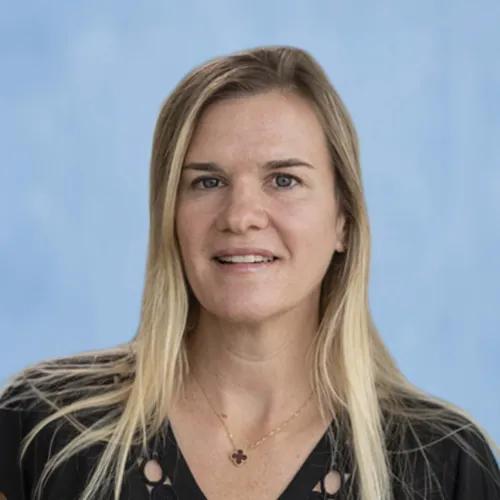
Katherine Gallagher, MD
Professor
Related

University of Michigan Health designated as state’s first Comprehensive Hypertension Center

Blood pressure high for years? Beware of stroke risk
Stay Informed
Want top health & research news weekly? Sign up for Health Lab’s newsletters today!
Featured News & Stories

Michigan’s aging brains need more protection, poll shows
Study explains how colorectal cancer cells maintain high iron levels

Could preeclampsia become a thing of the past?
Vascular STING activation facilitates natural killer cell anti-tumor immunity in small cell lung cancer
The Y chromosome is home to surprising jumping genes