Researchers find metabolic mechanism that blocks immune response, immunotherapy in cancer
Novel finding suggests a possible target for improving response to immune-based cancer treatments
11:00 AM
Author |
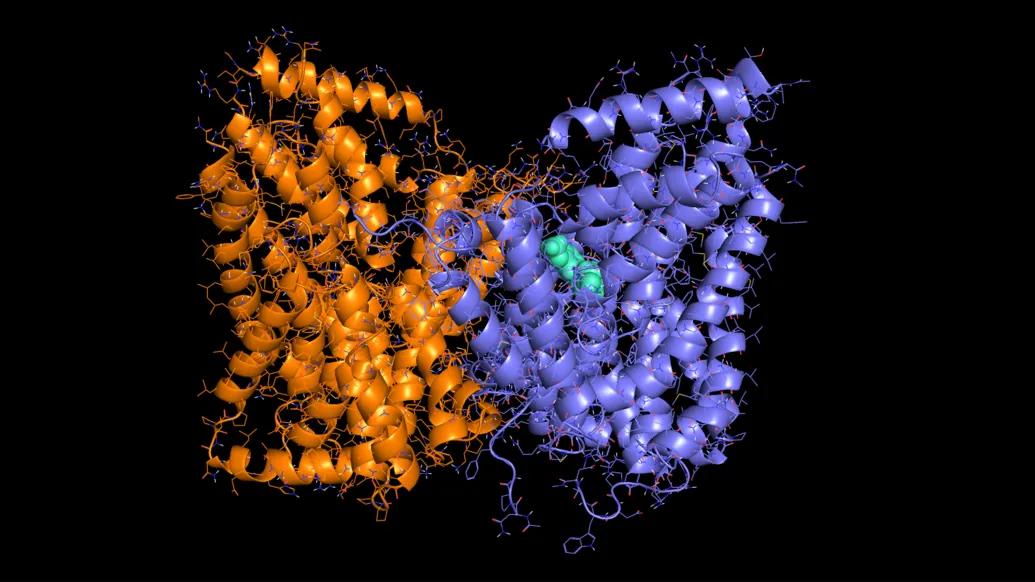
The immune system is a major target for cancer treatments.
Immune checkpoint inhibitors and CAR-T cell therapy can dramatically improve outcomes for many cancers.
But for about 70% of patients, these therapies don’t work.
Researchers at the University of Michigan Health Rogel Cancer Center have discovered a key reason why some cancers don’t respond to immunotherapy: A metabolite transporter within the tumor microenvironment that blocks a key type of tumor cell death integral to immune response.
“Tumor cells adapt their metabolic mechanisms to evade immune-base therapies. Understanding how these mechanisms of immune resistance work can provide new targets to refine immune-based treatments so they benefit more patients. Our discovery is one step in that direction,” said senior study author Weiping Zou, M.D., Ph.D., director of the Center of Excellence for Cancer Immunology and Immunotherapy at the Rogel Cancer Center.
Researchers identified SLC13A3 as a transporter of the metabolite itaconate in tumor cells that causes the cell to be resistant to ferroptosis, a form of regulated cell death.
Zou and colleagues were first to report that immune-regulated ferroptosis occurs in tumor cells and plays a key role in cancer immunotherapy, in two previous papers.
In the study, published in Cancer Cell, researchers found that high levels of SLC13A3 in patient tumor samples was associated with poor response to immunotherapy and poor overall survival in patients.
They tested this in tumor samples from patients with multiple cancer types from multiple institutions.
Researchers then validated the findings in tumor bearing mouse models in which tumor SLC13A3 was knocked out.
Deleting SLC13A3 led to reduced tumor development and progression, while restoring SLC13A3 caused tumor progression.
They also noted increased immune cells in the mice when tumor SLC13A3 was deleted, compared to those expressing SLC13A3.
Going a step further, researchers uncovered the mechanism driving this: tumor cells use SLC13A3 to uptake a metabolite called itaconate.
Then, itaconate stimulates a ferroptosis resistant mechanism and makes tumor cells resistant to ferroptotic cell death, thereby becoming unresponsive to immunotherapy.
Itaconate is produced by macrophages in the tumor microenvironment, which means there exists a detrimental crosstalk between macrophages and tumor cells via SLC13A3.
SEE ALSO: Researchers find new target to improve response to cancer immunotherapy
In collaboration with Shaomeng Wang, M.D., Ph.D., and team, researchers created a structural model of SLC13A3 to screen and identify a potential inhibitor, SLC13A3i, that could prevent tumor cells from taking up itaconate and reverse ferroptosis resistance.
They tested this inhibitor in mice as a single therapy and in combination with an immune checkpoint inhibitor.
The SLC13A3 inhibitor alone reversed the ferroptosis resistance and treated cancers in mice.
In combination, the two inhibitors blocked tumor progression and bolstered the effectiveness of the immune-based treatment in mice.
“Our studies show SLC13A3 plays a key role in shaping the fate of tumor cells and the effectiveness of immune-based cancer treatments. SLC13A3 is a promising target for developing clinically applicable SLC13A3 inhibitors that could make immune-based therapies more effective for more patients,” Zou said.
Additional authors: Heng Lin, Kole Tison, Yuheng Du, Paul Kirchhoff, Chan Kim, Weichao Wang, Hannah Yang, Michael Pitter, Jiali Yu, Peng Liao, Jiajia Zhou, Linda Vatan, Sara Grove, Shuang Wei, Thomas Vigil, Yatrik M. Shah, Richard Mortensen, Ilona Kryczek, Lana Garmire, Jwala P. Sivaccumar, Ashwin Kumar Ramesh, Ningyan Zhang and Zhiqiang An.
Funding: National Cancer Institute grants CA248430, CA217648, CA123088, CA099985, CA193136, CA152470, R01CA148828, P30CA46592 and the Welch Foundation.
Disclosure: Zhang, An, Sivaccumar, Ramesh, Zou, Lin, Wang and Kirchhoff are listed inventors in a patent application related to this work.
Paper cited: “Itaconate transporter SLC13A3 impairs tumor immunity via endowing ferroptosis resistance,” Cancer Cell. DOI: 10.1016/j.ccell.2024.10.010
Sign up for Health Lab newsletters today. Get medical tips from top experts and learn about new scientific discoveries every week.
Sign up for the Health Lab Podcast. Add us wherever you listen to your favorite shows.

Health Lab
Explore thousands of health news & research stories by visiting the Health Lab homepage for more.
Media Contact

Public Relations
Department of Communication at Michigan Medicine
In This Story

Weiping Zou
Professor
Stay Informed
Want top health & research news weekly? Sign up for Health Lab’s newsletters today!
Featured News & Stories
Study sheds light on how early pancreas lesions become cancerous
Artificial intelligence predicts genetics of cancerous brain tumors in under 90 seconds

Who’s at risk for painful periods?
Identifying avoidant, restrictive food intake disorder in gastroenterology patients
Uncovering cellular stress signal triggered by Salmonella