Researchers explore how certain growth factors affect Castleman disease
Understanding these interactions is crucial for diagnosis and targeted treatments
5:00 AM
Author |
The creation and growth of new blood vessels important for organ function is made possible by a signaling protein called vascular endothelial growth factor.
A review of recent cases and evidence finds that this growth factor may drive the biological processes of a subtype of Castleman disease, according to a paper co-authored by University of Michigan Health-Sparrow researcher Gordan Srkalovic, M.D., Ph.D.
Due to the high likelihood of death associated with this subtype of the condition, understanding its functional characteristics is critical to help find the cause and potential treatment options.
What is Castleman Disease?
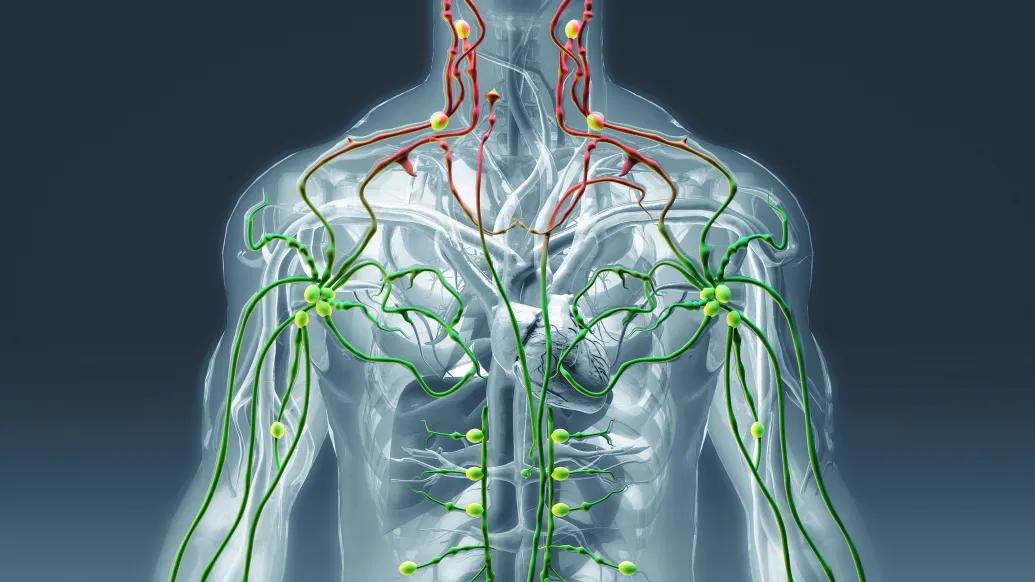
Castleman disease is a rare disorder that hyperactivates the immune system and enlarges lymph nodes and related tissue, causing major damage to the body’s organs.
In the United States there are an estimated 4,300 to 5,200 new cases diagnosed each year. It can impact anyone although most patients are at least 45 years old.
And the cause of the disease is unknown.
One type of Castleman disease is classified as idiopathic Multicentric Castleman disease, meaning it enlarges the lymph nodes in multiple regions of the body.
This category has three subtypes:
- Idiopathic plasmacytic lymphadenopathy - a rare benign inflammatory disease which causes large amounts of antibody production in the lymph nodes
- Idiopathic Multicentric Castleman disease with TAFRO syndrome - a combination of symptoms like low platelets, swelling from fluid build up, fever, kidney dysfunction and an enlarged spleen or liver
- Idiopathic Multicentric Castleman disease, not otherwise specified - diagnosed in patients who do not have TAFRO or idiopathic plasmacytic lymphadenopathy
Because idiopathic Multicentric Castleman disease with TAFRO is so difficult to diagnose and has the poorest prognosis, especially within the first six months, researchers say quick diagnosis and treatment are vital for survival.
That’s why Srkalovic, along with three other leading experts in Castleman disease, are working to better understand and distinguish the disease’s mechanistic features.
“If we can diagnose Castleman disease early, we have a greater chance of having a much better outcome,” Srkalovic said.
“Because the disease is so rare, our goal is to educate the broader medical community about the disease and possible ways to diagnose it.”
The findings
Previous studies have suggested that iMCD is characterized by a cytokine storm, often driven by interleukin 6, a protein in your body that helps with your immune response.
It causes a fever when you have an autoimmune disease, an infection or other illnesses.
However, the review found that vascular endothelial growth factor also plays a significant role in the biological processes of iMCD-TAFRO - rather than interleukin 6 alone.
Researchers say vascular endothelial growth factor interacts with the interleukin 6axis, contributing to disease progression.
This makes targeting specific receptors challenging, and patients will likely require treatment using diverse therapies.
“Explaining how this deadly disease develops and progresses could lead to earlier diagnosis and more effective ways to treat. At present, treatment is focused on cytotoxic therapy and blockade of interleukin 6, which does not seem to be enough to control the disease,” said Srkalovic.
He says targeting vascular endothelial growth factor with approved drugs like Sirolimus, an mTOR inhibitor, has shown promise in some patients, but its effectiveness is inconsistent, especially in severe cases.
This is due to the complexity of vascular endothelial growth factor receptor interactions and downstream pathways.
Srkalovic says precise predictive biomarkers and a deeper understanding of targets are crucial before clinical application.
He says additional research into vascular endothelial growth factor 's role, particularly in renal injury associated with iMCD-TAFRO, could reveal important diagnostic and therapeutic targets.
“Future research should focus on multiple possible contributors to this complicated disease and is ongoing through multinational efforts led by the Castleman Disease Collaborative Network,” he said.
“Particularly important is the participation of patients and their families as well as their physicians in the international ACCELERATE registry.”
Learn more about UM Health-Sparrow’s research work.
Paper Cited: “Increase in Vascular Endothelial Growth Factor (VEGF) Expression and the Pathogenesis of iMCD-TAFRO,” Biomedicines. DOI: 10.3390/biomedicines12061328
Additional authors: Sally Nijim, Maya Blanka Srkalovic, MSc, and David Fajgenbaum, M.D., MSc.
Funding: University of Michigan Health-Sparrow Foundation.

Health Lab
Explore thousands of health news & research stories by visiting the Health Lab homepage for more.
Media Contact

Public Relations
Department of Communication at Michigan Medicine
Stay Informed
Want top health & research news weekly? Sign up for Health Lab’s newsletters today!
Featured News & Stories
Uncovering cellular stress signal triggered by Salmonella

A first-of-its-kind treatment for mastocytosis
New drug combination may help treat advanced prostate cancer

How a common virus's hijack of cell repair processes may promote cancer

Study overturns 100-year-old assumption about common bacteria in the lungs