Researchers discover new protein target for childhood medulloblastomas
Higher levels of dihydrolipoyl transacetylase make Group-3 medulloblastomas vulnerable to copper-mediated death
5:00 AM
Author |

Medulloblastomas are one of the most common childhood brain cancers.
Particularly, Group-3 medulloblastomas are aggressive and incurable, contributing to childhood cancer deaths.
Led by University of Michigan researchers, a study in Cancer Cell identified a new target for Group-3 medulloblastomas.
The results help identify new therapeutic avenues for treating these deadly tumors.
Compared to normal cells, cancer cells use nutrients differently to build new molecules and generate energy.
To identify which metabolic pathways differ in Group-3 medulloblastomas, the team looked at more than 2,000 genes that behave differently in these cancer cells.
Cuproptosis is a newly discovered form of copper-dependent cell death. Even though we don’t know how it works, there is growing evidence that some types of cancers are sensitive to it.”
-Sriram Venneti, M.D., Ph.D.
They found that high levels of the gene for dihydrolipoyl transacetylase were associated with lower patient survival.
The team also discovered that this DLAT gene was controlled by c-MYC, a protein that is central to Group-3 medulloblastoma biology.
The protein c-MYC was in turn regulated by a metabolic enzyme called isocitrate dehydrogenase 1.
Using cell lines and mouse models, the team showed that DLAT had a role in metabolism and responding to oxidative stress.
However, high levels of DLAT also made Group-3 medulloblastomas more sensitive to copper-dependent cell death, known as cuproptosis.
“Although copper is important for brain development, we know that too much of it or too little of it can cause diseases,” said Sriram Venneti, M.D., Ph.D., professor of pathology and pediatrics and a member of Rogel Cancer Center. He is also the Co-Director of the Chad Carr Pediatric Brain Tumor Center.
“Cuproptosis is a newly discovered form of copper-dependent cell death. Even though we don’t know how it works, there is growing evidence that some types of cancers are sensitive to it.”
The team used a molecule called elesclomol that increases copper levels inside Group-3 medulloblastoma tumor cells to kill them.
Mice that had been treated with elesclomol lived longer and had reduced tumor levels compared to the control mice.
“Finding a drug that can penetrate into the brain is usually a huge challenge,” Venneti said.
“Elesclomol can cross the blood-brain barrier and enter into the brain even when it’s present in very small concentrations.”
The molecule has been used for other diseases in adults, including solid tumors, which makes the researchers hopeful that it will also work in children.
The team is working to better understand how excess copper causes cell death and whether elesclomol can be combined with immunotherapies.
“Tumors are heterogenous, and it’s possible that elesclomol is better suited for patients who have brain tumors with higher levels of c-MYC and DLAT,” Venneti said.
“We hope to start clinical trials soon and see if our findings can help us fight this type of cancer.”
Additional authors: Derek Dang, Akash Deogharkar, John McKolay, Kyle Smith, Pooja Panwalkar, Simon Hoffman, Wentao Tian, Sunjong Ji, Ana Azambuja, Siva Kumar Natarajan, Joanna Lum, Jill Bayliss, Katie Manzeck, Stefan R. Sweha, Erin Hamanishi, Matthew Pun, Diya Patel, Sagar Rau, Olamide Animasahun, Abhinav Achreja, Martin P. Ogrodzinski, Jutta Diessl, Jennifer Cotter, Debra Hawes, Fusheng Yang, Robert Doherty, Andrea T. Franson, Allison R. Hanaford, Charles G. Eberhart, Eric H. Raabe, Brent A. Orr, Robert J. Wechsler-Reya, Brandon Chen, Costas A. Lyssiotis, Yatrik Shah, Sophia Y. Lunt, Ruma Banerjee, Alexander R. Judkins, John Prensner, Carl Koschmann, Sebastian M. Waszak, Deepak Nagrath, Marcos Simoes-Costa and Paul Northcott.
Funding/disclosures: The work was funded by National Institutes of Health (5F31CA260935, NS110572, NS127799, CA261926, NS119231, NS124607, CA270136 and ES030695), Sontag Foundation, Mark Foundation for Cancer Research, Alex Lemonade Stand Foundation for Childhood Cancer, Hyundai Hope on Wheels, University of Michigan Chad Carr Pediatric Brain Tumor Center, The Evans Family, ChadTough Defeat DIPG Foundation and Aitch Foundation Graduate Fellowship.
Paper cited: “Isocitrate Dehydrogenase 1 Primes Group-3 Medulloblastomas For Cuproptosis,” Cancer Cell. DOI: 10.1016/j.ccell.2025.04.013
Sign up for Health Lab newsletters today. Get medical tips from top experts and learn about new scientific discoveries every week.
Sign up for the Health Lab Podcast. Add us wherever you listen to your favorite shows.

Health Lab
Explore thousands of health news & research stories by visiting the Health Lab homepage for more.
Media Contact

Public Relations
Department of Communication at Michigan Medicine
Related
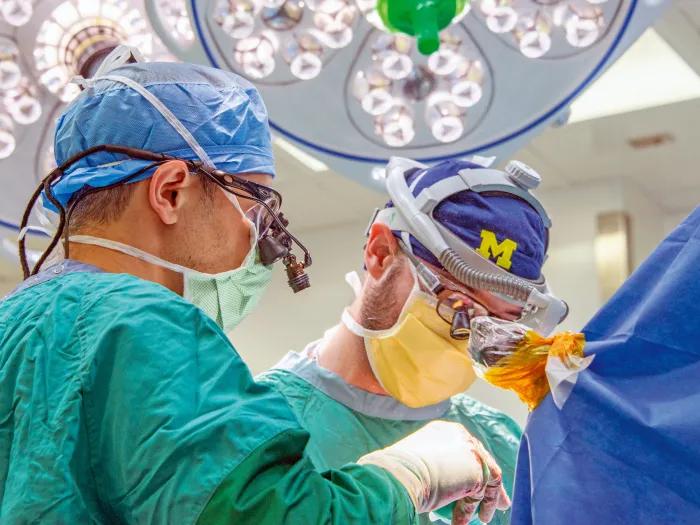
In 10 seconds, AI model detects cancerous brain tumor often missed during surgery

Studying cells to improve medulloblastoma treatment
Stay Informed
Want top health & research news weekly? Sign up for Health Lab’s newsletters today!
Featured News & Stories
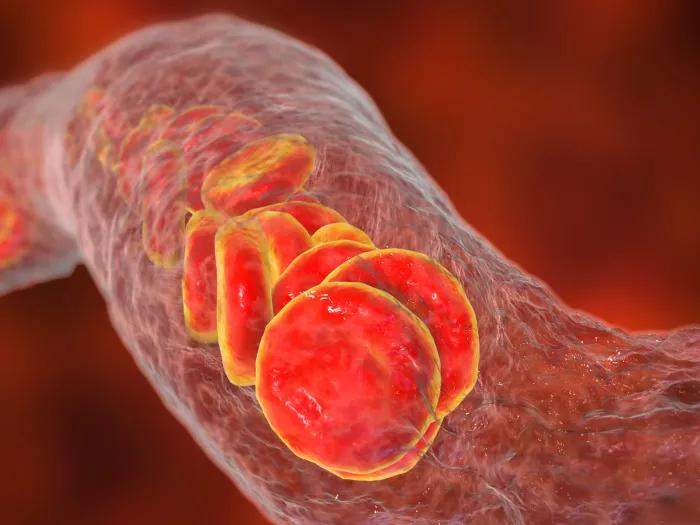
FDA-approved drug offers hope for patients with polycythemia vera, a rare bone marrow disorder

Pediatric patient treated for rare kidney cancer

Rare cancer diagnosis inspires community of support
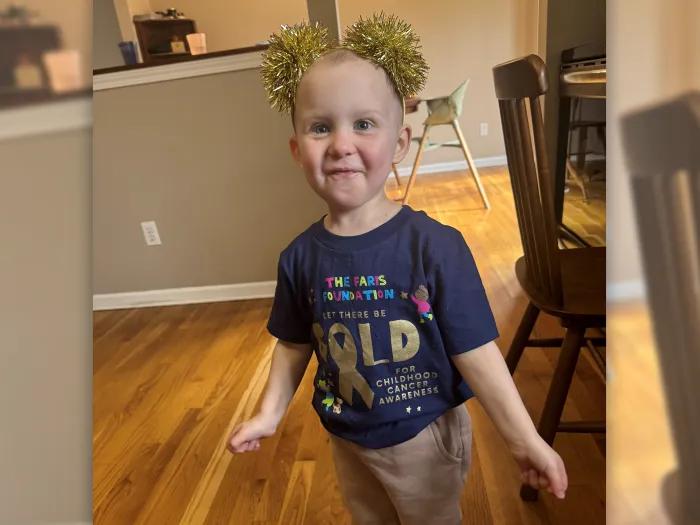
U-M alumni return from Central Asia to seek treatment for their child at Mott

Specialized care helps patient navigate rare liposarcoma diagnosis