Researchers discover new opportunities for preventing kidney injury following cardiac surgery
The findings may lead to a paradigm shift in how patients are managed during cardiac surgery to avoid kidney injury
5:00 AM
Author |
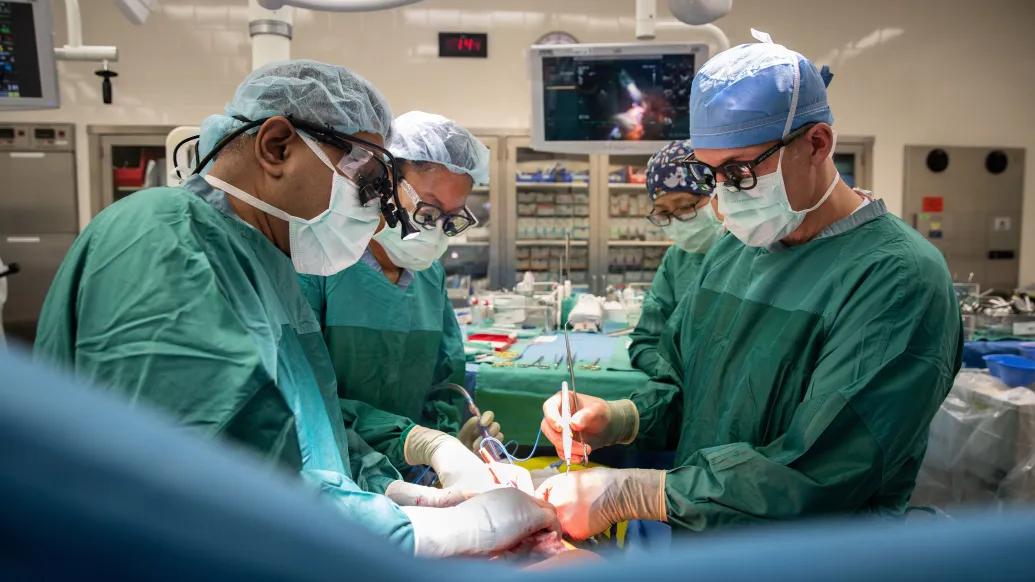
When a person has heart surgery, they’re often managed on cardiopulmonary bypass.
This process, involving a machine that temporarily takes over for the heart and lungs during the operation, has been linked to an elevated risk of kidney injury, including requirement for dialysis.
This can lead to more time spent in the hospital and, in some cases, death.
Past research has shown that lower levels of oxygen delivery during cardiopulmonary bypass (around 275 mL/min/m2) are associated with an elevated risk of kidney injury.
Based in part on these prior studies, the clinical community and industry have advanced a number of efforts to reduce a patient’s risk of kidney injury, including but not limited to transfusing patients with red blood cells, says Donald Likosky, Ph.D., head of the Section of Health Services Research and Quality in the University of Michigan Health Department of Cardiac Surgery.
But research from Michigan Medicine and the U-M School of Public Health finds that the minimum level of oxygen delivery during cardiopulmonary bypass may be lower than previously thought — meaning, there may be opportunities to avoid transfusing patients during cardiac surgical procedures.
SEE ALSO: An AI model predicting acute kidney injury works, but not without some tweaking | Michigan Medicine
“Cardiac surgery uses the most blood of any service in the hospital, and our research shows that prior analytical approaches may have identified falsely low thresholds for oxygen delivery,” said Likosky, senior author of the study published in Annals of Thoracic Surgery.
“As such, cardiac surgical programs may be unnecessarily transfusing patients to prevent kidney injury. Blood is a scarce resource, and transfusion comes with its own associated harm and risk of negative outcomes. Existing oxygen delivery thresholds that are disseminated by industry and used to design clinical trials may be too high and, thus, may be associated with potentially unnecessary interventions, including blood transfusions.”
Investigators reviewed cases of nearly 4,000 patients undergoing full cardiopulmonary bypass between May 2016 and the end of 2021. Of those patients, 29% developed postoperative kidney injury, and 7% had moderate to severe kidney injury.
Using risk-adjusted analyses, the research team found that the minimum oxygen delivery threshold to predict increased risk of acute kidney injury was 231 mL/min/m2, which was lower than the 275 mL/min/m2 commonly reported in past studies. Additionally, the minimum threshold for risk of moderate to severe kidney injury was 103 mL/min/m2.
These results suggest there is no one number for oxygen delivery where a patient’s risk of kidney injury suddenly increases; instead, the amount of oxygen delivered is inversely associated with injury risk, says David Sturmer, C.C.P., co-first author and chief of perfusion at U-M Health.
“Clinicians have long used the previous oxygen thresholds to guide treatment during an operation through a process commonly termed ‘goal-directed perfusion.’ Our results suggest patients may tolerate lower oxygen delivery during cardiopulmonary bypass than previously thought before developing acute kidney injury,” said Sturmer.
“This may have several impacts on patient management strategies, including the use of blood transfusions.”
The findings, researchers say, present an opportunity for stakeholders from the clinical and research worlds to collaborate on creating optimal management strategies to address low oxygen delivery among cardiac surgery patients.
“There is still so much work to be done to alleviate postoperative complications of cardiac surgery,” said Chi Chi Do-Nguyen, D.O., co-first author and integrated thoracic surgery resident at U-M Health.
“A multidisciplinary approach is crucial in advancing research within this field and making change. The merging of perfusion and surgical data, within the context of a multidisciplinary quality improvement program, provides an unparalleled opportunity to advance the care and outcomes for cardiac surgical patients.”
Additional authors include Robert B. Hawkins, M.D., M.Sc., Milo Engoren, M.D., Jeremy Wolverton, Michael Heung, M.D., Min Zhang, Ph.D., all of University of Michigan, and Guangyu Yang, Ph.D., of Renmin University of China.
Paper cited: “Oxygen Delivery Thresholds During Cardiopulmonary Bypass and Risk for Acute Kidney Injury,” The Annals of Thoracic Surgery. DOI: 0.1016/j.athoracsur.2023.04.04

Health Lab
Explore thousands of health news & research stories by visiting the Health Lab homepage for more.
Media Contact

Public Relations
Department of Communication at Michigan Medicine
Stay Informed
Want top health & research news weekly? Sign up for Health Lab’s newsletters today!
Featured News & Stories

Is the United States Lagging Behind Europe in Memory Improvement?
Reducing infections after heart surgery could save Medicare $441 million per year

Young father survives aortic dissection after delayed diagnosis

C.S. Mott Children’s Hospital first in country to implant expandable heart valve during FDA review phase

Weighing TAVR vs. SAVR for aortic stenosis treatment