Research may help better predict outcomes in kids with congenital cytomegalovirus
For CMV, studies offer new tools to improve counseling for families affected by these birth defects in newborns, including hearing loss
9:39 AM
Author |
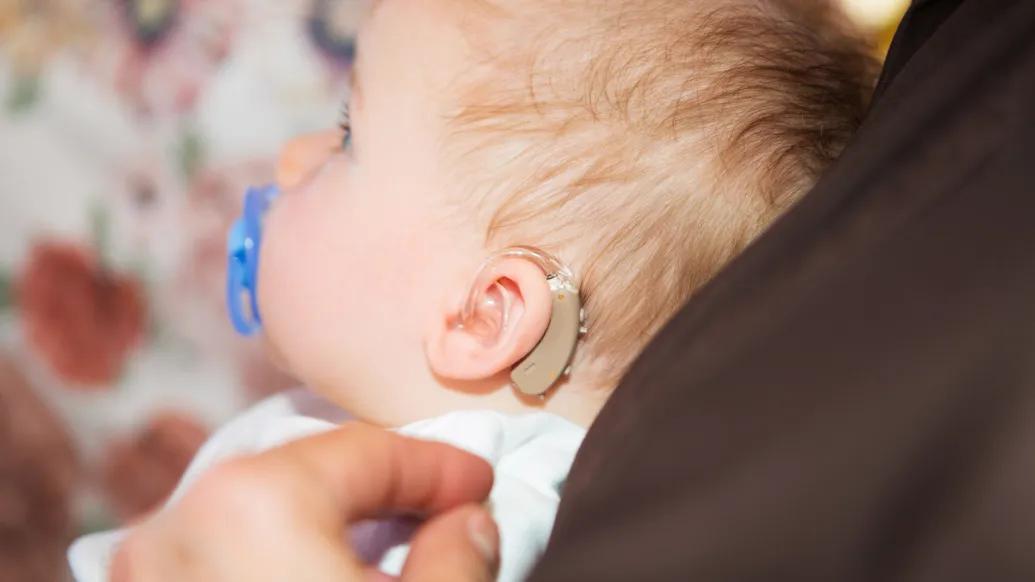
Two new studies may help researchers and clinicians better understand congenital cytomegalovirus, or CMV, the most common infectious cause of birth defects and a leading cause of non-genetic hearing loss in children.
Together, the studies offer new tools for predicting outcomes and improving counseling for families affected by the condition.
“This work helps bridge the gap between research and care by allowing us to better understand how CMV behaves before birth and how it affects children over time,” said Megan Pesch, M.D., a developmental behavioral pediatrician at University of Michigan Health C.S. Mott Children’s Hospital and an author on both studies.
“These findings represent an important step toward more accurate prediction of outcomes and more personalized care for affected children.”
About one in 200 babies are born with congenital CMV, which is caused by a virus passed from the pregnant person to the developing fetus through the placenta.
While CMV is a common cold-like virus for healthy adults and children, roughly 20% of infected babies will develop long term health problems or birth defects.
New modeling tool improves understanding of infection during pregnancy
One of the new studies co-authored by Pesch, published in MDM Policy & Practice and led by Massachusetts General Hospital, introduces a new computer-based model that simulates how CMV spreads and affects pregnancies over time.
Historically, there has been limited ability to predict which pregnancies are most at risk for severe outcomes.
The most important takeaway is that congenital CMV is not one single outcome. Even among children with similar early findings, we see very different developmental paths. Being able to identify these patterns helps us better understand prognosis and support families earlier.” -
- Megan Pesch, M.D.
The model brings together data from large population studies to better estimate how infection may spread and progress in different scenarios, including whether and when a fetus becomes infected and how severe outcomes may be.
By integrating these factors, the model can help researchers compare different prevention, screening, and treatment strategies and estimate their potential impact before they are tested in real-world settings, Pesch says.
Five distinct outcome patterns identified in children with CMV
The second study in Pediatric Research, led by Pesch, examined long term outcomes in a large group of children with congenital CMV to better understand how the condition affects development over time.
Rather than focusing on single diagnoses, researchers identified five distinct patterns of medical, developmental, and behavioral outcomes.
These ranged from children with no lasting effects or only hearing loss, to children with complex medical needs and global developmental delays.
Researchers found that early signs at birth, such as brain imaging abnormalities, prematurity or admission to intensive care, were often linked to more complex outcome patterns later in childhood.
However, they also found notable variation, including some children with significant findings at birth who later had minimal long term effects.
“The most important takeaway is that congenital CMV is not one single outcome,” Pesch said. “Even among children with similar early findings, we see very different developmental paths. Being able to identify these patterns helps us better understand prognosis and support families earlier.
“This type of information is critical for improving early decision-making, counseling and future treatment strategies for CMV.”
Papers cited:
“Development, Testing, and Calibration of LINCS: A New Microsimulation Model of Maternal and Fetal Cytomegalovirus Infection in the United States.” DOI: 10.1177/23814683261444049
“Neonatal characteristics and neurodevelopmental phenotypes in congenital cytomegalovirus.” DOI: 10.1038/s41390-025-04327-z
Sign up for Health Lab newsletters today. Get medical tips from top experts and learn about new scientific discoveries every week.
Sign up for the Health Lab Podcast. Add us wherever you listen to your favorite shows.

Health Lab
Explore thousands of health news & research stories by visiting the Health Lab homepage for more.
Media Contact

Public Relations
Department of Communication at Michigan Medicine
In This Story

Megan Pesch, MD
Adjunct Clinical Associate Professor
Related
Uncovering the link between a common congenital viral infection and autism
Stay Informed
Want top health & research news weekly? Sign up for Health Lab’s newsletters today!
Featured News & Stories

Continuing the legacy of a doctor’s doctor

4 ways to teach your teen safe driving habits

U-M-led consortium to receive up to $52 million in NIH funding to study why viral respiratory infections affect children differently

Gene editing is coming for common diseases. Are we ready?

Comprehensive DNA sequencing reveals hidden drivers of cancer