Regular eye drop regimens are crucial for glaucoma patients
Skipping eye drops can lead to eventual blindness
5:00 AM
Author |
Glaucoma is a leading cause of vision loss and blindness in the United States, and an estimated 4.3 million people are expected to have glaucoma by 2030.
Although most people use eye drops to treat their condition, at least half of glaucoma patients miss doses.
Consequently, as they age, these patients are at a higher risk of losing their sight.
Paula Anne Newman-Casey, M.D., associate professor of ophthalmology and visual science and a member of the Institute for Healthcare Policy and Innovation, discusses the causes of glaucoma, how it’s diagnosed, treatment procedures and why many people miss doses of their medicated eye drops.
How does glaucoma affect vision?
Newman-Casey: Glaucoma is a disease of the optic nerve, which acts like an electricity cable connecting your eye to your brain.
When the optic nerve is damaged, it doesn't transmit all the pixels from your eye.
At first, your brain can fill in the picture based on the surrounding context, so people don't notice that something is wrong.
Eventually, vision becomes blurred.
What are the risk factors for glaucoma?
Newman-Casey: If you have immediate family members, including parents, siblings or children, who have glaucoma, you are 20 times more likely to have it compared to the general population.
High eye pressure or thinner corneas also increase the likelihood of developing glaucoma because both can increase damage to the optic nerve.
Age is another factor. Only 2% of the population in the U.S. has glaucoma, but that number increases to 12% in people who are 80 or older.
Other risk factors include race—African Americans are twice as likely to have glaucoma, and we don’t know why.
How do you diagnose glaucoma?
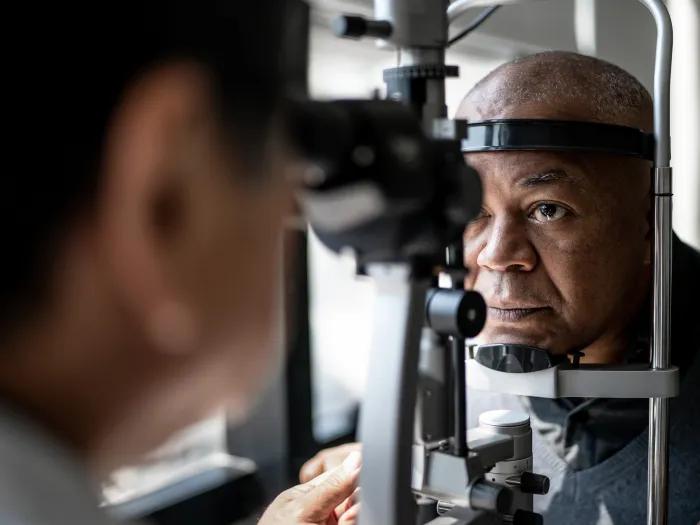
Newman-Casey: Eye doctors dilate your eyes and examine the optic nerve using a microscope called a slit lamp.
The optic nerve usually looks like a donut. The larger the donut hole, the more likely it is that somebody will have glaucoma.
Additionally, we conduct a visual field test to map out any pixels that are not being transmitted to the brain and an imaging test called optical coherence tomography to measure the thickness of all the cells that feed into the optic nerve.
We also measure the thickness of your cornea.
The final diagnosis is made by combining the results of all these tests and taking the patient’s family history and eye pressure into consideration.
Since the process is complicated, primary care offices usually do not routinely test for glaucoma.
What are the different treatment options?
Newman-Casey: Surgery, laser treatment and medications all aim to lower the pressure inside the eye.
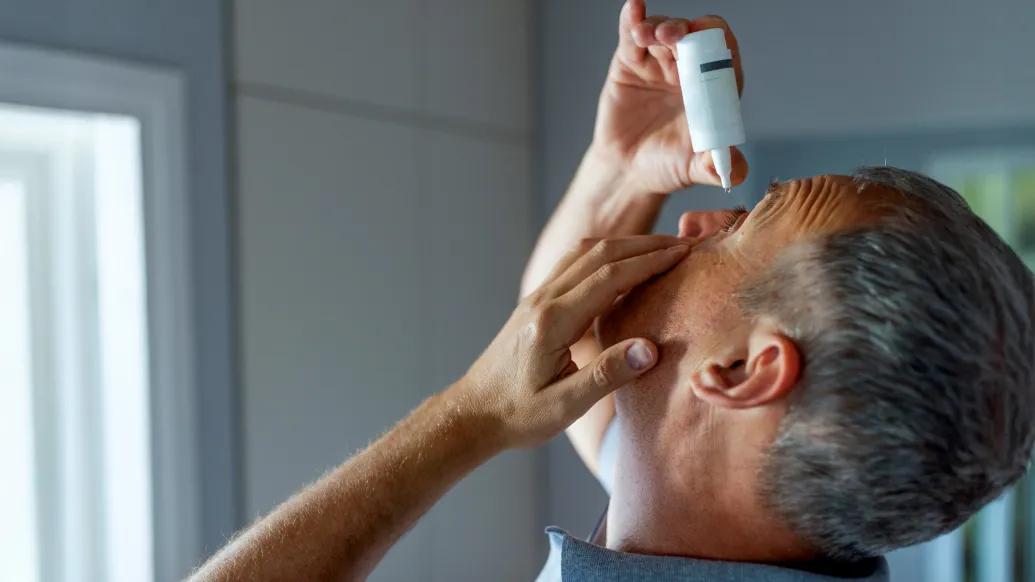
About 80% of glaucoma patients take drops to control their eye pressure.
The drops either decrease the production of fluid inside the eye or increase the outflow of fluid from it. However, the drops work best if you take them at the same time every day.
If you miss a dose, the resulting fluctuations in eye pressure are also harmful to the optic nerve.
Why do patients find it challenging to adhere to an eye drop regimen?
Newman-Casey: There are several reasons. A number of patients say that it doesn’t help with their vision, which is true.
It’s hard to convince someone to take their medication when they’re not seeing any impact. However, it is important to use the drops since they prevent your vision from getting worse as you age.
Another issue is how often people may have to use their eye drops. People usually forget if their medication schedule is complicated or they're busy.
We’ve found that patients who take their recommended eye drops usually have a fixed routine.
They tie taking their eye drops to things that they always do, like having their morning coffee, and that seems to be helpful.
Another problem is that these drops can be expensive and sometimes can cause side effects.
Although doctors can help with some of these issues, by changing the medication to one that has less side effects or is less expensive, some people are uncomfortable voicing their concerns.
I encourage people to bring a list of questions to ask their doctor.
What are your recommendations for those who struggle with taking eye drops?
Newman-Casey: It is important to remember that any vision loss from glaucoma is permanent.
Even though these medications do not make your eyesight better, they do prevent future vision loss and blindness.
Laser treatments, especially in the earlier stages of glaucoma, can reduce the need for eye drops and is a safe procedure.
Some people get nervous when they hear the word “laser,” but it is a great option to consider and discuss with your doctor.
Sign up for Health Lab newsletters today. Get medical tips from top experts and learn about new scientific discoveries every week.
Sign up for the Health Lab Podcast. Add us wherever you listen to your favorite shows.

Health Lab
Explore thousands of health news & research stories by visiting the Health Lab homepage for more.
Media Contact

Public Relations
Department of Communication at Michigan Medicine
In This Story

Paula Anne Newman-Casey, MD, MS
Associate Professor
Related
A New Method to Boost Glaucoma Medication Adherence
Glaucoma study shows higher prevalence than previously estimated
Stay Informed
Want top health & research news weekly? Sign up for Health Lab’s newsletters today!
Featured News & Stories
Innovative children’s vision research gets a boost from the Knights Templar Eye Foundation
Nerf gun accident causes retinal detachment in pediatric patient

Kellogg care inspires gift to vision research

Mediterranean diet can slow progression of age-related macular degeneration
Patient with retinitis pigmentosa receives new hope at Kellogg’s low vision clinic