Quiet strength of nature heals those dealing with cancer
A nature-centered exhibition provides a peaceful, therapeutic space for cancer patients, survivors and visitors
5:00 AM
Author |
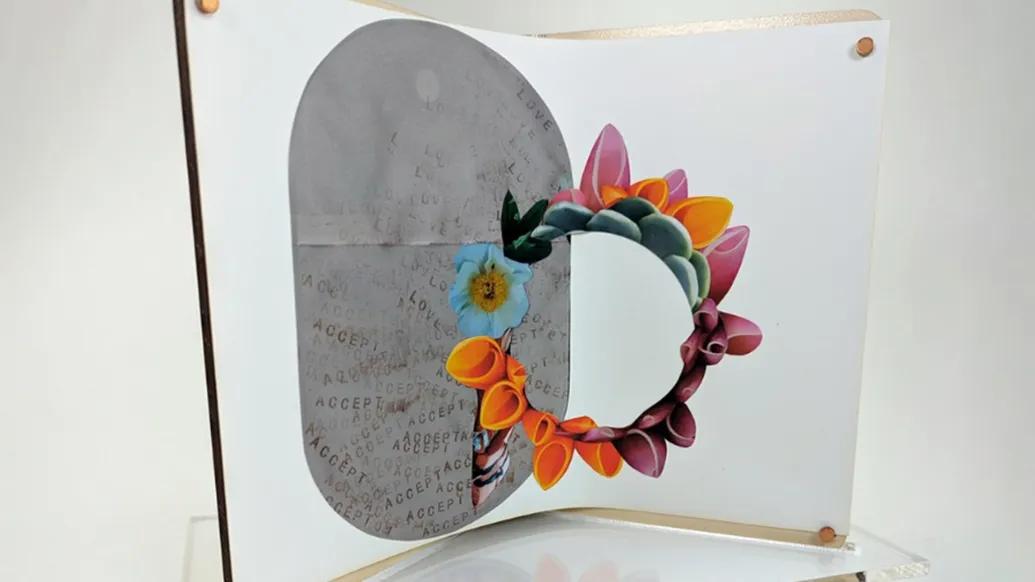
When cancer patients, survivors and their visitors walk through the Voices Art Gallery at the University of Michigan Health Rogel Cancer Center, they’re met with the calming beauty of nature.
Between appointments, they’ll observe joyful collages of a child exploring natural elements, all scavenged locally.
They’ll contemplate cyanotype prints, offering a new light imagery perspective.
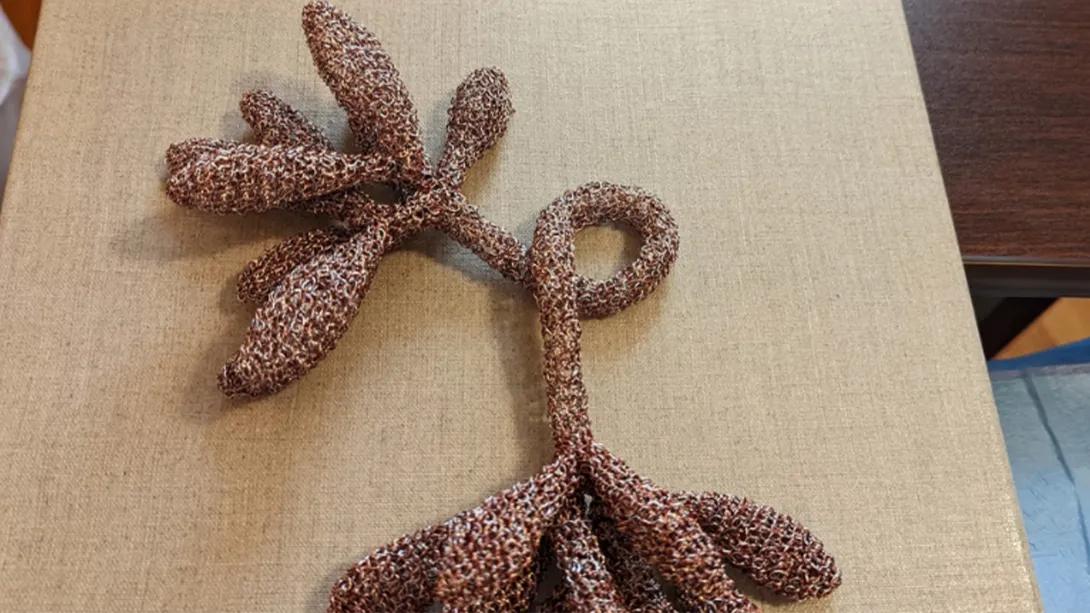
They’ll marvel at crocheted colored wire sculptures that subtly reference human anatomy.
And maybe, they’ll feel some of the peace Anne Mondro, an associate professor in the University of Michigan Stamps School of Art and Design, felt when creating the artwork throughout her own cancer journey.
Mondro’s journey sparked her connection with nature and deepened her discovery of art as a form of therapy.
Cancer journey
Mondro’s work explores the physical and emotional complexity of the human body.
She integrates traditional craft, fine art and digital technology to create images and sculptures investigating humanity.
For years, Mondro had explored the human experience and anatomy in her work.
She just never expected it to become as relevant as it did.
On Thanksgiving Day in 2020, on the same day her daughter, Hope, was born, Mondro was diagnosed with Stage III cancer.
“It was very complex to have all this joy of a newborn and all the devastation that comes with finding out you have cancer,” Mondro said.
While Mondro was in remission by the summer of 2021, her cancer came back the following year, in 2022.
She had extensive surgery and is now entering her one year of remission.
Using art to process
The experience left a physical and emotional toll on Mondro, who had to reconnect with her art and process all the emotions that came with cancer.
Gradually, as her strength returned, Mondro began to take daily walks with her daughter.
She started to collect flowers, natural elements and photos.
“Stopping at a willow tree, I tugged on a branch hovering over us, giving it just enough tension to fling into a wild dance. My daughter giggled with delight,” Mondro said.
“These tender moments of wonder and joy slowly brought back my spirit.”
After a tumultuous few years, Mondro was left with fear and anxiety.
She discovered art therapy at the Rogel Cancer Center, where she worked with therapist Sandra Drabant to make sense of her emotions.
“Even though I’m already an artist, it was important to have a therapist there to guide me through it,” Mondro said.
“The Rogel Cancer Center helped me find a practice that worked for me to give voice to the complexity that I have been experiencing – that heightened joy and sadness, all at once.”
Mondro says that the Rogel Cancer Center helped her discover collage-making, a more accessible art form to work with as she recovered.
Her collages, such as “A Quiet Moment (Delight),” incorporate the joyful memories from her nature walks.
“I think being in awe of nature and letting that beauty and joy seep into my work and into my practice is important to me,” Mondro said.
“It’s my way of holding onto those moments of peace and inspiration that came from those walks.”
Mondro found further inspiration by participating in an art therapy group project at the Rogel Cancer Center.
The group, comprised of patients, shared their experiences and created a Book of Hope using various art methods.
Forms of art
Mondro’s art in “The Quiet Strength of Nature” reflects nature’s importance in her healing journey.
With her new exhibition, Mondro begins to combine her previous themes of anatomy with nature.
“I think about ways to depict the complexity of the body through metaphors, and I’ve created intricate, crocheted sculptural pieces that reference anatomy to do this. Now, I’m integrating imagery from flora and tying these two worlds of health and nature together,” Mondro said.
In her cyanotypes in the exhibition, Mondro collected natural objects from her walks and used the low-tech photographic technique to create the images by exposing the objects to natural light.
For Mondro, the process is symbolic of personal discovery and spiritual awakening.
Mondro says that the theme of her work has always been about “caring for others as well as yourself.”
Through the exhibition, Mondro has taken great care to provide meaningful artwork to the place that helped her in her journey.
Her work honors her experience and will now honor the experiences currently underway at the Rogel Cancer Center.
“The Rogel Cancer Center has saved my life – twice. It’s a way I can give back to the community,” Mondro said.
“I think our lived experiences guide our art-making processes. I will continue to use my art to honor my experiences and the stories shared with me.”
Learn more about The Quiet Strength of Nature.
This story originally ran in Michigan Medicine’s internal publication Headlines. Navya Yerrapu additionally edited the piece to appear on Health Lab.
Sign up for Health Lab newsletters today. Get medical tips from top experts and learn about new scientific discoveries every week by subscribing to Health Lab’s two newsletters, Health & Wellness and Research & Innovation.
Sign up for the Health Lab Podcast: Add us on Spotify, Apple Podcasts or wherever you get you listen to your favorite shows.

Health Lab
Explore thousands of health news & research stories by visiting the Health Lab homepage for more.
Media Contact

Public Relations
Department of Communication at Michigan Medicine
Stay Informed
Want top health & research news weekly? Sign up for Health Lab’s newsletters today!
Featured News & Stories

Medical students develop novel technological solutions for unmet patient needs

More leucovorin prescribed to kids after federal officials touted its unproven benefits for autism

7 things every family caregiver should know – but many don’t

A tragedy and a trial shine a spotlight on new moms’ mental health

UM Health-Sparrow breaks ground on Janice M. Granger Behavioral Health Building