Prescription Tracking Tackles Misuse of Opioids and Other Drugs — But Results Vary
Prescription drug monitoring programs could help fight a national epidemic and boost the effort to get people treatment, research shows. But states differ widely in implementation.
1:00 PM
Author |
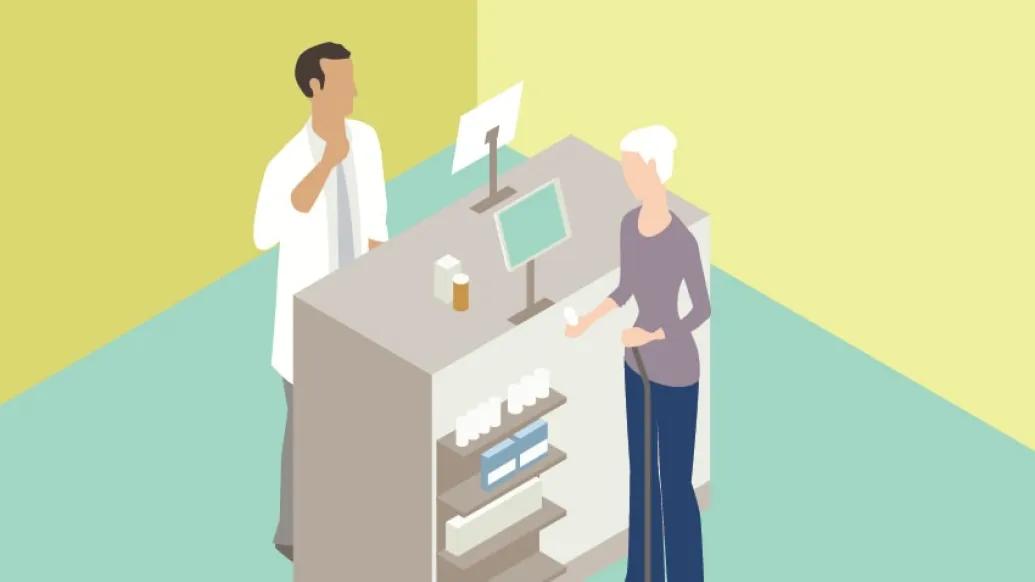
Get a prescription these days, and odds are it's not written on a special pad of paper, but in a computer system that zips the information straight to a pharmacy, and into an electronic medical record.
MORE FROM THE LAB: Subscribe to our weekly newsletter
It's faster, safer and more convenient — and no one has to figure out the prescriber's messy handwriting.
When a drug carries an addiction risk or has a street value for illicit use, prescribing it digitally carries the potential to fight America's epidemic of prescription drug misuse and overdose.
By pooling data on every such prescription written and filled inside their borders, states have created prescription drug monitoring programs. PDMPs focus on the information about opioid painkillers, stimulants, sedatives and other drugs found on the U.S. Drug Enforcement Administration's Schedule II-V lists of controlled substances.
Every state except Missouri offers a PDMP, although the Show-Me State just announced plans to start one. Washington, D.C., and Guam have them, too.
But the laws and requirements for their use vary greatly even as two new studies from the University of Michigan, as well as other research, show an effect on prescribing patterns for opioids and other drugs. While the evidence around their use is still growing, early signs indicate they can have a sizable impact.
Meanwhile, states like Michigan are improving PDMP systems further — and considering making use mandatory for prescribers and pharmacists before a prescription can be filled. New funding from the federal government, provided mostly by the previous administration and Congress, is fueling those efforts.
The power of a PDMP: Opioids
Depending on the state, a PDMP can make prescription information for individual patients available to every pharmacy and prescriber in the state within a day.
SEE ALSO: Why U.S. Doctors Love Opioids and Hate Marijuana for Chronic Pain
Armed with information from a PDMP check, a doctor might realize that the patient requesting opioids during a clinic appointment, emergency room visit or hospital stay has already gotten them from another doctor.
This "doctor shopping" is considered a major factor in developing opioid addiction. U-M researcher Thomas Buchmueller, Ph.D., and his Cornell University colleague recently published a study of the impact of mandatory PDMP checks on doctor shopping and other problematic behavior by Medicare participants.
They say that the strongest laws, with mandates for use, have larger effects on problematic prescription patterns — but that even more limited laws have some effect.
That conclusion syncs with other new U-M findings about the impact of strong PDMP programs on the amount of high-dose opioids dispensed to people with private insurance.
Conducted by a team led by Rebecca Haffajee, J.D., Ph.D., M.P.H., and recently presented at a national meeting, the study found that robust PDMPs, such as those implemented in Kentucky and Tennessee, had a greater effect on the morphine-equivalent doses of opioids prescribed to people with private insurance in those states, compared with less-stringent or nonexistent systems in other states.
The bottom line: The states with the strongest PDMP laws along a variety of features had the steepest drops in per-person prescribed doses of opioids.
Spotting a patient's problematic prescription habits might also help a doctor counsel patients and refer them to addiction treatment, or even lead the doctor to prescribe medication that can block opioids' effect directly, a third U-M paper says.
In it, U-M opioid researchers Amy Bohnert, Ph.D., and Pooja Lagisetty, M.D., urge hospital-based doctors to take seriously the responsibility of addressing signs of opioid misuse, even when patients are still inpatients. Hospitalists, they write, "can no longer be bystanders to the sea change in opioid treatment."
The Michigan Automated Prescription System helps practitioners determine if patients are receiving prescriptions from other providers to try to prevent drug abuse. This video walks through MAPS uses and recent changes.
The power of a PDMP: Other drugs and other uses
Opioids aside, PDMPs may also address other problematic prescribing.
For instance, a nurse practitioner or psychologist might see that a patient has refilled an attention-deficit drug prescription before it was supposed to run out — suggesting someone else might be getting the pills.
SEE ALSO: Opioids Before Surgery Mean Higher Costs, More Problems Likely Afterward
A nursing home physician might get an alert that an elderly patient has been prescribed a benzodiazepine medication and an opioid — a dangerous combination.
A pharmacist might notice that a newly prescribed drug could interact badly with another one a patient is taking. Or a pharmacy tech could observe that a certain prescriber has been writing many prescriptions for the same medication to an inordinate number of patients.
PDMPs were mainly started to allow law enforcement agencies to request information as part of investigations into possible "pill mills," which feed illegal trade in all kinds of DEA scheduled substances.
In each case, the power of PDMPs depends greatly on how well the systems are built and which policies states have put in place.
The more time and training it takes to enroll in or check the system, or to use the information found there, the less successful it will be, says Haffajee. Some states allow prescribers to grant access to delegates — for instance, a nurse or medical resident — to encourage more checking by some member of the care team.
Where PDMPs fall short
Even with mandatory use requirements, none of the systems tells a doctor what to prescribe, or avoid prescribing, to a patient. That freedom has been crucial to states' willingness to launch the systems and to adoption by prescribers.
SEE ALSO: Why One Pain Specialist Hasn't Prescribed an Opioid in 10 Years
It also means that it's imperative to educate prescribers on appropriate uses and doses of controlled substances and the risks of high dosing or diversion to nonmedical uses. For instance, many clinicians still need to learn about the latest opioid guidelines for chronic pain, issued last year by the Centers for Disease Control and Prevention.
The Michigan Opioid Prescribing Engagement Network (Michigan-OPEN), an initiative the U-M Institute for Healthcare Policy and Innovation launched, aims to do just that. The team provides opioid training for surgeons and others who may not have formal education in pain control but prescribe many painkillers to postoperative patients.
Some health care experts say doctors might prescribe opioids when asked, even knowing they aren't the best option for a patient, for fear of antagonizing the patient or receiving low satisfaction scores.
In an age when anyone can review a hospital on Yelp or Google — and when Medicare bases its payments partly on patient questionnaires about how satisfied they are with their care — the worry is real.
But a recent study in JAMA by members of the Michigan-OPEN team looked at whether opioid prescriptions were linked to trends in patient satisfaction around pain control. Using data from 31,481 patients treated at 47 Michigan hospitals, they found that the amount of opioid medication the patients were prescribed for immediate post-surgery pain control did not affect ratings.
This suggests that surgeons and others could reduce their initial opioid prescribing without harming their hospitals' payment — though Medicare plans to stop counting pain control satisfaction in its calculations next year anyway.
In the end, says Haffajee, the PDMP movement isn't going away — and neither should the education effort.
The next big frontier, she says, is allowing prescribers and pharmacists to see other states' PDMP data about their patients and integrating PDMP data directly into electronic medical record systems. Although law enforcement and judicial officials can request such interstate access to aid their investigations and prosecutions, doctors, nurses and pharmacists don't always have it yet.

Health Lab
Explore thousands of health news & research stories by visiting the Health Lab homepage for more.
Media Contact

Public Relations
Department of Communication at Michigan Medicine
Stay Informed
Want top health & research news weekly? Sign up for Health Lab’s newsletters today!
Featured News & Stories

Top 7 tips for choosing Medicare prescription drug coverage for 2027

What’s the latest on 7-OH and kratom availability and addiction care?

Digital alerts support timely treatment decisions of critically ill cardiac patients
The Care Ecosystem: Supporting People Living with Dementia and Their Families
College of Pharmacy alum advances U-M Medical School addiction research