
The Power of Caring: Forming a Circle of Support Around Suicidal Teens
In a TEDMED 2020 talk, a teen suicide expert describes findings about the important role adults have in supporting young adults at risk.
9:27 AM
Author |
Cheryl King, Ph.D., has studied teen suicide, and ways to prevent it, for decades.
But even as she's worked to understand this most tragic phenomenon, the death toll has continued to rise.
Last year, though, she and her colleagues from the Michigan Medicine Department of Psychiatry reported some surprising findings when they went back to look at what had happened to young people who had taken part in one of their past studies.
In a talk she gave early this year at the prestigious TEDMED conference in Boston, she described what they found, and how it could help others.
She also spoke plainly about the urgent need for solutions like this one, to help teens who have attempted suicide or shared their intent to try.
SEE ALSO: Recent Sharp Rise in Firearm Deaths Seen Across Most States
In this video, she describes the concept of the Youth-Nominated Support Team, or YST, which asks high risk teens to pick trusted, supportive adults to help them recover, and equips those adults to assist.
The idea is not to replace medications and mental health therapy, she says, but to bolster them. "It's based on the simple insight that the adults in teens' lives are a powerful untapped resource," she says in her talk. "The adults in teens' lives want to help, but they need help to do so."
Her team's website offers more information on how to use the YST approach.
As a result of her team's findings, King says, "We do not have to sit back and wring our hands while the teen suicide rate continues to climb."
Instead, the research teaches an important lesson: "Teen suicide is not just the teen's problem or the family's problem or the doctor's problem or the mental health provider's problem. It is everyone's problem and we can all play a role in the solution."
SEE ALSO: Fewer Deaths Among Adults Who Got Extra Support as Suicidal Teens
Paper cited: Association of the Youth-Nominated Support Team Intervention for Suicidal Adolescents With 11- to 14-Year Mortality Outcomes," JAMA Psychiatry. DOI: 10.1001/jamapsychiatry.2018.4358

Health Lab
Explore thousands of health news & research stories by visiting the Health Lab homepage for more.
Media Contact

Public Relations
Department of Communication at Michigan Medicine
Stay Informed
Want top health & research news weekly? Sign up for Health Lab’s newsletters today!
Featured News & Stories

Children’s mental health is in crisis
Giving Voice to Lived Experience in Dementia Research

How U-M helped bring depression out of the darkness
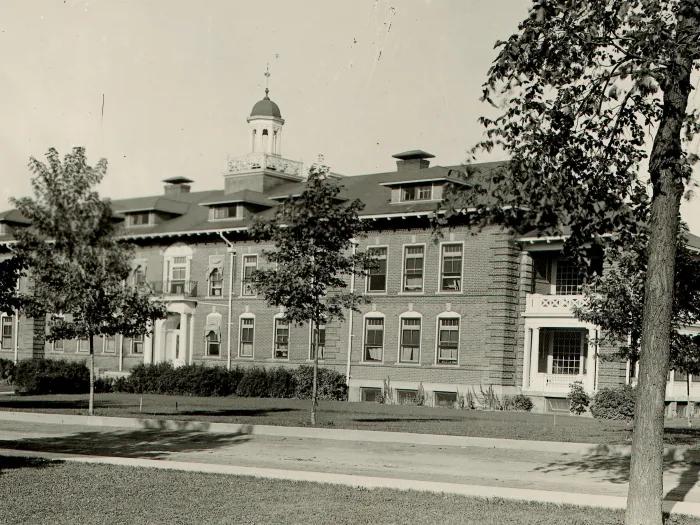
Exploring the mind’s mysteries: 130 years of mental health care & innovation at U-M

Small daily activities may help ease dementia caregivers’ stress

