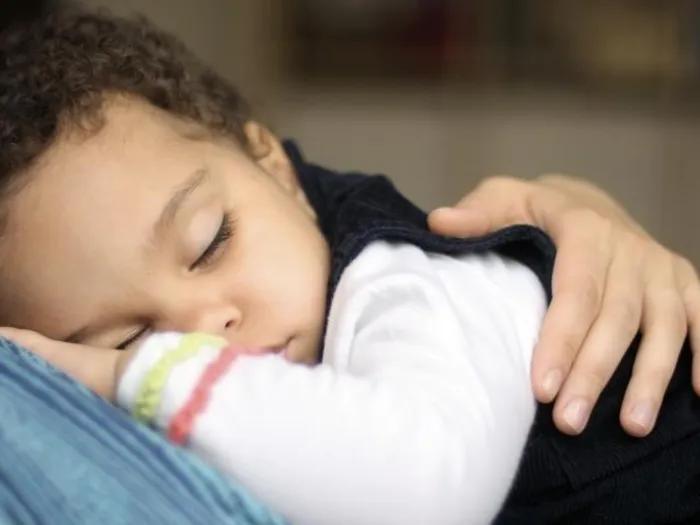
Most children are ready to begin the toilet training process between 24 to 27 months but some children will be ready earlier or later than that.
How do I know when my child is ready to start toilet training?
Look for most of these characteristics in your child to help you decide if the time is right for toilet training:
- Desire to please (likes to give gifts, enjoys praise)
- Desire for independence (takes pride in new abilities, wants to “do it myself”)
- Imitates adults and older children
- Language skills: able to communicate needs and understands words about the toileting process
- Motor skills: able to walk to the potty, get on, and pull down pants
- Bowel movements occur on a fairly predictable schedule
- Has longer periods with a dry diaper, which means your child's bladder is able to store urine. (For example, child wakes up from a nap dry or stays dry for two or more hours.)
- Is able to follow simple, one-step verbal instructions
- Shows an interest in imitating other family members or friends in the bathroom
- Through words, facial expressions, or a change in activity, your child shows you he or she knows when his or her bladder is full or when he or she is about to have a bowel movement
Don't feel pressured to begin earlier. If you start too early, it will just take your child longer to train.
It can be easier to start in the summer, since your child will have on less clothing and it will be easier to get undressed. Also, consider avoiding high-stress times for the start of your toilet training journey, like around the time of a move or the birth of a new baby.
Toilet training tips
- Proceed slowly and take signals from your child.
- Give your child a feeling of active participation, control and independence.
- Let your child get used to the potty seat without any other expectations. Allow your child to sit on the seat fully clothed, perhaps looking at a book or playing with a small toy. Let your child see parents and older siblings using the toilet.
- Learn your child’s behavioral cues that signal he or she is about to go (for example, grimacing or stopping activity, often after mealtimes). Talk about the feeling of having to go and encourage your child to notice it and tell you when he or she has that feeling. Praise your child for recognizing and sharing this information with you.
- Once your child is comfortable with the potty and maybe even showing interest in using it, have your child sit on the potty right after you take off a wet or poopy diaper.
- Next, lead the child to the potty 1–3 times per day, take off the diaper and encourage him or her to sit. After meals tends to be a "high-yield" time for sitting. A few minutes should be enough.
- Praise, praise, praise your child for cooperation with sitting on the toilet, even if he or she doesn’t go.
- Do not force your child to sit if he or she resists. This can lead to opposition, which may set back the whole training process.
- Gradually increase the number of sitting times. Guide sitting times towards a routine, such as in the morning, after meals and before bedtime.
- After repeated success, graduating to training pants or underwear is a big incentive for children to keep on using the potty.
- After the graduation, remember that accidents are common and that they are not a failure but a part of learning.
- Be matter-of-fact about accidents and do not shame your child.
- Deal with potty training matter-of-factly, using simple and straightforward words for bowel movements (like poop or stool), urine (like pee), and body parts (like penis, vulva and anus).
- Praise your child for every step in the right direction and keep your attitude positive.
Keeping a positive tone and using lots of praise will work much better than punishing, criticizing or shaming your child.
Potties and potty seats
Kids need to feel comfortable and in control when starting to use the potty. A training potty allows the child to sit with both feet firmly on the floor. If your child prefers, a child seat can be attached to the adult toilet. Make sure it is stable and your child has a stool to climb up on and rest his or her feet on while sitting. Putting the potty in the family room or play room at the beginning can make it more accessible and less intimidating to your child.
Toilet training trouble-shooting
- Disposable diapers these days keep kids feeling so dry they are often not aware that they have wet. Consider forgoing the "pull-ups" or other such disposable products and use cloth training pants so your child can tell when he or she has wet. Make the transition to cloth training pants a proud moment for your child. Celebrate!
- If your child shows no interest in using the potty, set aside the training process and try again in a few weeks.
- Coordinate closely with other caregivers. For example, if your child attends daycare, explain to the provider that you are using a toilet training method based on positive reinforcement. Keep in touch with the caregiver regarding which step of the process you are currently working on.
- Many children refuse to train and may regress at any point in the training process. View this as a temporary setback and avoid shaming or scolding the child. Continue to base your training on encouragement and praise for a job well done.
- Your child may continue to wet his or her bed at night. This is normal and resolves on its own in most children by age 6.
- If children feel pressured, they may attempt to "control" the situation by withholding stool. The risk of withholding is constipation, which makes stools harder and more uncomfortable to pass, setting up a vicious cycle. Your pediatrician can help with breaking the cycle. Do not give your child laxatives unless you have discussed this with the doctor.
- There may be different reasons your child won’t use the toilet for bowel movements. He or she may be constipated, scared of the toilet or being alone in the bathroom, trying to find ways to be in control, or just be too busy playing. Try to identify if one of these may be a factor for your child.
- If your child asks for a diaper when they have to have a bowel movement, praise him or her for recognizing the body’s signal and telling you. Suggest he or she go into the bathroom to poop in the diaper. Gradually work toward pooping on the toilet.
- Do not remind your child too much or express disappointment with setbacks. This is a kind of pressure and pressure sets up resistance.
Additional resources:
- Information for parents of toddlers preschoolers about using public bathrooms (AAP)
- Tips for toilet training and children with special needs (AAP)
Suggested reading:
Books for parents:
- Oh Crap! Potty Training: Everything Modern Parents Need to Know to Do It Once and Do It Right by Jamie Glowacki
- Parents’ Book of Toilet Teaching by Joanna Cole.
- Autistic Logistics: A Parent's Guide to Tackling Bedtime, Toilet Training, Tantrums
- Toilet Training in Less than a Day, by Nathan Azrin and Richard Foxx
- The Potty Journey: Guide to Toilet Training Children with Special Needs, Including Autism and Related Disorders by Judith A. Coucouvanis
Books for kids ages 1–3:
- Potty by Leslie Patricelli
- Everyone Poops by Taro Gomi.
- Where’s the Poop? by Julie Markes
- P is for Potty, a Sesame Street book by Random House
- Potty Book for Girls (Boys) by Alyssa Capucilli
- Potty Superhero by Paragon Books
Reviewed by Sara Laule, MD
Updated February 2018

Health Lab
Explore thousands of health news & research stories by visiting the Health Lab homepage for more.
Media Contact

Public Relations
Department of Communication at Michigan Medicine
Stay Informed
Want top health & research news weekly? Sign up for Health Lab’s newsletters today!
Featured News & Stories
Back-to-school anxiety: 6 ways to fight the fear
Safe sleep for babies

Navigating Mental Health Resources
10 Tips for New Parents
Croup