Poor vision plus unsafe homes drive higher fall risk in seniors
5 simple actions you can take now to reduce some key fall-hazards within your home
5:00 AM
This piece was originally published by Michigan News and written by Fernanda Pires. The article has been adapted for use on Health Lab.
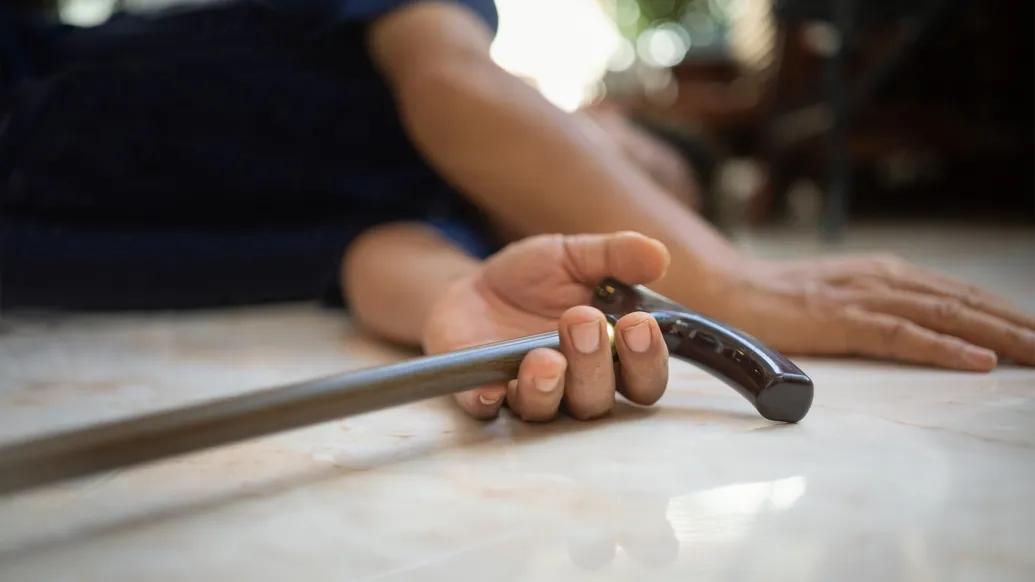
Older adults with severe vision loss are three to four times more likely to fall when they live in homes with hazards such as missing grab bars, tripping risks or broken flooring.
A University of Michigan study, supported by the National Eye Institute, finds that it’s not just that poor vision increases fall risk or that hazards increase fall risk—it’s the interaction between the two that really matters.
“The home is not just a background; it’s a key shaper of fall risk,” said lead author Shu Xu, a postdoctoral fellow at U-M’s Institute for Social Research.
“Our study emphasizes the need to include the home environment as a key component of fall prevention, especially for older adults with vision loss. If we focus only on improving vision, we may overlook a group at very high risk: people who have both poor vision and hazards in their homes.”
The population-based cross-sectional study analyzed data from the National Health and Aging Trends Study, which gathers nationally representative data on United States Medicare beneficiaries aged 65 and older.
Researchers included 4,648 community-dwelling older adults who completed visual function tests and the home environment instrument in 2022.
Xu and colleagues documented that nearly half (47%) of older adults lacked grab bars in the bathroom.
More than half of the sample lived with at least one hazard.
Tripping hazards affected 9.5% of homes and broken flooring was present in 4.5%.
And a total of roughly 7% of homes had two hazards.
“When an older adult with normal vision lives in a home with multiple hazards, fall risk is relatively low, but with high levels of vision impairment, fall risk increases threefold to fourfold,” Xu said.
“Importantly, even among those with high levels of vision impairment, fall risk only increases significantly when home hazards are present.”
Progressive loss
Incremental declines in vision directly raise fall risk for older adults with hazards in the home.
Researchers measured specific visual functions and found that each one-line difference on the Snellen visual acuity chart—which tests how clearly a person can see by having them read letters of decreasing size from a set distance—was associated with a 31% increase in fall risk.
Each one-line loss on the contrast sensitivity chart raised the risk by 14%.
These rising percentages suggest that poor vision may make it harder for older adults to detect and avoid existing dangers in their homes.
The findings underscore that even small losses in vision may increase risk substantially when environmental hazards are present.
“Identifying and addressing home hazards is crucial,” said co-author Joshua Ehrlich, the Paul R. Lichter Research Professor of Ophthalmology and research associate professor at the Institute for Social Research.
“Fall prevention should be framed as a partnership between health care and the physical home. In this case, vision care plus targeted home modifications.”
Falls are a major cause of morbidity and mortality. Just one fall can be devastating for an older person. They also contribute to high health care costs to individuals, families and the health care system.
Nonfatal falls cost the United States an estimated $80 billion each year.
Here are 5 simple, concrete actions:
- Get regular eye exams and use the right glasses. Make sure prescriptions are up to date, and use glasses as recommended.
- Check the bathroom first. Add grab bars near the toilet and in the shower or tub; use nonslip mats in the tub or shower.
- Clear the walking paths. Remove or tape down loose rugs; move electrical cords out of walkways; keep hallways and stairs free of clutter.
- Fix damaged flooring. Repair torn carpet, broken tiles or uneven floorboards that could catch a foot or cane.
- Improve lighting. Use bright, even lighting, especially on stairs and in hallways; add night-lights near the bathroom and bedroom.
The study suggests that policymakers might devise policies to promote home modifications for people with poor vision as a cost-effective way to reduce falls, prevent injuries and also help people remain safely in their homes for longer.
Clinicians and caregivers must recognize that vision loss alone is not enough, Xu says.
Understanding whether an older adult is living in a home with environmental hazards is crucial to decreasing the likelihood of falls in older adults with poor vision to the level of those with normal vision, she says.
“Home environmental supports, such as home repairs and modifications, should be viewed not only as short-term fall prevention strategies but also as long term public health investments, with the potential for cost savings when adopted at scale,” Xu said.

Health Lab
Explore thousands of health news & research stories by visiting the Health Lab homepage for more.
Media Contact

Public Relations
Department of Communication at Michigan Medicine
Stay Informed
Want top health & research news weekly? Sign up for Health Lab’s newsletters today!
Featured News & Stories
Innovative children’s vision research gets a boost from the Knights Templar Eye Foundation
Better prenatal care data could help prevent maternal complications, experts say
Many hospitals still don’t do enough to prevent UTIs from catheters
Nerf gun accident causes retinal detachment in pediatric patient

Rabies is on the rise: Experts offer advice