Pets can help older adults’ health and well being, but may strain budgets too
Poll of adults over age 50 shows changes since 2018, including more people choosing not to have pets due to financial costs, potentially missing out on benefits
8:00 AM
Author |
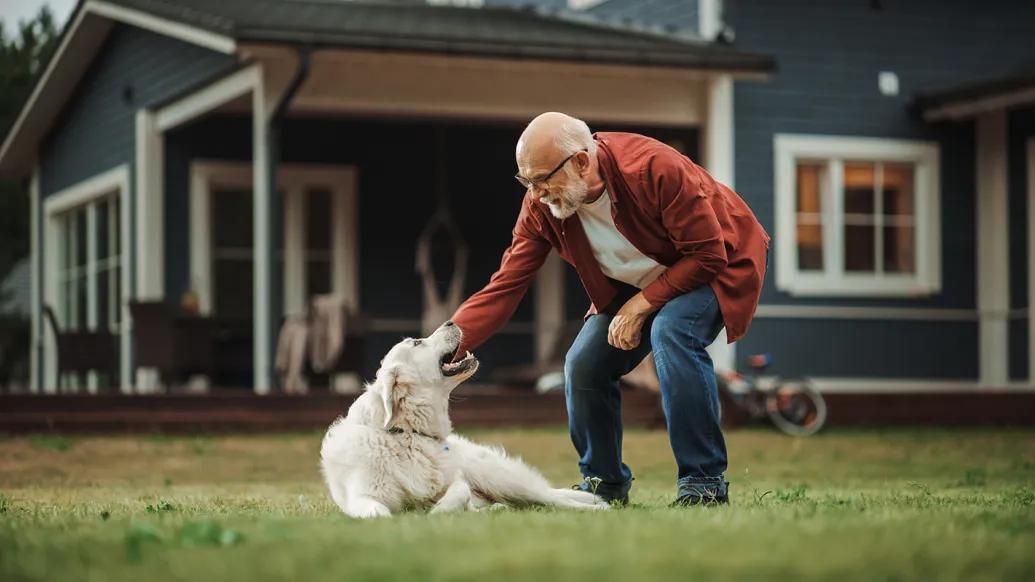
Taking a dog for a walk, cuddling a cat, watching fish glide through a tank, or just having a pet around may help many middle-aged and older adults with their health or well-being, a new poll finds.
But the costs of caring for those pets strains the budgets of 31% of pet owners age 50 and older, the poll shows.
And 33% of people over 50 who don’t have pets say such costs are a main reason why.
The findings, from the University of Michigan National Poll on Healthy Aging, give an updated look at an issue that the poll last explored seven years ago in people ages 50 to 80.
The percentage of adults in that age range who have pets hasn’t changed significantly, with 57% having at least one pet today compared with 55% in 2018.
But the percentage of adults aged 50 to 80 who say having a pet gives them a sense of purpose has grown, to 83% today from 73% in 2018.
In addition, 70% of current pet owners over 50 say having a pet connects them with others, in a time when rates of loneliness and isolation among older adults are high.
And 63% say having a pet helps reduce their stress, while 44% say it helps them stay physically active.
Wellness gain, financial strain
But balancing the benefits of pet ownership with the costs has gotten harder.
The percentage of pet owners aged 50 to 80 who say that having a pet strains their budget has risen from 18% in 2018 to 31% today.
The current pet owners who were most likely to report that owning a pet strains their budget included women, those who rated their mental or physical health as fair or poor, individuals with disabilities that limit their daily activity, and those with household incomes under $60,000.
“Our two polls, seven years apart, clearly show that animals can play a key role in the lives of older adults, and bring many benefits that can contribute to healthy aging,” said Preeti Malani, M.D., who directed the poll when the first pet data were gathered in 2018 and now advises its research team.
Animals can play a key role in the lives of older adults, and bring many benefits that can contribute to healthy aging. Yet some of the people who could potentially get the most benefit from having a pet may also be the ones who have cost-related challenges to pet ownership."
-Preeti Malani, M.D.
“Yet some of the people who could potentially get the most benefit from having a pet may also be the ones who have cost-related challenges to pet ownership.”
Malani is a Professor in the Department of Internal Medicine at the U-M Medical School with training in geriatrics and infectious diseases, and a longtime dog owner.
The poll is based at the U-M Institute for Healthcare Policy and Innovation and supported by Michigan Medicine, U-M’s academic medical center.
Changes in pet-related measures over time
The 2018 poll included adults aged 50 to 80, while the new poll conducted in September 2025 included people over 80. For the comparisons between the two poll years, only adults aged 50 to 80 from the 2025 poll were included.
The percentage of the types of pets that older adults have did not change significantly, with 70% of all current pet owners age 50 and over reporting having dogs, 50% having cats, and much smaller percentages having other pets such as fish (6%), birds (4%), small mammals (3%), large mammals (3%) and reptiles (1%).
Among current pet owners, 31% said they have more than one kind of pet.
But over time, the poll suggests a decline in how many adults are getting some types of pet-related benefits.
For instance, in 2018, 60% of pet owners said having a pet helped them cope with physical or mental symptoms.
But in 2025, just 34% said this.
The percentage who reported that their pet helped them be physically active dropped from 64% to 44%, and the percentage who said their pet helped reduce their stress dropped from 79% to 63%.
Among those poll respondents who said they do not have pets, the percentage who cited cost as a reason rose from 21% in 2018 to 33% today.
Another top reason, lack of time to care for a pet, rose from 15% to 20%. And the percentage who said they are not healthy enough to take care of a pet rose from 2% to 6%.
Role of health care providers
Given the intersections of health and pet ownership shown in the poll, health care providers should inquire about their patients’ relationship with pets and even document it, advises poll director Jeffrey Kullgren, M.D., M.P.H., M.S.
He notes that even if a patient does not have pets of their own, they may benefit from pets in other ways such as walking with a friend and their dog, pet-sitting for a neighbor, or visiting relatives who have pets.
“If we’re encouraging someone to get more physical activity to improve their physical or mental health, knowing if they have a pet they can take for a walk or play with could be very useful. And discussing ahead of time who will help with pet care if they have a planned or unexpected hospitalization could relieve stress,” he said.
“We also need to be attuned to the mental health effects of pet loss, which is a very real form of grief that needs to be taken seriously.”
Kullgren is an Associate Professor of Internal Medicine at U-M and a primary care physician at the VA Ann Arbor Healthcare System.
Michigan poll findings
In addition to the national sample, the team also analyzed data from a sample of Michigan adults aged 50 and over, for the Michigan Poll on Healthy Aging supported by the Michigan Health Endowment Fund. In all, 54% of older Michiganders say they have at least one pet.
Among these Michiganders, the five most common benefits of having a pet were that their pet gives them a sense of purpose (87%), helps them enjoy life (72%), connects them with others (72%), reduces stress (67%), and helps them feel loved (66%).
Michigan pet owners age 50 and older were more likely than pet owners age 50 and older in the rest of the U.S. to agree that having a pet strains their budget (38% in Michigan vs. 31% in the rest of the U.S.)
Cost was commonly mentioned by Michigan adults age 50 and older who don’t have pets.
In all, 29% of older Michiganders without pets cited cost as a reason; 42% mentioned not wanting to be tied down and 30% said they just choose not to have a pet.
Explore more findings about Michiganders over 50 and pets on the poll website and through an interactive data dashboard.
About the poll
The 2025 poll findings come from a nationally representative survey conducted by NORC at the University of Chicago for IHPI and administered online and via phone in September 2025 to 2,698 respondents age 50 to 95 from the AmeriSpeak panel. The Michigan-focused analysis includes 1,270 Michigan adults age 50 to 93, including a non-probability oversample. Results are weighted to reflect each respective population. The 2018 poll was fielded to a nationally representative sample of 2,051 adults age 50-80 conducted using the Ipsos KnowledgePanel. Both surveys are nationally representative and allowed the team to compare findings from these two points in time.
Read past National Poll on Healthy Aging reports and Michigan findings, and learn about the poll methodology.
Sign up for Health Lab newsletters today. Get medical tips from top experts and learn about new scientific discoveries every week.
Sign up for the Health Lab Podcast. Add us wherever you listen to your favorite shows.

Health Lab
Explore thousands of health news & research stories by visiting the Health Lab homepage for more.
Media Contact

Public Relations
Department of Communication at Michigan Medicine
In This Story

Preeti N Malani
Clinical Professor
Related

Dog diversity unveiled by international DNA database

Survey finds a need for pet care during hospitalizations
Stay Informed
Want top health & research news weekly? Sign up for Health Lab’s newsletters today!
Featured News & Stories

Many older adults make Medicare decisions quickly and most don’t change plans, poll finds
What’s the latest on 7-OH and kratom availability and addiction care?

Depression in OBGYN residents needs more attention, study suggests

Exceptional response to immunotherapy gives patient with liver cancer more milestones to celebrate

Better prenatal care data could help prevent maternal complications, experts say