Personalized medicine, not X-rays, should guide common forearm fracture treatments in older adults
The new findings will guide future treatments of distal radius fracture.
5:00 AM
Author |
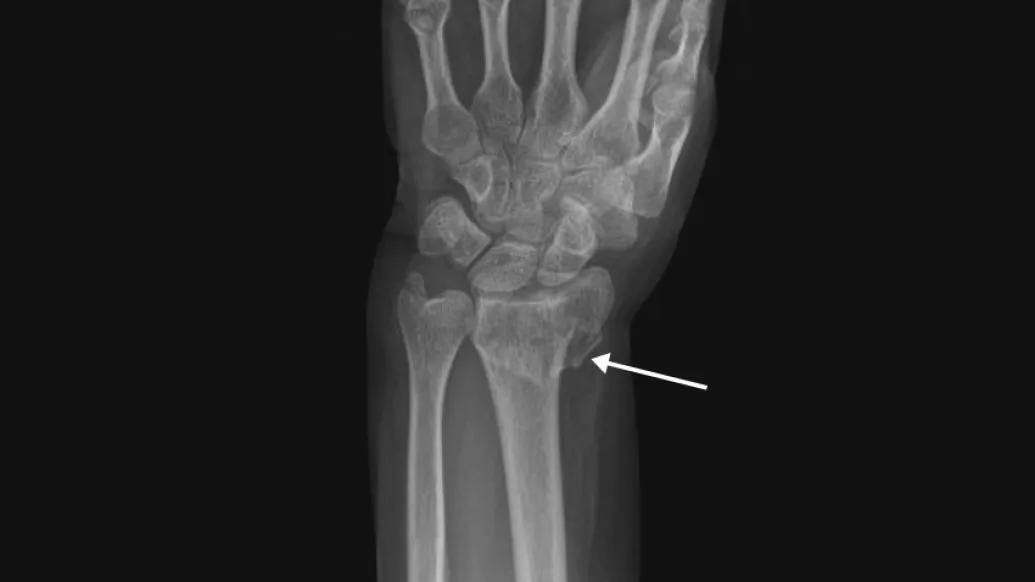
A decade-long study of the most common forearm fracture in older adults revealed that personalized medicine catering to a patient's individual needs and environment, not age or X-rays, should guide treatment options.
Led by a Michigan Medicine physician, the research team examined treatment outcomes over two years for patients who fractured their distal radius, the larger of two bones in the forearm. They found no one-size-fits all method for treating the fracture, which more than 85,000 Medicare beneficiaries sustain annually.
"Traditionally, surgeons look at these broken bones on X-rays, and they have to assess various ways of fixing it based off fracture anatomy and patient age," said Kevin Chung, M.D., study lead and Charles B. G. De Nancrede Professor of Surgery at Michigan Medicine. "However, in older patients, we determined that the patient-centered care in tailoring particular treatments to their needs, social environment and risk tolerance for surgery are all considerations in prescribing treatment."
MORE FROM THE LAB: Subscribe to our weekly newsletter
The new study, published in JAMA Network Open and funded by the National Institutes of Health, covered more than 180 participants studied at more than 20 global medical centers over a 10-year period.
"For hand surgery, this is the most intense, collaborative effort to try and answer a 200-year puzzle about distal radius fractures in older adults," Chung said. "It is one of the most common fractures in the world for this patient population – you have parents and grandparents that will get this fracture. For the good of public health, we needed to answer this question."
For hand surgery, this is the most intense, collaborative effort to try and answer a 200-year puzzle about distal radius fractures in older adults.Kevin Chung, M.D.
Participants in the trial were randomized to receive one of three treatment strategies, including volar locking plates, external fixation, and pinning. Those who chose not to have surgery were treated with casting. Although participants treated with volar plating reported better ability to perform daily tasks early on in the follow-up period of the trial, that gap between plating and other methods disappeared at the six-month mark. All participants were satisfied with the outcomes at the study's conclusion.
"Surgeons need to know how to perform all the techniques available to treat distal radius fracture, rather than being so ingrained to using just the plating system because, now, most trainees are taught just that system," Chung said. "But there are so many fracture patterns that require one to have all the tools and skills necessary to make sure patients receive tailored treatment for their injuries."
The results show that the interaction between the surgeon, the patient and the patient's family is key because satisfaction of the patients demands a much more personal approach than the singular interest of fixing a broken bone, Chung said.
"We know that chronological age doesn't determine a patient's physiological age," he said. "When someone is 70 years old, they may be physiologically 40-50. Those patients have a need to get back to physical activities and independent living, so we should treat them more aggressively."
Recruitment for a trial lasting 10 years proved difficult for the research team. The older people participating in this historic study, some struggling with transportation, wanted to help others, Chung said.
"It is difficult to participate in this trial because of the time and effort invested by the patients," he said. "These are special people. They contributed their lives for the science of helping other older patients who will suffer from this fracture. Their commitment is inspirational to us, which kept our research team going, despite overwhelming challenges. We are grateful to our study participants, the National Institutes of Health and the support of the American people."
Like Podcasts? Add the Michigan Medicine News Break on iTunes, Google Podcast or anywhere you listen to podcasts.
Paper cited/DOI: "Comparison of 24-Month Outcomes After Treatment for Distal Radius Fracture," JAMA Network Open. DOI: 10.1001/jamanetworkopen.2021.12710

Health Lab
Explore thousands of health news & research stories by visiting the Health Lab homepage for more.
Media Contact

Public Relations
Department of Communication at Michigan Medicine
Stay Informed
Want top health & research news weekly? Sign up for Health Lab’s newsletters today!
Featured News & Stories

U-M Board of Regents approves construction of Nathan and Catherine Forbes Sports Medicine Institute
Why tendons heal so poorly and how researchers hope to fix them
Rethinking how clinicians learn to feel disease
Treating arthritis of the hands

Paying it forward for future Wolverines