Personalized app reduces cancer-related fatigue
Users experienced reduced anxiety and sleep disturbances
5:00 AM
Author |
One of the most common side effects of cancer treatments, including chemotherapy and radiation therapy, is fatigue.
Cancer-related fatigue is often worse and harder to manage compared to the fatigue in people without cancer and can sometimes persist weeks, months or even years after treatment ends.
Researchers at the Rogel Cancer Center, in collaboration with Arcascope, a University of Michigan spinout start-up, have developed and tested a personalized app that tracks a user’s circadian rhythm and makes behavioral recommendations to reduce daily fatigue.
The work was published in Cell Reports Medicine.
Traditional approaches to managing cancer-related fatigue include medicines, exercise and meditation practices. However, they may not work for everyone.
“These measures appeal to only a portion of the population,” said Muneesh Tewari, a professor of internal medicine and a member of U-M Rogel Cancer Center.
“We wanted to provide something that could be more easily and widely accessible.”
Our bodies have an internal clock that controls our sleep-wake cycle. It follows a 24-hour pattern and affects several processes, such as digestion and body temperature.
Disturbances in this system have been shown to worsen fatigue and quality of life in cancer patients.
Fortunately, external factors like light can help modify circadian rhythms.
“Although lighting-based treatments can be useful, previous studies used a one-size-fits-all approach where the patients were exposed to light at a specific time of day, without accounting for their individual circadian rhythms,” said Caleb Mayer, a former graduate student of mathematics and the first author of the study.
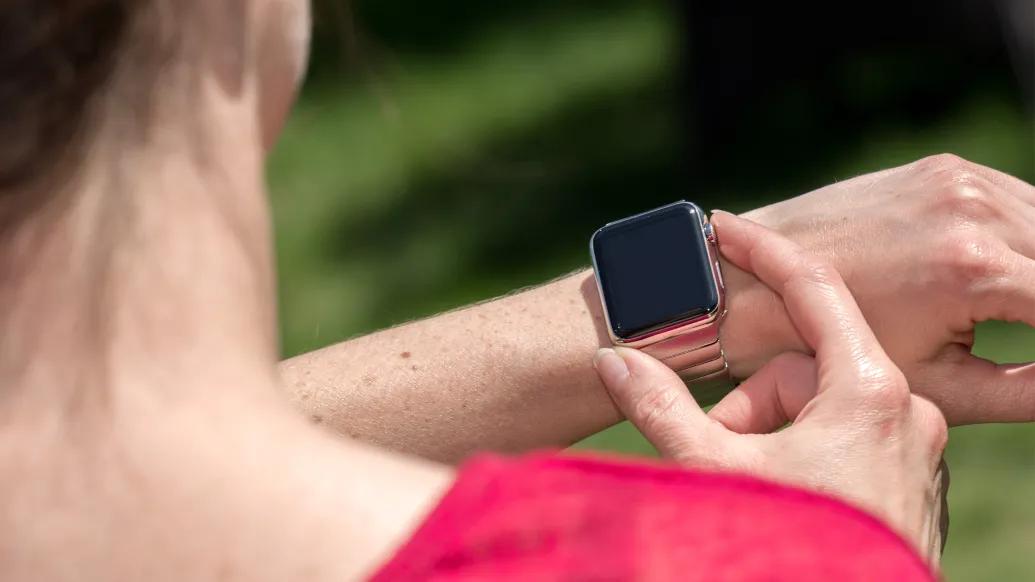
To improve these treatments, the team developed an app called Arcasync that tracked a user’s sleep-wake patterns based on their heart rate and physical activity patterns.
Then, using mathematical models, the app was able to make recommendations such as “Seek bright light” at a particular time of day.
Using 138 participants, who were divided into a control group and an intervention group, the researchers tested the app on patients who had breast cancer, prostate cancer and blood cancer.
For 12 weeks all participants were asked to report their fatigue levels, sleep disturbances, anxiety, depression and overall health.
Those in the intervention group had decreased daily and weekly fatigue, demonstrating that personalized recommendations can improve their quality of life.
“We have shown that you can take a device that is seamlessly integrated into your life and use it to guide your circadian rhythms,” said Sung Won Choi, a professor of pediatric hematology-oncology and a member of the Institute for Healthcare Policy and Innovation.
“The reach of this app may be far greater than traditional medications or exercise regimens, regardless of cancer type.”
The team will be expanding their study to include more participants and are also interested in assessing the degree to which each individual followed the light recommendations.
“Tackling fatigue is the first step. Next, we also want to exploit the circadian clock to make drugs more effective and less toxic,” said Olivia Walch, CEO of Arcascope, who carried out the research as a graduate student in applied mathematics at U-M.
“Our goal is for future versions of our app to help people time their pills or shift themselves ahead of a scheduled infusion, to maximize how well the treatments work while keeping side effects to a minimum.”
Additional authors: Walter Dempsey, Kevin Hannay, Caroline Clingan, Zoe Bowen, Michelle Rozwadowski, Zachery R. Reichert, N. Lynn Henry, Joshi J. Alumkal and Daniel B Forger.
Funding/disclosures: The work was supported by the NIH Small Business Innovation Research program (R43CA236557).
Conflict(s) of interest: Walch has given talks at Unilever events and received honorariums and travel expenses, she has also done consulting for Gideon Health and is the CEO of Arcascope, a company that makes circadian rhythms software. Forger is the CSO of Arcascope. Forger and the University of Michigan are part owners of Arcascope. Henry has received institutional support for the conduct of a clinical trial (Blue Note Therapeutics), receives royalties from Up-To-Date and has consulted for AstraZeneca and Myovant Sciences. Reichert has received institutional support from AstraZeneca and consulted for AstraZeneca and Johnson and Johnson.
Paper cited: “A circadian and app-based personalized lighting intervention for the reduction of cancer-related fatigue,” Cell Reports Medicine. DOI: 10.1016/j.xcrm.2025.102001.
Sign up for Health Lab newsletters today. Get medical tips from top experts and learn about new scientific discoveries every week.
Sign up for the Health Lab Podcast. Add us wherever you listen to your favorite shows.

Health Lab
Explore thousands of health news & research stories by visiting the Health Lab homepage for more.
Media Contact

Public Relations
Department of Communication at Michigan Medicine
In This Story
Sung W Choi, MD, MS
Professor
Related
7 Ways to Fight Cancer Fatigue
How to cope with sleep issues after cancer treatment
Stay Informed
Want top health & research news weekly? Sign up for Health Lab’s newsletters today!
Featured News & Stories
FDA-approved drug offers hope for patients with polycythemia vera, a rare bone marrow disorder
Medical students develop novel technological solutions for unmet patient needs

Researchers create new path to target hard-to-drug prostate cancer protein
Study explains how colorectal cancer cells maintain high iron levels

Phase 1 trial of alrizomadlin shows promise in targeting metastatic salivary gland cancers