Pediatric patient treated for rare kidney cancer
Maria was 18 months old when she was diagnosed with an exceptionally rare kidney cancer, with fewer than 50 cases reported worldwide
5:00 AM
Author |
For nearly 20 years, Vanessa Shamany-Fakhoury, M.B.A., M.H.A., B.S.N., R.N., has cared for patients at C.S. Mott Children's Hospital.
In October 2019, she found herself on the other side of the hospital bed when her 18-month-old daughter, Maria, became a patient.
While getting her twin daughters ready for a nap, Shamany-Fakhoury noticed a dark stain in Maria's diaper.
She contacted Maria's pediatrician and was told it was likely food dye.
If it happened again, she was advised, it could be a urinary tract infection.
A few days later, Shamany-Fakhoury found blood in Maria's diaper again.
"I had a gut feeling that, even though she was acting completely fine, it wasn't a UTI and something was very wrong," she said.
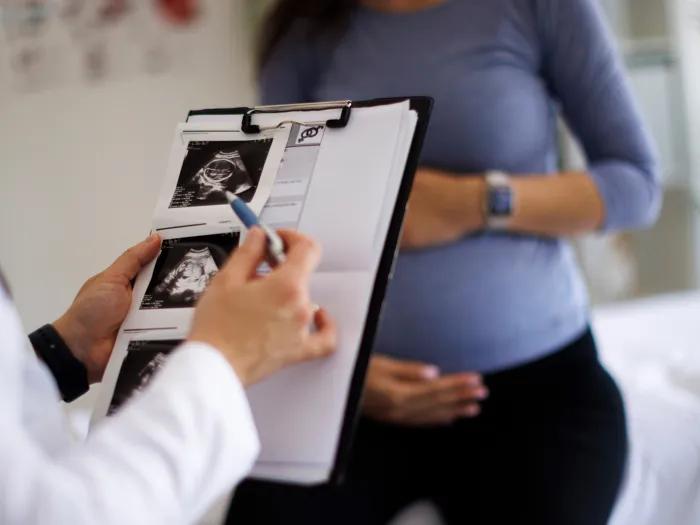
A subsequent ultrasound revealed a large mass on Maria's left kidney.
Maria's care team at Mott quickly recognized that the mass did not resemble the pediatric kidney cancers they commonly treat.
Additional imaging and testing confirmed the need for surgery. Erika Newman, M.D., Associate Professor of Pediatric Surgery and member of the Solid Tumor Oncology Program, recommended removing the tumor as soon as possible.
Five days later, Newman and her team removed the peach-sized tumor along with Maria's left kidney.
The diagnosis was anaplastic sarcoma of the kidney, an exceptionally rare cancer.
There have been fewer than 50 cases worldwide since the tumor was first recognized as a distinct cancer in 2007, making it one of the rarest known solid tumors.
Genetic testing through MI-ONCOSEQ study at the Michigan Center for Translational Pathology identified a rare DICER1 mutation, a genetic change associated with an increased risk of developing certain tumors.
Developing a treatment plan for a rare cancer
Because so few cases had been reported, there was no established treatment protocol for Maria's cancer.
"There was no standard treatment plan in the literature, and we had to reach out to experts across the U.S. for help," said Laura Sedig, M.D., Clinical Assistant Professor of Pediatrics, who led Maria's care.
Sedig’s team worked with Children’s Hospital of Minnesota and Children’s Oncology Group, a clinical trials group that is supported by the National Cancer Institute, to develop one.
Maria’s treatment included surgery followed by multiple cycles of chemotherapy.
Our family was forced to split up. Maria and I essentially lived at Mott — it became our home away from home. However, through it all, we knew everyone at Mott was in our corner, fighting right alongside Maria."
-Vanessa Shamany-Fakhoury
For Shamany-Fakhoury and her family, the treatment meant spending much of their time at Mott.
"Our family was forced to split up. Maria and I essentially lived at Mott — it became our home away from home," Shamany-Fakhoury said. "However, through it all, we knew everyone at Mott was in our corner, fighting right alongside Maria."
Even during treatment, Maria looked for opportunities to be a kid. Whenever she could, she would sneak away to the playroom, sometimes for only a few minutes.
Five years later, Maria remains cancer-free.
Her care team continues to monitor her for signs of recurrence and manage her kidney health after chemotherapy resulted in chronic kidney disease.
A new perspective on patient care
Shamany-Fakhoury's experience as a parent changed the way she viewed health care, despite having spent most of her career caring for patients herself.
"I have walked the halls in Mott thousands of times as a nurse, but it looks very different when you're on the other side of the bed as the parent," she said.
"You always think this will never happen to you or someone you love. This experience humbled me as a mom, but even more so as a nurse."
Today, colleagues across Michigan Medicine invite Shamany-Fakhoury to share her family's experience with clinical and nonclinical teams.
She uses the experience to help health care professionals better understand the perspective of patients and caregivers and the lasting impact of their interactions.
She often remembers advice Newman gave her at the beginning of Maria's treatment.
"From day one, Dr. Newman told me to buckle up because Maria's treatment wasn't a race — it was a journey," Shamany-Fakhoury said.
"That perspective, along with our faith, helped carry us through some of our hardest days."
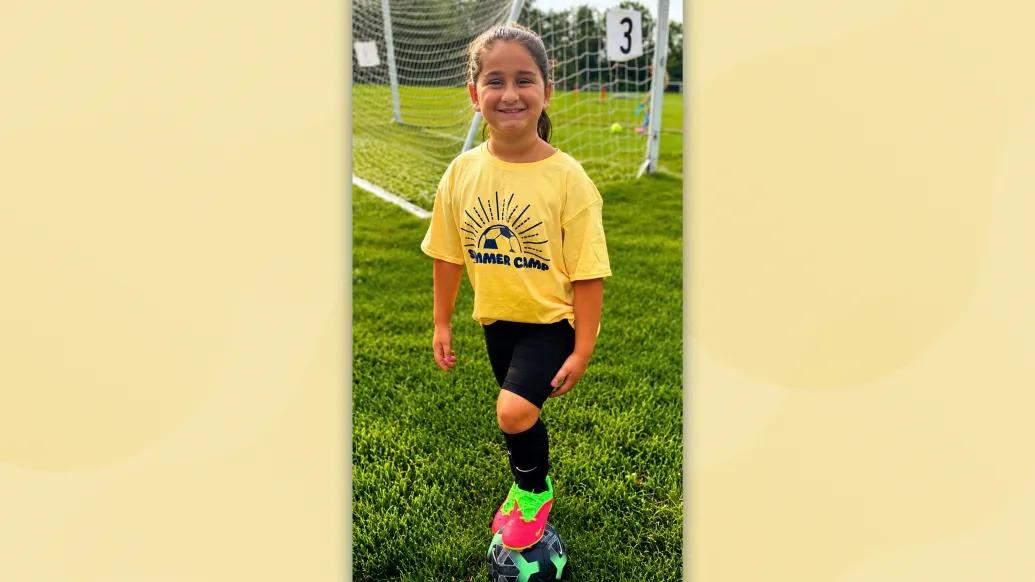
Now 8, Maria is thriving.
She enjoys playing soccer, swimming, riding her scooter and spending time with family and friends.
She also maintains a year-round love of the Grinch.
Shamany-Fakhoury hopes her family's experience encourages others facing difficult diagnoses to hold on to hope.
"It's very easy to give up, but so incredibly important to hold on to your faith and find joy whenever you can," she said.
Learn about getting involved at BlockOutCancer.org and be a part of bringing hope, healing and brighter tomorrows to children and families facing cancer.
Sign up for Health Lab newsletters today. Get medical tips from top experts and learn about new scientific discoveries every week.
Sign up for the Health Lab Podcast. Add us wherever you listen to your favorite shows.

Health Lab
Explore thousands of health news & research stories by visiting the Health Lab homepage for more.
Media Contact

Public Relations
Department of Communication at Michigan Medicine
In This Story
Erika Adams Newman, MD, MBA, FAAP, FACS
Professor
Laura Kimberly Sedig, MD, MSc
Clinical Assistant Professor
Related

Children’s life threatening experiences lead mom to new nursing career

Nursed Back to Health
Stay Informed
Want top health & research news weekly? Sign up for Health Lab’s newsletters today!
Featured News & Stories

4 ways to teach your teen safe driving habits
Online resources and coaching helped people seek genetic testing for cancer

Comprehensive DNA sequencing reveals hidden drivers of cancer
‘Molecular glue’ stabilizes protein that inhibits development of non-small cell lung cancer and uterine cancer
Exceptional response to immunotherapy gives patient with liver cancer more milestones to celebrate