PCOS has a new name
What the shift from PCOS to PMOS means for your fertility journey
5:00 AM
Author |
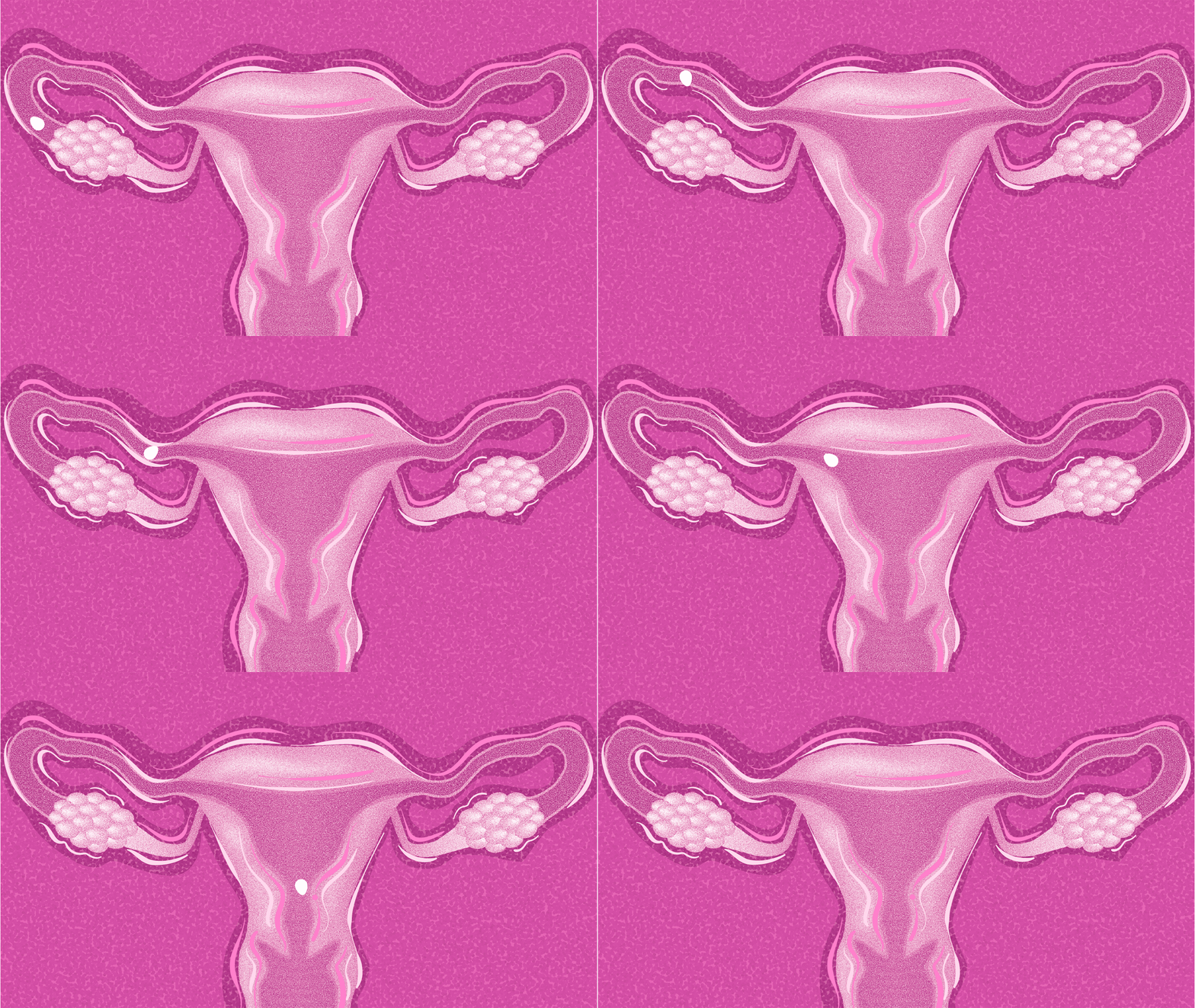
If you have polycystic ovary syndrome, or PCOS, you may soon see a new name for the condition: polyendocrine metabolic ovarian syndrome, or PMOS.
This follows a landmark international expert consensus published in The Lancet.
Hanh N. Cottrell, M.D., a double-board-certified reproductive endocrinologist, specializes in infertility at the University of Michigan Health Center for Reproductive Medicine.
One of her interests is fertility care in people with PMOS.
She says the name change now reflects that the condition involves more than the ovaries.
“The condition encompasses more than issues with ovarian function; it also encompasses metabolic factors as well,” she said.
While the old name, polycystic ovary syndrome, viewed your body through a narrow, localized lens.
The new name, PMOS, uses a telescopic lens to show how your fertility is deeply connected to your entire endocrine system:
Polyendocrine: "Poly" means many and "endocrine" refers to your hormone systems. This acknowledges that ovulation struggles are driven by an intricate web of interconnected hormones rather than just a single reproductive organ issue.
Metabolic: This is the most crucial addition for fertility. It formally recognizes that your body's energy and blood sugar processing directly impact egg quality, ovulation regularity and early pregnancy health.
Ovarian: The ovaries remain a critical piece of the puzzle maintaining the link to reproductive health, egg development and fertility.
Syndrome: A collection of signs that look completely different from one person to the next, meaning your fertility plan must be customized to your specific body.
While each person’s symptoms can present differently, Cottrell says the general three main criteria for PMOS diagnosis are:
Irregular menstrual cycles
Signs of hormonal imbalance, such as increased hair growth, acne or other skin changes
Ultrasound findings showing multiple small follicles within the ovary
Fertility and PMOS
For those actively trying to conceive or concerned about future fertility, the name PCOS has long been confusing for patients, particularly when they hear the word “cyst.”
The structures seen on an ultrasound in someone with PCOS are generally small ovarian follicles, which contain immature eggs.
They aren't the same as pathological ovarian cysts that might require treatment or surgery.
“PCOS was very confusing because it was emphasizing cysts on the ovaries,” Cottrell said.
“Those cysts are actually just young eggs and, sometimes, when there’s a higher range of those young eggs, it can be associated with hormone imbalances.”
SEE ALSO: U-M Health Center for Reproductive Medicine
For someone trying to conceive, the more important question isn’t simply what the ovaries look like on an ultrasound.
It’s whether the ovaries are releasing an egg regularly and monthly.
Irregular menstrual cycles can be a sign that ovulation isn’t happening consistently.
And if an egg isn’t being released, there may be fewer opportunities for an egg and sperm to meet.
That’s one reason irregular cycles shouldn’t be dismissed when you’re trying to get pregnant.
The metabolic health connection
By placing "metabolic" directly into the title, Cottrell says the medical community is validating what reproductive endocrinologists have known for years: metabolic health is the foundation of fertility.
Insulin resistance and high insulin levels – hallmark metabolic features of PMOS – can tell the ovaries to produce more testosterone.
PCOS was very confusing because it was emphasizing cysts on the ovaries. Those cysts are actually just young eggs and, sometimes, when there’s a higher range of those young eggs, it can be associated with hormone imbalances.”
- Hanh N. Cottrell, M.D.
This excess testosterone acts like a red light, halting egg development and causing irregular or missing periods.
“Lifestyle changes are a huge piece of the therapy options as well,” Cottrell said.
They may include working with your primary care clinician to optimize your overall metabolic health and weight while you’re receiving fertility care.
When should you seek fertility care with PMOS?
For people younger than 35 with no known fertility risk factors, the general recommendation is often to seek an infertility evaluation after 12 months of trying to conceive.
But that timeline doesn’t apply if your periods are irregular.
“Waiting that year is not the right advice,” Cottrell said.
If your cycles are irregular, consider talking with your OB-GYN or a reproductive endocrinologist and infertility specialist sooner.
A clinician can review your menstrual history, along with any other symptoms, and determine whether an additional evaluation for PMOS or another cause of irregular ovulation makes sense.
In patients with diagnosed PMOS, it may not be the only potential reason for difficulty conceiving, so a comprehensive fertility evaluation will also consider the uterus, other reproductive anatomy and sperm health.
How is fertility treated with PMOS?
When PMOS is contributing to infertility because you’re not ovulating regularly, treatment may focus on helping you ovulate.
These treatments are called ovulation induction therapies.
Oral medications are often used as a first-line treatment, though the best approach depends on the individual and what is contributing to infertility.
SEE ALSO: In Vitro Fertilization
“Tailor a patient’s care plan to the issues present while optimizing metabolic health,” is how Cottrell described the approach.
For some people, simpler fertility treatments aren’t successful, or there are additional factors affecting fertility.
In those cases, in vitro fertilization may be an option.
The important point is that a diagnosis of PMOS doesn’t automatically mean you’ll need IVF or that pregnancy will be difficult to achieve.
What does the PCOS-to-PMOS name change mean for patients and fertility?
For now, the biggest change may be the language you hear, not the fertility treatment you receive.
Current fertility treatments – such as ovulation-induction medications (like letrozole or clomiphene), insulin-sensitizing therapies, or undergoing IVF – remain the gold standard of care.
But you can expect your care team to place a heavier emphasis on your metabolic health moving forward, Cottrell says.
If you’re trying to conceive, don’t let the diagnosis convince you that pregnancy isn’t possible.
“Many patients with PMOS do conceive, and there are several effective treatment options that can help get that person to their healthy family,” Cottrell said.
Sign up for Health Lab newsletters today. Get medical tips from top experts and learn about new scientific discoveries every week.
Sign up for the Health Lab Podcast. Add us wherever you listen to your favorite shows.

Health Lab
Explore thousands of health news & research stories by visiting the Health Lab homepage for more.
Media Contact

Public Relations
Department of Communication at Michigan Medicine
Stay Informed
Want top health & research news weekly? Sign up for Health Lab’s newsletters today!
Featured News & Stories

Depression in OBGYN residents needs more attention, study suggests
Better prenatal care data could help prevent maternal complications, experts say

Is the United States Lagging Behind Europe in Memory Improvement?

PMOS is the New PCOS

Who’s at risk for painful periods?