Overcoming cancer and a lifelong phobia
How collaboration helped a unique head and neck cancer patient
3:11 PM
Author |
Reflecting on his experience as a head and neck cancer patient at Michigan Medicine, Charles Coughlan doesn’t mind mixing his sports metaphors.
When describing surgeon Keith Casper, M.D., and his support staff, Coughlan recalls some of the best soccer teams he ever played on—groups that were unselfish, supportive and collaborative.
But when describing his own journey through cancer treatment, Coughlan imagines himself as a jockey, trying not to stray off course by treating circumstances as different than they are.
“My mantra for life is: It’s easier to ride the horse in the direction it’s going,” he said.
For Coughlan, the ride has taken him all over.
He grew up in Waterford, Ireland in the 1950s and ’60s, where he loved to play sports. (“I was kicking a soccer ball before I could walk.”)
His uncle was on the board of directors of the Waterford Blues, the local soccer team, and another branch of the family tree bred champion racehorses.
As a young man, Coughlan left Ireland to travel the world and ended up working on a kibbutz in Israel, where he met an American woman.
While his travels then took him to the Netherlands, France, England and eventually back to Ireland, Coughlan kept in touch with his American friend and, in 1976, followed her back to the United States.
He worked as a cowboy on a Florida dairy farm that summer before marrying in her native Michigan.
He enrolled at Michigan State in 1980 and eventually settled down as a civil engineer for the city of Grand Rapids.
Coughlan was still living in Grand Rapids in 2019, when doctors diagnosed him with oropharyngeal cell cancer stage 4A.
They recommended radiation and chemotherapy and, for perhaps the first time in his life, Charles considered not riding the horse in the direction it was going.
His extreme fear of needles made him keen to pass on treatment.
“But I promised my daughter I'd do my best and I figured, I gave my word, so I can’t break it,” Coughlan said.
He completed chemoradiotherapy over six weeks. In what he describes as the darkest days of his life, Coughlan had to take Xanax on the way to treatment to deal with his trypanophobia, then struggled to eat afterward, losing 26 pounds in two weeks.
Despite going to bed and waking up sick, Coughlan became determined to have a positive attitude that would reflect the admiration he had for the staff who helped him.
He remembered his mantra. And things seemed to improve as he responded to treatment and stabilized his weight.
Then, in 2024, Coughlan went back to his doctor in Grand Rapids for a bump on his tongue.
“I thought it was a canker sore. I guess I was off by one letter: It was cancer, not canker.”
Facing the possibility of more chemotherapy, more needles and more struggles to eat, Coughlan got a welcome call walking at the White Pine Trail State Park.
His doctor mentioned he might be a candidate for a special robotic surgery performed by a doctor named Keith Casper at Michigan Medicine in Ann Arbor. And then Coughlan got more good news: Casper would come to him.
Cross-state collaboration
Five years ago, the department of otolaryngology noticed a steady stream of head and neck cancer patients coming to Ann Arbor from Grand Rapids and the surrounding area.
Many times, however, the distance would cause patients to miss regular checkups.
So, seeing an opportunity to make these patients’ lives easier—and promote greater collaboration with University of Michigan Health-West—a handful of clinicians began traveling on Fridays from Ann Arbor to Grand Rapids to a newly established oncology clinic.
Now two doctors regularly make this trip: Keith Casper, M.D., and David Forner, M.D., M.Sc., both clinical faculty in the department of otolaryngology-head and neck surgery.
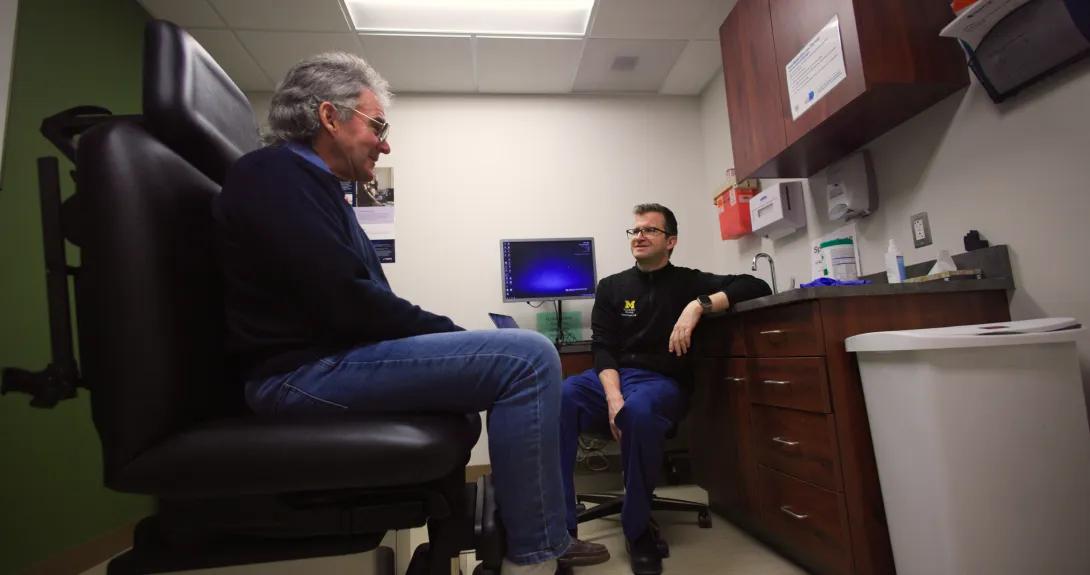
For at least two Fridays out of every month, Casper will get up early to make the drive to UMH-West where he sees his patients, who include Charles Coughlan.
Early on, Casper explained that Coughlan’s prior cancer treatment complicated the ability to remove the squamous cell carcinoma he had mistaken for a canker sore.
So, Casper suggested Coughlan come to Ann Arbor for robotic surgery.
On June 17, 2024, Coughlan arrived at Michigan Medicine’s University Hospital for his operation. Aware of his trypanophobia, the staff tried to help him deal with the unavoidable needles.
“I think that the anesthesia and nursing teams did an amazing job of preparing him for the needles and doing everything they could for him,” Casper said.
Casper and his team successfully removed lymph nodes in Coughlan’s neck and throat and a small section of his tongue.
The days after surgery were tough for Coughlan as the IV port needles needed to stay in.
But the nursing staff earned his admiration for trying to make the recovery as painless as possible.
“They’d work a week to make five minutes better for you,” Coughlan said.
“I love them forevermore.”
Now, Coughlan is back home in Grand Rapids, focusing on sports and his grandson instead of needles and calories.
He still sees Casper at University of Michigan Health-West where they have time to talk about soccer and family, in addition to his treatment.
It’s easier to ride the horse where it’s going. It’s also easier to ride with someone else who knows the path.
“Dr. Casper performed so many surgeries, but for me, one surgery is a huge event,” Coughlan said.
“And when you find somebody who makes you feel like this is the only surgery he’ll ever do in his life—and is giving you everything—that makes a difference. They make you feel special.”
Sign up for Health Lab newsletters today. Get medical tips from top experts and learn about new scientific discoveries every week.
Sign up for the Health Lab Podcast. Add us wherever you listen to your favorite shows.

Health Lab
Explore thousands of health news & research stories by visiting the Health Lab homepage for more.
Media Contact

Public Relations
Department of Communication at Michigan Medicine
In This Story
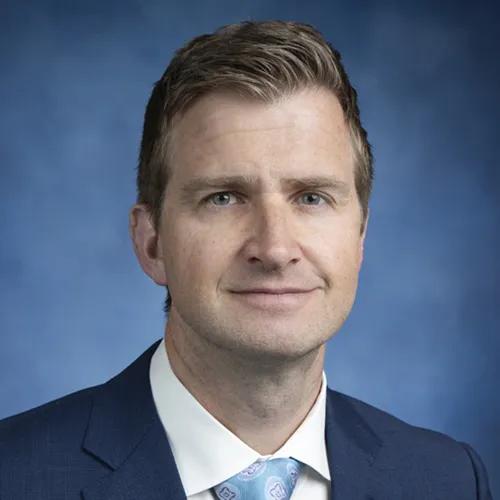
Keith Andrew Casper, MD
Clinical Associate Professor
Stay Informed
Want top health & research news weekly? Sign up for Health Lab’s newsletters today!
Featured News & Stories

How U-M helped bring depression out of the darkness
Distance, insurance, social factors may hinder access to lifesaving heart monitoring for children

Mobile health app improves heart failure medication use, dosing after hospitalization

Giving Voice to Lived Experience in Dementia Research
Exploring the mind’s mysteries: 130 years of mental health care & innovation at U-M