Over Time, Marijuana Use Dampens Brain’s Response to Reward
A long-term study of young marijuana users shows measurable changes in the brain’s reward system, shifts that may put them at risk for addiction.
11:00 AM
Author |
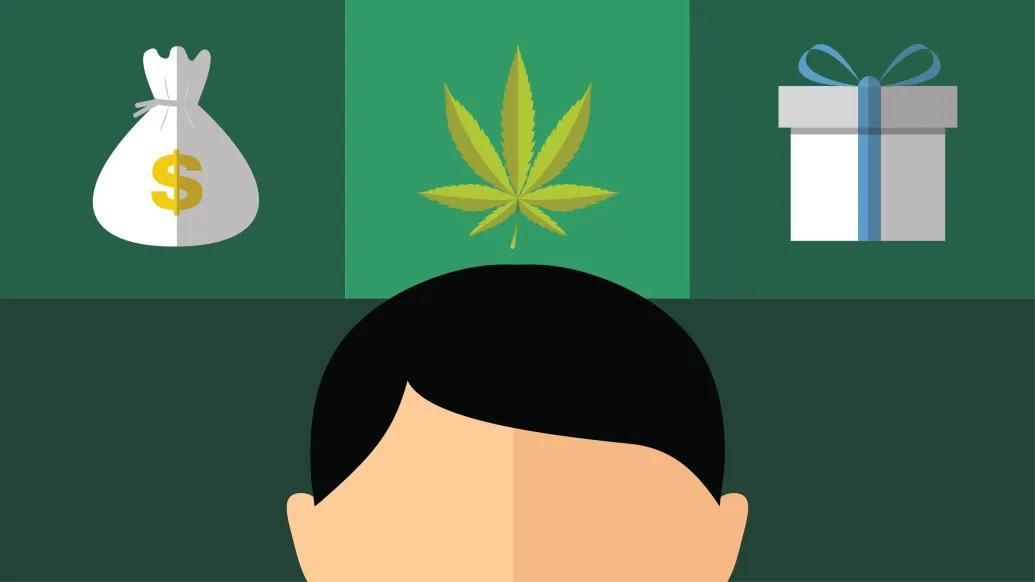
Most people would get a little "rush" out of the idea that they're about to win some money. If you could look into their brains at that very moment, you'd see lots of activity in the part of the brain that responds to rewards.
SEE ALSO: Why Doctors Love Opioids and Hate Marijuana for Chronic Pain
But for people who've been using marijuana, that rush isn't as big — and it shrinks as use continues, a new study finds.
That dampened, blunted response may also open users up to a higher risk of addiction to cannabis or other substances.
The new results come from the first long-term study of young marijuana users that tracked changing brain responses to rewards.
Published in JAMA Psychiatry and performed at the University of Michigan Medical School, the study shows measurable changes in the brain's reward system with marijuana use — even when other factors such as alcohol use and cigarette smoking were taken into account.
"What we saw was that over time, marijuana use was associated with a lower response to a monetary reward," says senior author and U-M neuroscientist Mary Heitzeg, Ph.D. "This means that something that would be rewarding to most people was no longer rewarding to them, suggesting but not proving that their reward system has been 'hijacked' by the drug, and that they need the drug to feel reward — or that their emotional response has been dampened."
Some people may believe that marijuana is not addictive, or that it's 'better' than other drugs that can cause dependence. But this study provides evidence that it's affecting the brain in a way that may make it more difficult to stop using it.
Spotting reward-seeking brain behavior
The study involved 108 people in their early 20s, the prime age for marijuana use. All were taking part in a larger study of substance use, and all had brain scans at three points over four years. Three-quarters were men, and nearly all were white.
SEE ALSO: Study Pinpoints Genetic Markers That Influence Addiction
While their brain was scanned in a functional MRI scanner, they played a game that asked them to click a button when they saw a target on a screen in front of them. Before each round, they were told they might win 20 cents, or $5 — or that they might lose that amount, or have no reward or loss.
The researchers were most interested in what happened in the reward centers of the volunteers' brains, the nucleus accumbens. Researchers were interested in the moment of anticipation, when the volunteers knew they might win some money and were anticipating performing the simple task that it would take to win.
In that moment, the cells of the nucleus accumbens usually swing into action, pumping out a 'pleasure chemical' called dopamine. The bigger the response, the more pleasure or thrill a person feels — and the more likely they'll be to repeat the behavior later.
But the more marijuana use a volunteer reported, the smaller the response in their nucleus accumbens over time, the researchers found.
While the researchers didn't also look at the volunteers' responses to marijuana-related cues, other research has shown that the brains of people who use a high-inducing drug habitually often respond more strongly when they're shown cues related to that drug. The increased response means the drug has become associated in their brains with positive, rewarding feelings. And that can make it harder to stop seeking the substance and using it.
If this is true with marijuana users, says first author Meghan Martz, doctoral student in developmental psychology at U-M, "It may be that the brain can drive marijuana use, and that the use of marijuana can also affect the brain. We're still unable to disentangle the cause and effect in the brain's reward system, but studies like this can help that understanding."
Regardless, the new findings show that there is change in the reward system over time with marijuana use. Heitzeg and her colleagues also showed recently in a paper in Developmental Cognitive Neuroscience that marijuana use impacts emotional functioning.
The new data on response to potentially winning money may be further evidence that long-term marijuana use dampens a person's emotional response — something scientists call anhedonia.
"We are all born with an innate drive to engage in behaviors that feel rewarding and give us pleasure," says co-author Elisa Trucco, Ph.D., psychologist at the Center for Children and Families at Florida International University. "We now have convincing evidence that regular marijuana use impacts the brain's natural response to these rewards. In the long run, this is likely to put these individuals at risk for addiction."
Marijuana: Not so benign?
Marijuana's reputation as a "safe" drug, and one that an increasing number of states are legalizing for small-scale recreational use, means that many young people are trying it. As many as a third of college-age people report using it in the past year.
But Heitzeg says that her team's findings, and others' work, have shown that it can cause effects including problems with emotional functioning, academic problems and even structural brain changes. And, the earlier in life someone tries marijuana, the faster their transition to becoming dependent on the drug, or other substances.
"Some people may believe that marijuana is not addictive, or that it's 'better' than other drugs that can cause dependence," Heitzeg says. "But this study provides evidence that it's affecting the brain in a way that may make it more difficult to stop using it. It changes your brain in a way that may change your behavior, and where you get your sense of reward from."
She is among the scientists leading a nationwide study called ABCD, for Adolescent Brain Cognitive Development. This will track thousands of preteens nationwide over 10 years, looking at many aspects of their health and functioning, including brain development via brain scans. Because some of the teens in the study are likely to use marijuana, the study will provide a better chance of seeing what happens over time.

Health Lab
Explore thousands of health news & research stories by visiting the Health Lab homepage for more.
Media Contact

Public Relations
Department of Communication at Michigan Medicine
Stay Informed
Want top health & research news weekly? Sign up for Health Lab’s newsletters today!
Featured News & Stories
Study Pinpoints Genetic Markers That Influence Addiction
What’s the latest on 7-OH and kratom availability and addiction care?

Foundation gift inspires additional gifts to strengthen youth mental health care

College of Pharmacy alum advances U-M Medical School addiction research

Are 988 and other mental health crisis lines missing people over 50?