Opioids for dental pain still more common in U.S.
Despite a recent 27% drop in patients filling dental opioid prescriptions, the rate is still higher in United States than in Puerto Rico and six other developed countries
12:02 PM
Author |
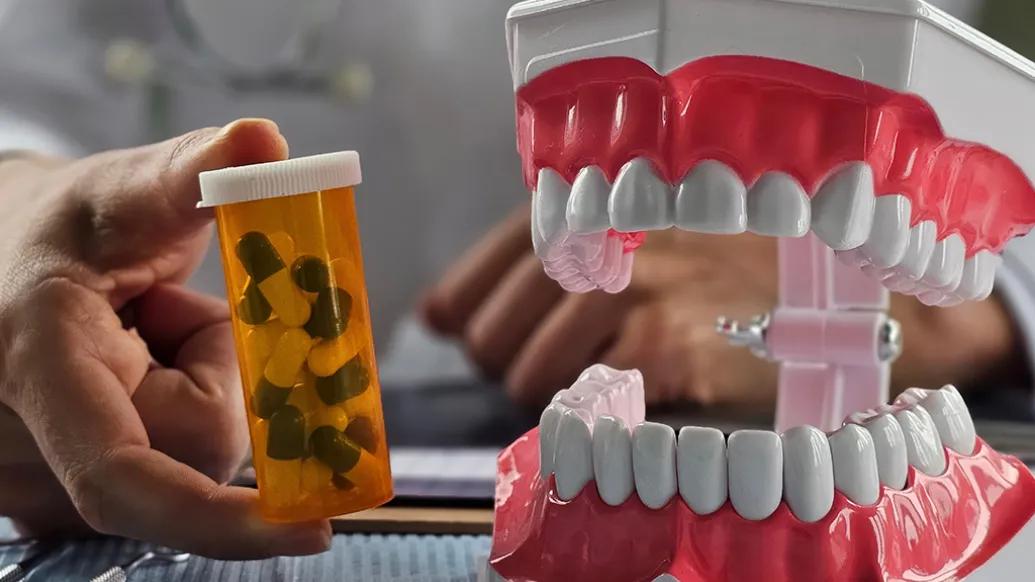
People getting their teeth pulled or drilled by dentists in the United States are still much more likely to get powerful opioid medications than dental patients in other developed countries or even the U.S. territory of Puerto Rico, a new study finds.
That’s despite steep drops in dental opioid prescription fills in recent years in the U.S., according to the findings from a team from the University of Michigan Medical School and University of New South Wales published in the journal JAMA Network Open.
Dentists worldwide have worked in recent years to move away from prescribing opioids for routine dental procedure pain.
Newer dental care guidelines encourage them to advise patients to use other types of pain medication because of the risk that prescription opioids can lead to long term use, the form of addiction called opioid use disorder, accidental poisoning or overdose.
From 2021 to 2024, the new study shows, there was a 27% drop in the rate of patients in U.S. states filling prescriptions from dentists for opioids, and a 10% drop in Puerto Rico.
There were also double-digit decreases in four developed countries the researchers analyzed: Canada, France, Australia and Germany.
But by the end of 2024, the U.S. still had the highest rate of such prescription fills, though it had closed the gap with Canada, the country with the next-highest rate.
By contrast, the Netherlands had a dental opioids prescription fill rate that was 24 times lower than the U.S. rate.
In the Netherlands in 2024, just 83 prescriptions for dental opioids were filled for every 100,000 inhabitants.
In the U.S., 2,022 such prescriptions were filled for every 100,000 people.
Kao-Ping Chua, M.D., Ph.D., the lead author of the new study, has tracked dental opioid prescribing patters in the U.S. and other countries for years.
“Our study shows that the US dental opioid dispensing rate is decreasing but remains high by international standards," said Chua, who is an Associate Professor of Pediatrics at the U-M Medical School and of Health Management and Policy at the U-M School of Public Health.
"This finding suggests that some U.S. dentists are still overprescribing opioids."
Chua is also director of the Susan B. Meister Child Health Evaluation and Research Center or CHEAR.
In 2023, Chua and colleagues showed that the rate of prescribing in the U.S. had dropped 45% between 2016 and 2022, though the progress slowed after the start of the COVID-19 pandemic.
Even so, the 2022 rate in the U.S. was four times the 2016 rate in the United Kingdom. The new study does not include UK data.
The senior author of the new paper, Chad Brummett, M.D., is a Professor of Anesthesiology at U-M and co-director of the U-M Opioid Research Institute and the U-M-based opioid guideline and education effort called OPEN.
OPEN offers guides and educational materials for opioid-sparing pain care for dental and oral surgery patients. They’re available for free and have been updated several times.
Chua and Brummett are members of the U-M Institute for Healthcare Policy and Innovation; Romesh Nalliah, D.D.S., a co-author, was also a member during his time on the U-M faculty. Other authors are three members of the University of New South Wales in Sydney, Australia: Claudia Bruno, Ph.D.; Sallie-Anne Pearson, Ph.D., and Jonathan Brett, MBBS, Ph.D., and Siljia He, M.S., a CHEAR statistician.
The study was funded by the Benter Foundation, with additional funding by the National Institute on Drug Abuse of the National Institutes of Health (R01DA056438, R01DA057284, and R01DA057943), and the Australian National Health and Medical Research Council (1196900, 1196560).
Reference: "International Trends in Dental Opioid Prescriptions," JAMA Network Open. DOI: 10.1001/jamanetworkopen.2026.7824
Sign up for Health Lab newsletters today. Get medical tips from top experts and learn about new scientific discoveries every week.
Sign up for the Health Lab Podcast. Add us wherever you listen to your favorite shows.

Health Lab
Explore thousands of health news & research stories by visiting the Health Lab homepage for more.
Media Contact

Public Relations
Department of Communication at Michigan Medicine
In This Story

Kao-Ping Chua, MD, PhD
Associate Professor
Chad M Brummett, MD
Professor
Related
Opioid Prescriptions for Wisdom Teeth Linked to Long-Term Use
Treating Dental Pain with Opioids Linked to Higher Risk of Overdose in Patients and Family Members
Stay Informed
Want top health & research news weekly? Sign up for Health Lab’s newsletters today!
Featured News & Stories
Top 7 tips for choosing Medicare prescription drug coverage for 2027

Many older adults make Medicare decisions quickly and most don’t change plans, poll finds
What’s the latest on 7-OH and kratom availability and addiction care?
Better prenatal care data could help prevent maternal complications, experts say
Many hospitals still don’t do enough to prevent UTIs from catheters