Older adults’ health may get a little help from their friends
Most people over 50 have at least one close friend and feel able to discuss health with them – but gaps seen for those in worse physical or mental health
2:14 PM
Author |
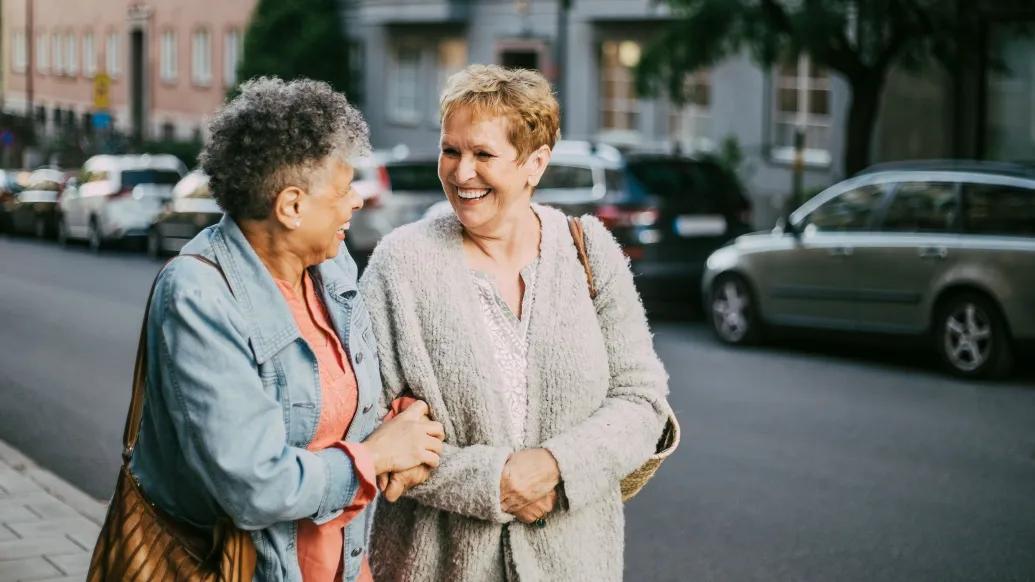
Whether they’re lifelong buddies or recently connected, close to home or miles away, a poll shows the key role that friends play in the lives and wellbeing of adults aged 50 and older.
But it also reveals some challenges for those who have physical health or mental health issues – suggesting it may be important for them connect with existing friends or make new friends.
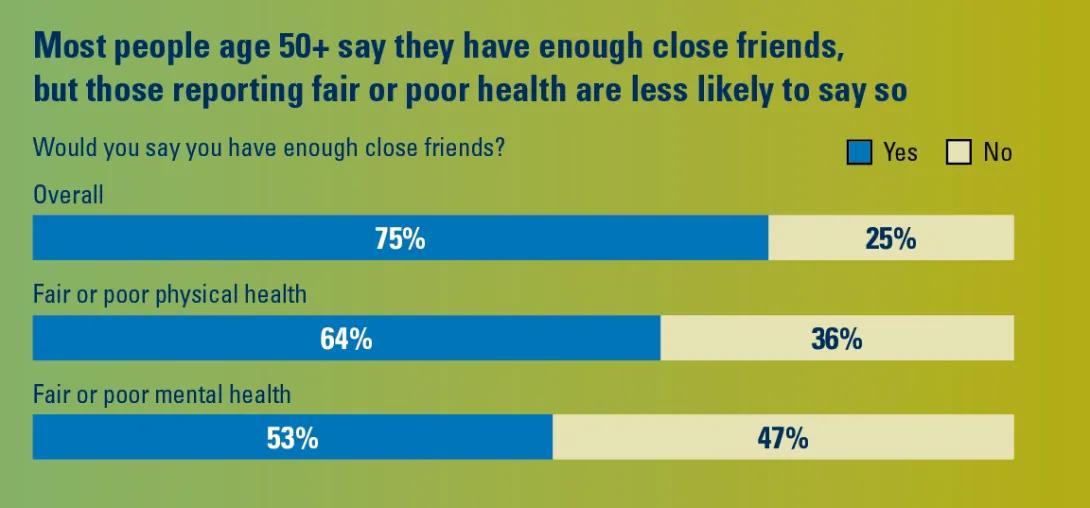
In all, 90% of people aged 50 and older say they have at least one close friend, and 75% say they have enough close friends, according to findings from the University of Michigan National Poll on Healthy Aging.
What’s more, 70% of those with a close friend say they can definitely count on them to provide support in discussing their health.
But the percentage who said they don’t have any close friends was twice as high among people with worse health, with 20% of those who call their mental health fair or poor saying so, along with 18% of those who call their physical health fair or poor.
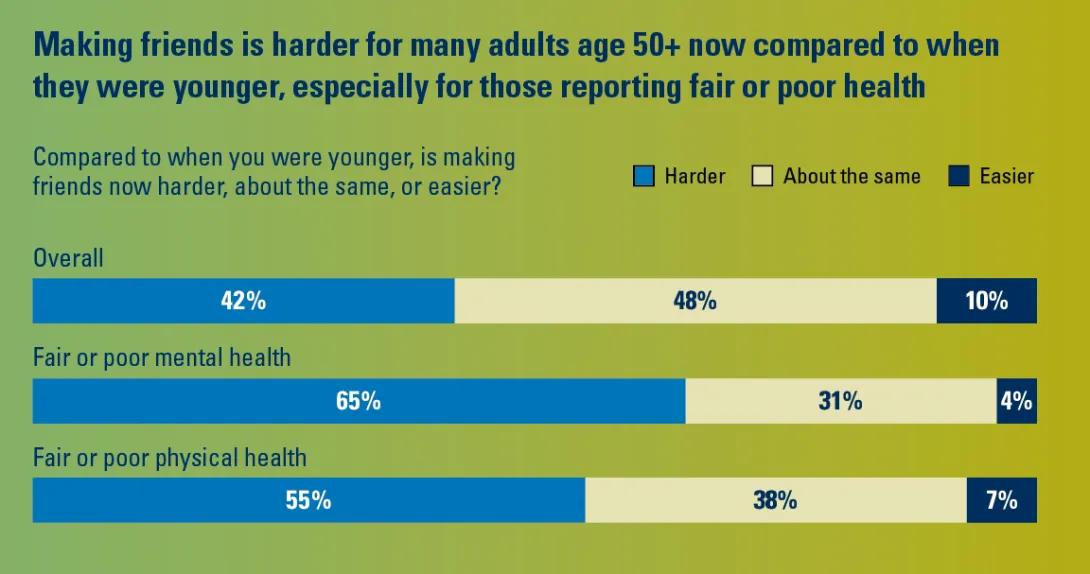
In addition, 47% of those with fair or poor mental health said they don’t have enough close friends. Older adults in fair or poor physical or mental health were also much more likely to say it’s harder to make friends now than earlier in life.
The poll is based at the U-M Institute for Healthcare Policy and Innovation, and supported by AARP and Michigan Medicine, U-M’s academic medical center.
“With growing understanding of the importance of social connection for older adults, it’s important to explore the relationship between friendship and health, and identify those who might benefit most from efforts to support more interaction,” said Sarah Patterson, Ph.D., the U-M demographer who worked with the poll team on the new survey. Patterson is a research assistant professor at the U-M Institute for Social Research, in the Survey Research Center, and a member of IHPI.
In addition to looking at differences by health status, Patterson and the poll team also asked older adults about interactions with close friends for support on their health and well-being.
When health care providers see older adults, we should also ask about their social support network, including close friends, especially for those with more serious health conditions."
-Jeffrey Kullgren, M.D., M.P.H., M.S.
They found that 79% of those with at least one close friend said that they can turn to them for emotional support, and that 50% had a friend who had encouraged them to make healthier choices like eating better and getting more exercise in the past year.
In addition, 35% said a close friend had encouraged them to get a symptom checked out by a health professional, and 32% had a friend who had helped them when they were sick or injured.
“When health care providers see older adults, we should also ask about their social support network, including close friends, especially for those with more serious health conditions,” said poll director Jeffrey Kullgren, M.D., M.P.H., M.S., a primary care physician at the VA Ann Arbor Healthcare System and associate professor of internal medicine at U-M.
“In some cases, we may even see friends accompanying older adults to health care appointments, which 15% of those with close friends said a friend had done for them. We also need to be attuned to the mental health of those who have experienced the loss of a close friend.”
In addition to the national poll report, the team compiled data for Michigan adults age 50 and older compared with those in other states. A summary is available as well as an interactive data visualization.
“This poll underscores the vital role friendships play in the health and well-being of older adults,” said Indira Venkat, Senior Vice President of Research at AARP. “Strong social connections can encourage healthier choices, provide emotional support, and help older adults navigate health challenges, particularly for those at greater risk of isolation.”
Other findings about friendships and health
Men were more likely than women to report having no close friends, as were people age 50 to 64 compared with those age 65 and older
Older adults who felt isolated or a lack of companionship at least some of the time in the past year were more likely to say they don’t have any close friends compared with those who hardly ever felt isolated or lonely
Among older adults with at least one close friend, 46% said they have a close friend(s) from a different generation (at least 15 years older or younger than them)
28% of older adults with close friends would like more contact with their close friends, but this percentage was much higher among those in fair or poor mental health or physical health
42% of older adults say it’s harder to make new friends now than when they were younger, but 65% of those in fair or poor mental health and 55% of those in fair or poor physical health said this
34% of older adults said it’s now harder to maintain friendships than when they were younger, but the percentage was much higher among those in fair or poor mental health (61%) or physical health (47%)
The poll findings come from a nationally representative survey conducted by NORC at the University of Chicago for IHPI and administered online and via phone in August 2024 among 3,486 adults ages 50 – and older across the U.S. The Michigan sample included 1,174 respondents ages 50 - 94. The samples were subsequently weighted to reflect the U.S. and Michigan populations.
Read past National Poll on Healthy Aging reports and about the poll methodology.
Sign up for Health Lab newsletters today. Get medical tips from top experts and learn about new scientific discoveries every week.
Sign up for the Health Lab Podcast. Add us wherever you listen to your favorite shows.

Health Lab
Explore thousands of health news & research stories by visiting the Health Lab homepage for more.
Media Contact

Public Relations
Department of Communication at Michigan Medicine
In This Story

Jeffrey Todd Kullgren, MD, MS, MPH
Professor
Related
1 in 3 older adults still experience loneliness and isolation
Grandparents help grandkids in many ways – but the reverse may be true too
Stay Informed
Want top health & research news weekly? Sign up for Health Lab’s newsletters today!
Featured News & Stories

Emergency room intervention pairs smartphone, telehealth counseling to reduce risky firearm behavior

Better prenatal care data could help prevent maternal complications, experts say
Pain, psychological factors and physical function closely linked in people with systemic sclerosis

Many hospitals still don’t do enough to prevent UTIs from catheters
Rural-urban disparities in head and neck cancer